

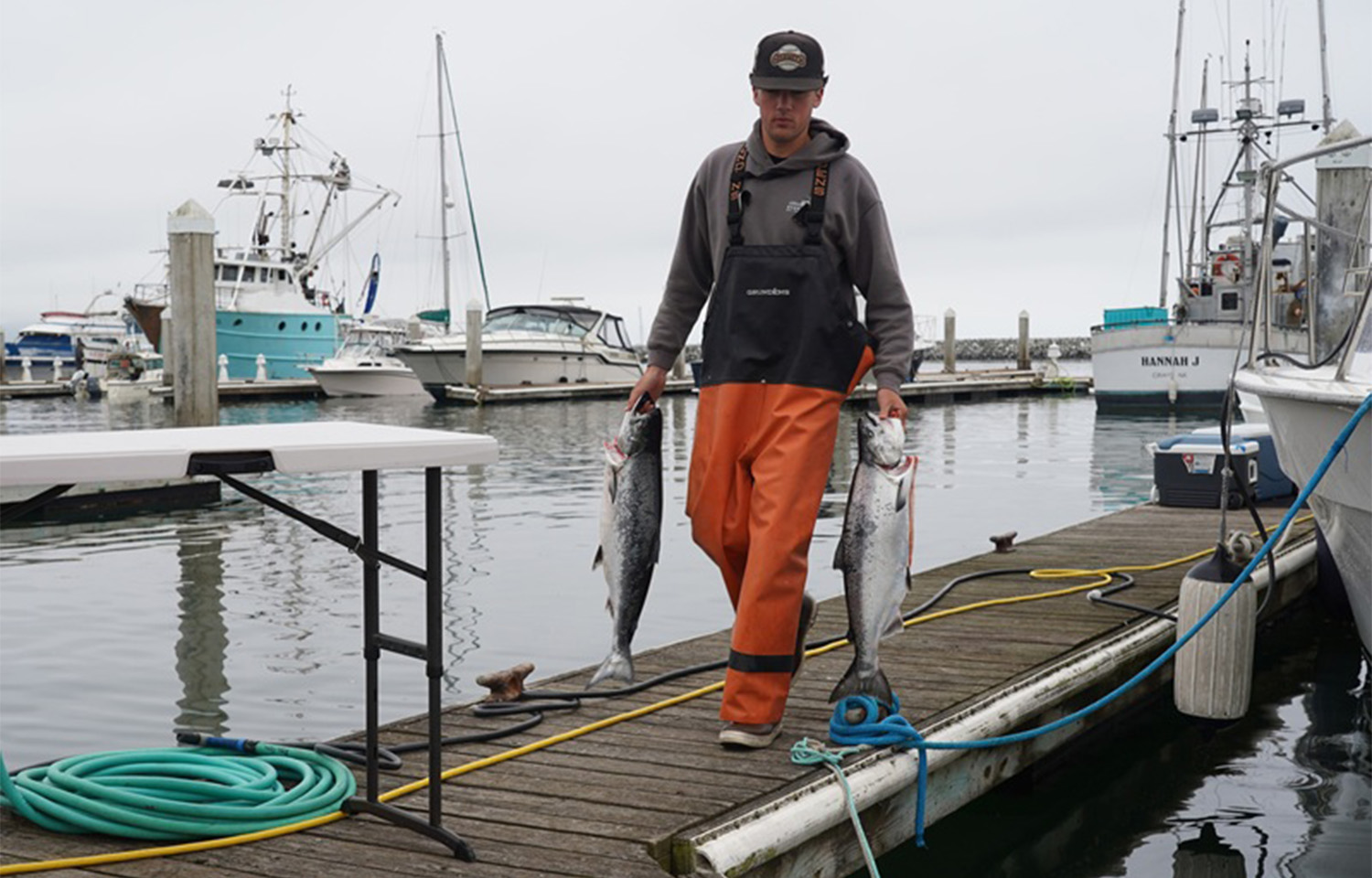
The U.S. state of California has reopened commercial salmon fishing in state waters after a three-year closure.
Regulators signaled they were considering a commercial salmon fishery in 2026 after forecasts showed the population of Klamath and Sacramento River fall Chinook were at a level that could potentially sustain a fishery. Those predictions proved true, and the California Department of Fish and Wildlife (CDFW) said it is reopening the fishery.
“Seeing our salmon populations recover is incredibly heartening and demonstrates what’s possible when we all work together – state and federal partners, Tribes, sport angler and commercial fishing interests, NGOs, and others – to do what’s best for salmon,” CDFW Director Meghan Hertel said in a release. “Salmon are part of the cultural fabric of California, and I’m delighted more Californians will have the opportunity to enjoy these magnificent fish whether that’s in the water, on the end of their fishing lines, or on their dinner plates.”
The fishery was closed in 2023 and remained so after the 2024 Sacramento River and Klamath River fall Chinook salmon runs were smaller than forecast.
Regulators at the time expected a run of more than 180,000 adult Chinook salmon to return to the Sacramento River Basin that year, but fewer than 100,000 fish turned up. Klamath River also saw a much smaller return of 36,568 fish, compared to the forecast of over 65,000 fish.
Returns in 2025 were significantly improved after improved drought conditions, with returns jumping in the Sacramento Valley to nearly 165,000, up from just over 100,000 the year before and marking some of the best returns the river had seen in a decade.
“The health of our salmon populations fluctuates with environmental conditions, and we’ve seen just how vulnerable these fish are to recent droughts, changing river conditions, and a warming climate,” California Natural Resources Secretary Wade Crowfoot said. “This year’s return of ocean salmon fishing is an encouraging sign as we advance California’s long-term, science-based Salmon Strategy.”
Sport fishing for the salmon already began on 11 April, and commercial fishing will begin on 16 May. The season will come with a quota of 83,000 salmon overall.
“We’re cautiously optimistic about what this year’s improved salmon seasons will bring,” Golden State Salmon (GSSA) Executive Director Vance Staplin said of the upcoming season. “Businesses up and down the coast and inland are desperate for the economic boost this season will bring, especially after so many recent bad years of no business caused by the shutdown of salmon fishing.”
The initial closures cost the state financially.
California pushed for federal fishery disaster relief on the closures, and in 2025, the U.S. Department of Commerce confirmed disasters took place in the 2024 Sacramento River fall Chinook salmon fishery and the 2024 Klamath River fall Chinook salmon fishery. For that season alone, the state sought USD 47 million (EUR 40 million) in financial relief.
Staplin said the economic impact of the fishery across the state is significantly higher when you consider the entire supply chain.
“Coastal communities that have grown to rely on the annual salmon fishery are excited at the prospect of hopefully becoming profitable again,” he said.
GSSA Board Chair Mike Aughney said the association is excited to have a season, even if it is heavily restricted compared to years past.
“At the same time, we’re also concerned about the juvenile salmon currently trying to get out of the Central Valley and to the sea,” Aughney said. “After the extremely warm March, we can use all the rain we can get as baby salmon transit from fresh to saltwater between now and June.”
In 2024, California implemented its “Salmon Strategy for a Hotter, Drier Future” which the CDFW said laid the groundwork for the state to restore its salmon populations. Some of those efforts included restoring and expanding habitat for the species and removing barriers to salmon migration.
“Together with a range of partners, we’re restoring habitat, removing barriers, improving flow, and reconnecting rivers to give salmon a better chance to survive in all conditions,” Crowfoot said. “This work is about balance – making improvements and modernizing water management to help nature thrive and our communities prosper.”
