


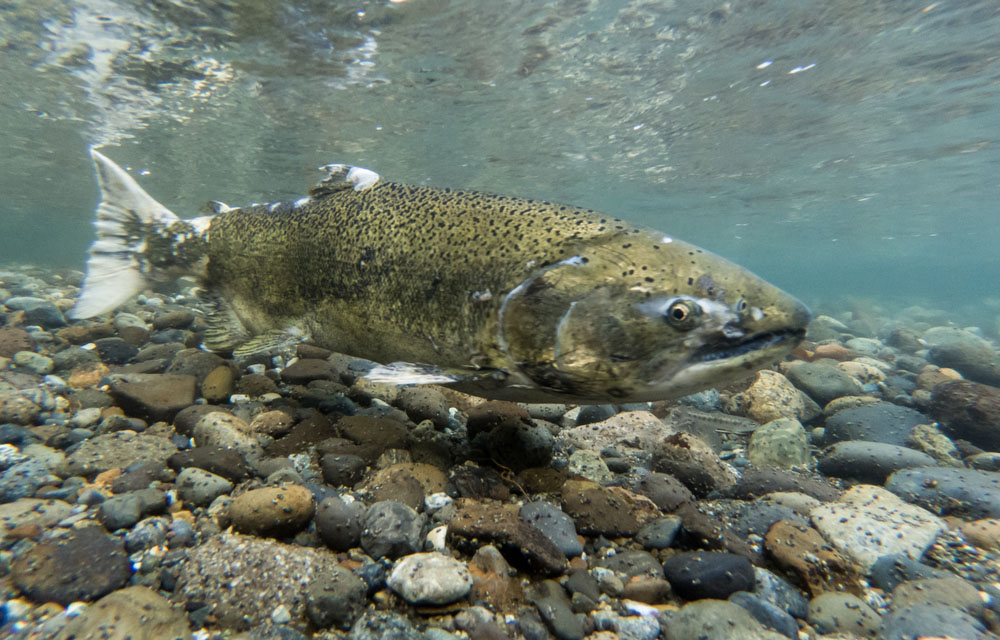
The U.S. state of California has declared progress in restoring salmon populations and habitats, completing half of the actions laid out in the California Salmon Strategy for a Hotter, Drier Future that was issued more than two years ago.
“Restoring California’s salmon is not just an environmental goal. It is part of our commitment to the rivers, tribes, communities, and ecosystems that define this state,” California Governor Gavin Newsom said in a release. “Success is rooted in persistence, collaboration, science, and respect for tribal sovereignty. Salmon recovery is a signal of what is possible when we restore nature with urgency and purpose. This is only the beginning.”
Newsom first released the strategy in 2024 to guide and coordinate the state’s various efforts to restore salmon populations and help the species recover. California salmon stocks had plummeted in recent years, leading regulators to cancel the commercial salmon seasons in 2023, 2024, and 2025 to help the species recover. State officials blamed declining runs on several factors, including drought, wildfires, lost habit, and algal blooms.
All told, the document outlined 71 actions the government would take to help improve salmon stocks in cooperation with Tribal nations, federal agencies, conservation groups, utilities, and the fishing community.
“Salmon are the lifeblood of tribal cultural heritage and nutrition, the backbone of river ecosystems, and the engine of a multimillion-dollar commercial and recreational fishing sector,” California Department of Fish and Wildlife Director Meghan Hertel said in a release. “Rebuilding populations of this iconic species requires collaboration, and this report is proof that working together delivers results.”
In its second update on the strategy, the state government reported it had completed 49 percent of the actions laid out in the document while making progress on the remaining actions. That’s up from the 26 percent of actions completed as recorded in the government’s update last year.
“We applaud Governor Newsom’s leadership and California’s progress in implementing the Salmon Strategy for a Hotter, Drier Future. Guided by science-based tools like the California Environmental Flows Framework, this strategy will restore healthier rivers, strengthen salmon populations, and build resilience to a changing climate,” The Nature Conservancy in California said in a social media post. “We look forward to continuing this work in partnership with the governor, conservation groups, state and federal agencies, and tribal nations across California in the months and years ahead.”
There have been significant positive developments for California salmon populations and the commercial fishery over the last year.
Most notably, stronger runs on the Sacramento River and Klamath River led regulators to open a commercial fishing season for the first time since 2022.
“The health of our salmon populations fluctuates with environmental conditions, and we’ve seen just how vulnerable these fish are to recent droughts, changing river conditions, and a warming climate,” California Natural Resources Secretary Wade Crowfoot said at the time. “This year’s return of ocean salmon fishing is an encouraging sign as we advance California’s long-term, science-based Salmon Strategy.”
The season kicked off 16 May with a quota of 83,000 salmon. CDFW also introduced new digital tools to track commercial and recreational harvests, allowing fishers to see how many more fish can be taken before the quota is reached. As of 18 June, the tracker showed 54,129 fish harvested.
Last year, officials in California and Oregon welcomed the return of salmon to the Klamath River Basin, a development made possible by the removal of four hydroelectric dams beginning in 2023. California claimed the dam removals opened up 420 miles of habitat, and observers spotted fish returning to upper areas of the river that had not seen salmon in over 100 years.
Other major achievements last year listed by the California government include reintroducing salmon to coldwater habitat on the Yuba River, floodplain salmon rearing habitat activation in the Yolo Bypass, and the protection of flows for salmon in the Scott and Shasta rivers.
The state has also released a story map showcasing its achievements over the last year.
