



Egypt has unveiled a pilot project to collect fishing operations and landing data directly at major ports as the country strives to strengthen and modernize its fisheries monitoring, control, and surveillance infrastructure.
Egypt's Mediterranean coastline, which extends 995 kilometers, poses challenges in properly monitoring fisheries data, particularly due to the long distances between where fishing activities and landings take place and where the resulting data is subsequently organized and analyzed.
To help alleviate some of the issues, Egypt's Lakes and Fish Resources Protection and Development Agency (LFRPDA), a government-owned entity established in 2021 that replaced Egypt’s General Authority for Fish Resources Development (GAFRD), has set up four office units along the Egyptian Mediterranean coast. The new offices will allow data collectors to be onsite for the collection of fisheries data such as catch totals, effort, discards, and information on vulnerable species.
The initiative is receiving support from the General Fisheries Commission for the Mediterranean’s (GFCM) MedSea4Fish capacity development program, which itself is financed by the E.U. The Food and Agriculture Organization’s Egypt office has served as the operational arm responsible for the final delivery of the units onsite.
“It was deemed important to have these four outposts so that data collectors could have a base for their work in the field, ensuring data is collected consistently across the year while alleviating the travel burden on data collectors,” GFCM Communication Officer Adèle Peenaert said. “The fisheries data collection project is fundamental for generating the scientific evidence required to assess fish stocks, monitor fisheries activities, support fishing communities, and inform sustainable management decisions.”
Peenaert added that the collected data will, at regional and international levels, "contribute to shared stock assessments, strengthen scientific advice, support compliance with international commitments and promote coordinated fisheries governance in the Mediterranean, ultimately helping to ensure the long-term sustainability of marine resources and the livelihoods that depend on them.”
“If more tailored and accurate fisheries management decisions are to be taken, the first step is to have better information, and collecting that information directly in ports may be one of the simplest ways to bring the numbers closer to the reality of fishing fleets,” she said.
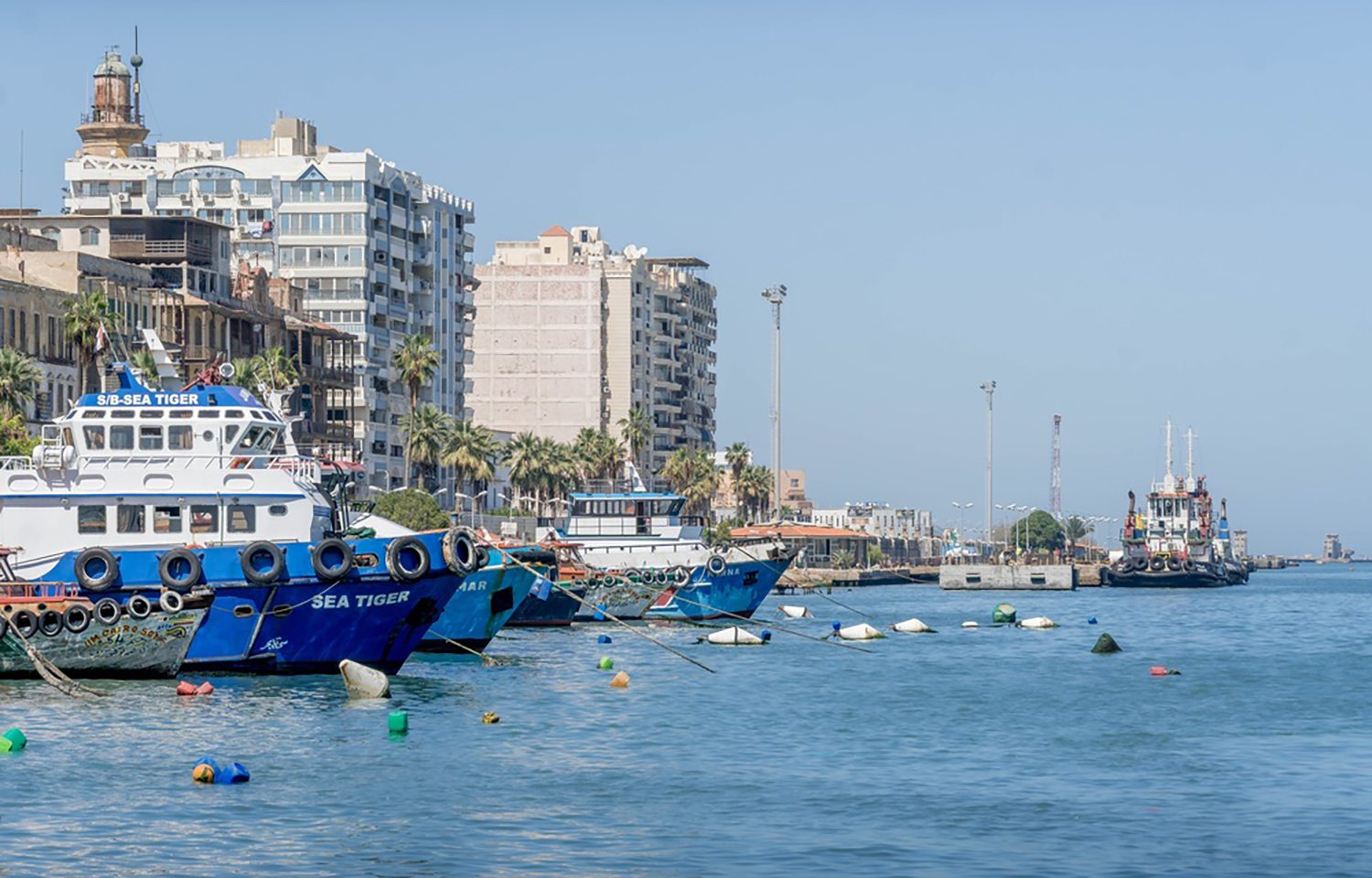
The four fisheries data collection office units were strategically installed at fishing landing points at the ports of Abu Qir, Ezbet El-Borg, Port Said, and Miaddiyyah.
The latter three ports were ranked among the top 10 fishing landing points along the Eastern Mediterranean, with a combined volume of landings estimated at 36,015 metric tons in 2025, according to GFCM's State of Mediterranean and Black Sea Fisheries report for last year.
