






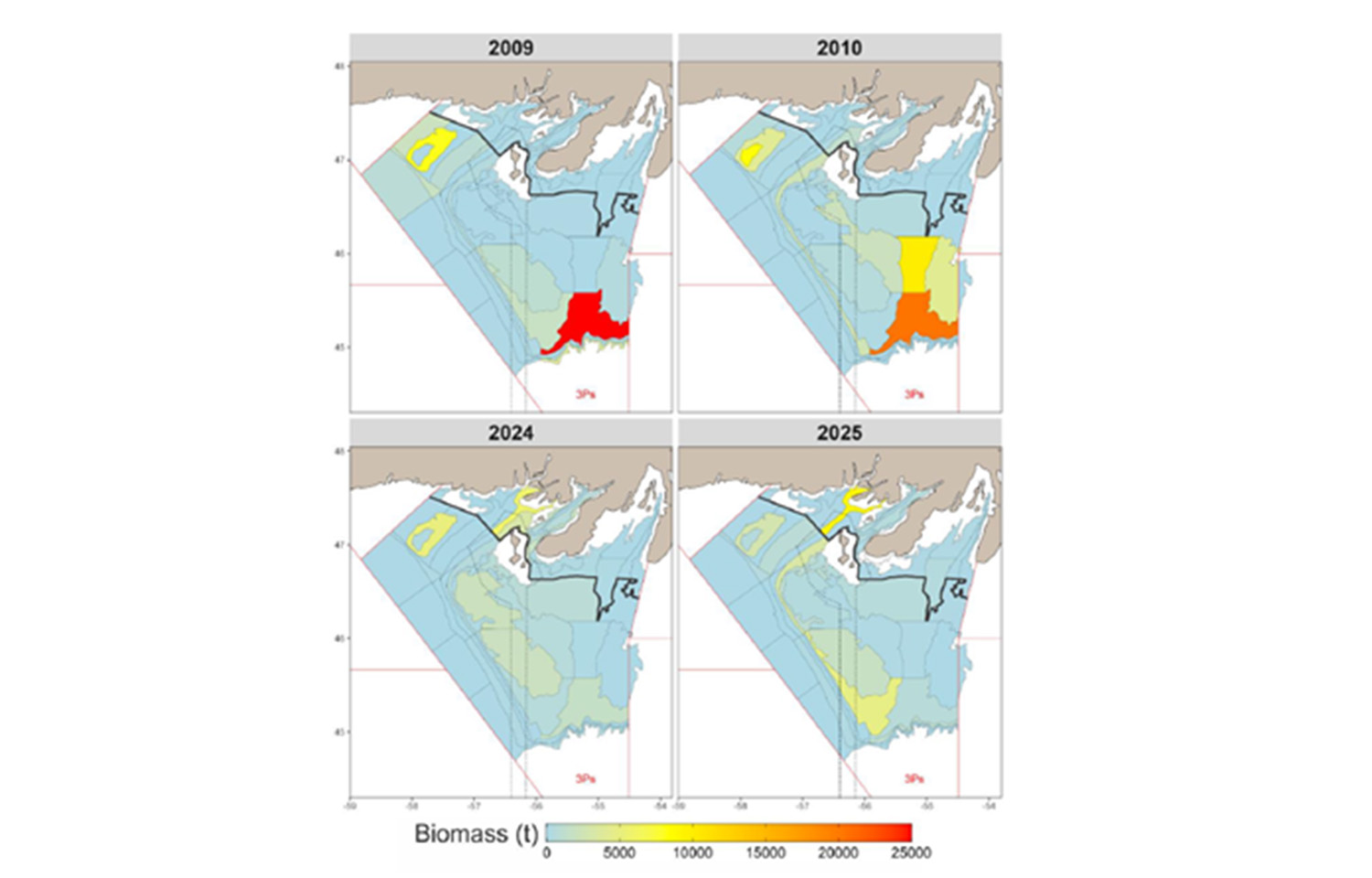
Recent assessments from Canada’s Department of Fisheries and Oceans (DFO) on the “3Ps” cod-fishing zone off the coast of the province of Newfoundland have found the stock is still in the critical zone and hasn’t achieved any growth.
The province's main fishing union said the results of the assessment represent a symptom of poor management.
The 3Ps cod stock achieved Marine Stewardship Council (MSC) certification in 2016, but since that time, the species has been on a downswing and recent assessments by DFO scientists found the stock has not achieved growth that was originally predicted.
Those assessments have the Fish, Food, and Allied Workers Union (FFAW) in Newfoundland – which represents fishers in the province – pointing out they have long warned the stock was in danger while the Atlantic Groundfish Council (AGC) simultaneously showed persistent optimism that the stock would see growth under its fishery improvement project (FIP) in the region.
“The ecosystem in 3Ps continues to undergo structural changes, and unfortunately, despite incredibly low fishing mortality levels, the south coast cod stock assessment is not showing the growth we were hoping to see this year nor the growth expected under the 3Ps Cod Rebuilding Plan,” AGC Director of Fisheries Management and Science Vanessa Bourgeois said.
The AGC added that though it is a “challenging period” for the 3Ps cod stock, the fact the northern cod stock is entering the healthy zone is a sign that Canada’s management process is sound.
According to FFAW, a key part of the new assessments by DFO is that the offshore components are showing significant losses – a reality the union claims it predicted when it objected to the MSC certification of the 3Ps cod stock. FFAW said the patterns of the 3Ps stock are currently similar to the patterns the stock experienced when the northern cod stock collapsed – a stock that only recently reopened after a 32-year moratorium.
“We’ve seen this before. When northern cod collapsed, the same thing happened; offshore effort was concentrated on remaining cod aggregations while inshore harvesters struggled to fill their quotas. We need to learn from those mistakes, not repeat them,” FFAW President Dwan Street said in a release.
FFAW said inshore harvesters have claimed the stock is in worse shape than estimates were indicating and the recent lack of progress on the 3Ps stock is vindication for those predictions.
“If this were just about warming water, we’d be seeing those fish move inshore,” FFAW Inshore Council member and longtime fisherman Alfred Fitzpatrick said. “We’re not seeing that. The fish were taken, and it shouldn’t have happened. This was poor management.”
FFAW said the lack of any increase to the 3Ps cod biomass should be taken as a sign that the stock is in trouble and that the current management is not working.
“We can’t fix the past, but we can take responsibility for how we manage the future,” FFAW Fisheries Scientist Erin Carruthers said. “This means revisiting the rebuilding plan, it means listening to the people on the water, and it means tracking – and importantly reviewing – changes in the distribution of fish and fleets within a stock area.”
