




Chinese tourists appear to be traveling to Malaysia to eat a Convention on International Trade in Endangered Species (CITES)-protected fish that is banned in China.
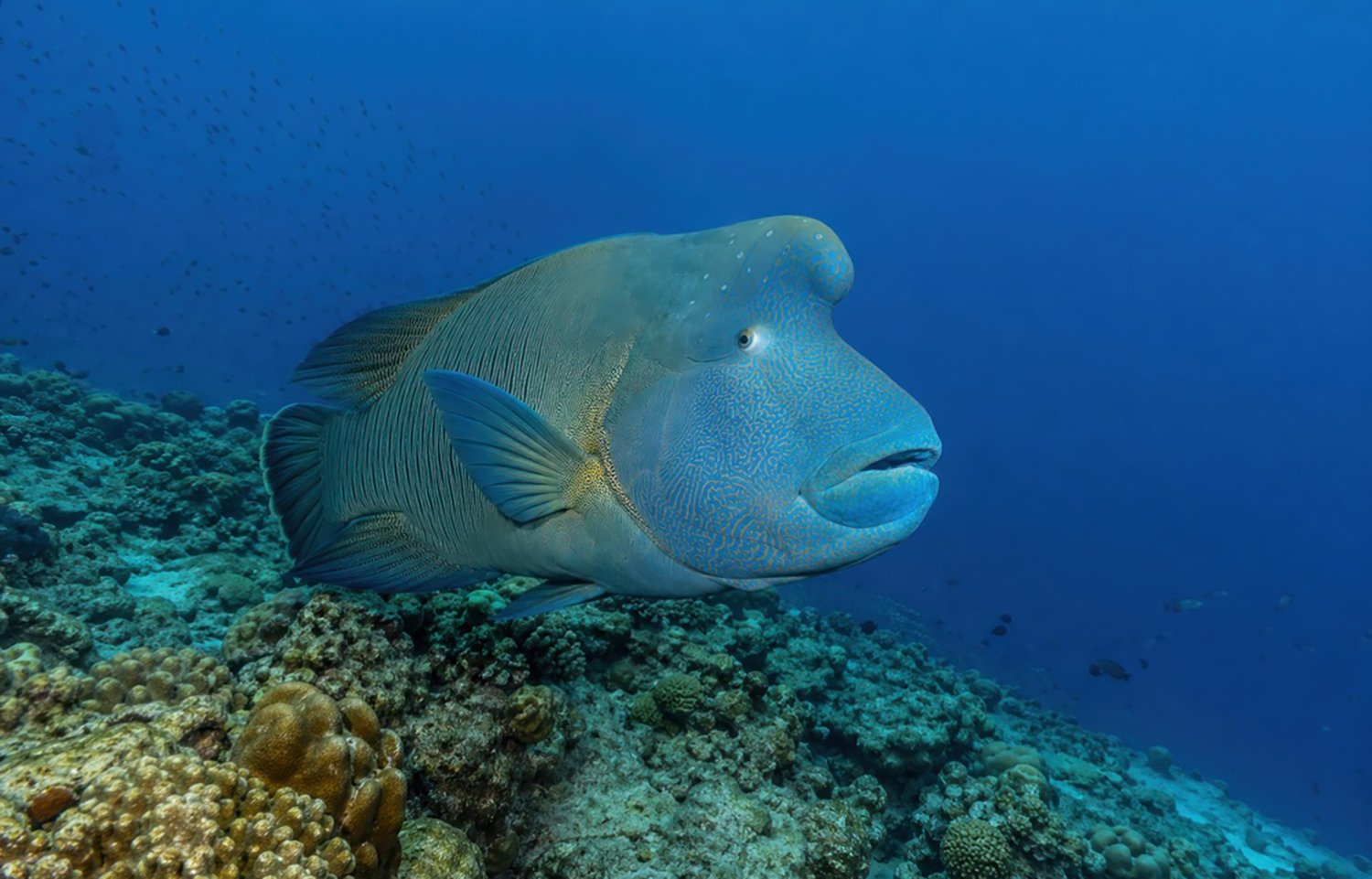
Humphead wrasse (Cheilinus undulatus), which is a tropical fish typically found among coral reefs in the Indo-Pacific region, is listed as endangered on the International Union for the Conservation of Nature’s (IUCN) Red List of Threatened Species. As a result of the listing, trade in the species has been banned in China since 2021.
However, domestic trade of the species is allowed in Malaysia, so to circumvent the ban, Chinese tourists have been heading to the nearby Southeast Asian nation.
Videos posted on Chinese social media platforms show humphead wrasse being displayed or cooked at restaurants in such popular Malaysian destinations as Semporna.
Most of the videos, which appear to be posted by both travelers and restaurateurs, use a hashtag in Mandarin Chinese that translates to “achieve seafood freedom.”
Professor Yvonne Sadovy at the University of Hong Kong, who has closely studied the humphead wrasse trade and campaigned to stop it in China and Hong Kong, told SeafoodSource that some of the wrasse being eaten by Chinese tourists in such Malaysian destinations as Semporna may be smuggled in from the Philippines, as a CITES permit is required to trade wrasse across borders and the CITES trade database shows no humphead trade between the Philippines and Malaysia.
“It looks like – we do not know this for sure but I cannot see any other explanation – most of their fish are imported from the Southern Philippines … most likely from the Tawitawi area where there is a lot of grow-out and it is hard to police,” she said. “As I understand, this is a longstanding trade, so the questions are why is Malaysia not looking more at cross-border smuggling and why does the Philippines not address this?”
Professor Michael Fabinyi at the University of Technology Sydney, who has extensively researched trade in and consumption of reef fish in southeast Asia and China, backed up Sadovy’s line of thinking.
He explained to SeafoodSource several factors permitting the smuggling of fish from the Philippines into Malaysia.
“The reasons for lack of enforcement are likely partly due to livelihood concerns, partly due to weak state capacity, and the fact that trade networks in the area are very well-established, linked to long-term social and kin relations, and state boundaries are relatively porous,” he said.
According to the IUCN, humphead wrasse has significant cultural value in several Asian markets.
“In several countries, it has long been an important ceremonial fish, sometimes reserved for kings or special community festivities,” the organization said.
