






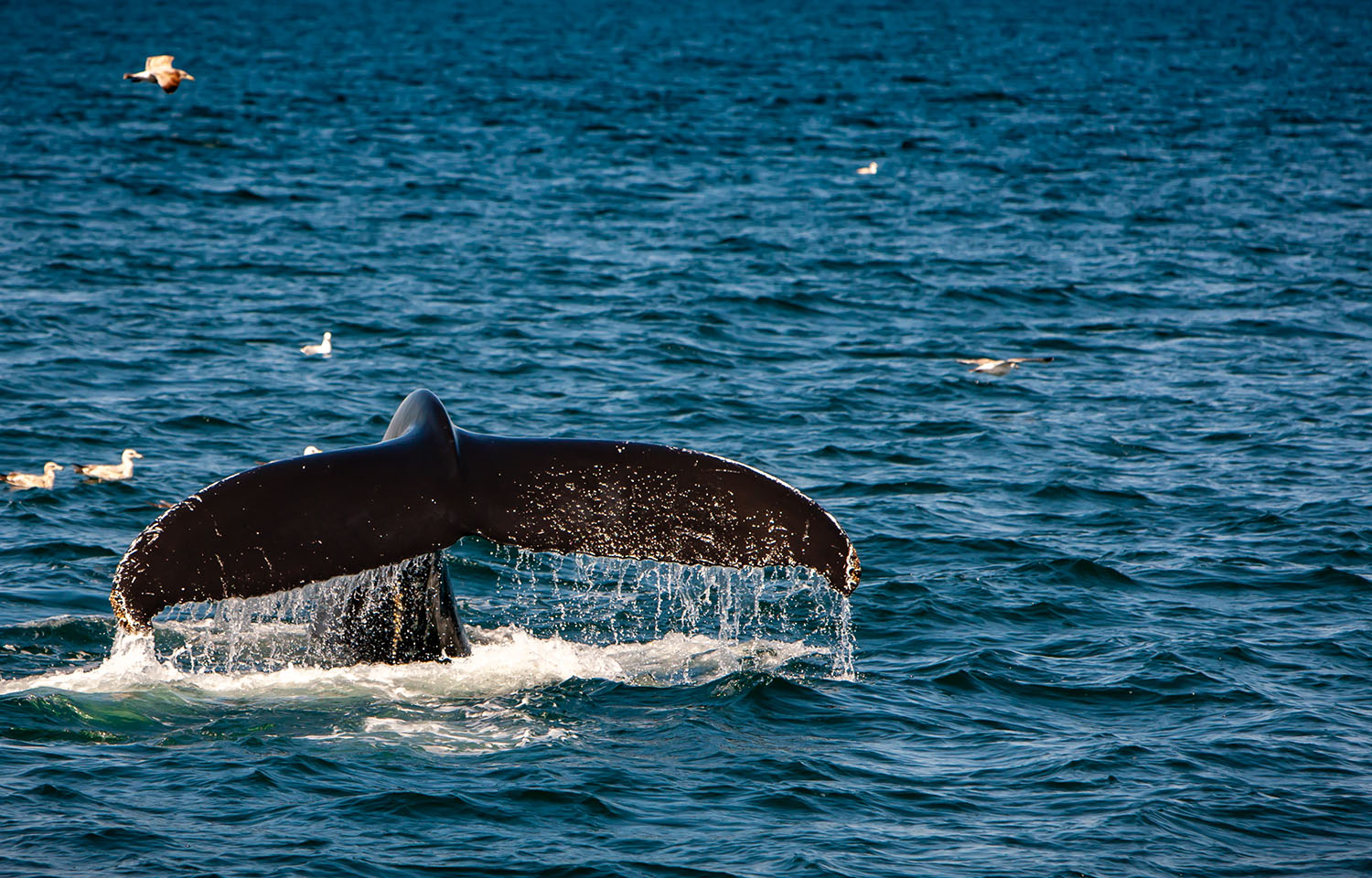
Conservation groups are attempting to step in to defend a 2008 vessel speed rule designed to protect North Atlantic right whales from vessel strikes, arguing that the speed limits are vital to saving the endangered species.
“This speed rule is the only one that protects the few remaining right whales from deadly vessel strikes," Conservation Law Foundation Senior Counsel Erica Fuller said in a statement. "Undermining the rule will set a dangerous precedent that risks the survival of endangered right whales and countless other marine mammals and vulnerable species. Our responsibility to protect these creatures extends beyond policy; it’s a commitment to preserving the health of our oceans for generations to come.”
The 2008 rule is being challenged in the Middle District Court of Florida by a vessel captain who was fined USD 14,250 (EUR 13,190) for knowingly violating the speed limits, traveling 18 knots in a 10-knot area for over 200 kilometers in 2022.
The captain is asking the court to block NOAA Fisheries from collecting civil penalties filed against the captain and vessel owner, claiming that that neither the Endangered Species Act (ESA) nor Marine Mammal Protection Act (MMPA) gives NOAA Fisheries the authority to implement a civil penalty to enforce vessel speed limits.
Now, a trio of conservation groups – Defenders of Wildlife, Whale and Dolphin Conservation, the Conservation Law Foundation, and the Center for Biological Diversity – have filed a motion to be allowed to defend the 2008 law in court from the lawsuit.
“The 2008 vessel speed rule is firmly grounded in the science and the law,” Jane Davenport, senior attorney for Defenders of Wildlife, said in a statement. “An attack on the 2008 vessel speed rule is an attack on the wildlife laws that Congress specifically enacted to save species like the right whale from extinction. It’s life or death.”
There are only roughly 370 North Atlantic right whales left, and according to NOAA Fisheries, the main threats to the species are vessel strikes and fishing gear entanglements.
“The speed rule is essential in protecting right whales, and its value should be assessed based on the risk they face,” Whale and Dolphin Conservation North America Executive Director Regina Asmutis-Silvia said in a statement. “Right whales live in a Hunger Games lottery where the odds of any single boat hitting a whale may be low but the odds of a right whale being struck and killed by a speeding boat are astronomically high.”
At 2025 Seafood Expo North America (SENA), held earlier this month in Boston, Massachusetts, U.S.A., Robert Smith, a partner at Boston-based law firm K&L Gates, warned that the Supreme Court’s overturning of the Chevron deference last year could open the door for more lawsuits challenging NOAA Fisheries regulations.
The Chevron deference was a court precedent that saw judges defer to the judgement of federal agencies in interpreting congressional statutes. The Chevron deference was overturned in a case involving New Jersey herring fishers, who claimed NOAA Fisheries lacked the authority to force them to pay for fishery observers on their vessels.
“In the short term, you are going to see a lot more uncertainty and a lot more litigation,” Smith said at SENA during a presentation titled “The Demise of the Chevron Doctrine and the Legal Implications for Fisheries and Aquaculture.”
“If you’re a member of the seafood industry looking to challenge a particular action by an agency, you have more opportunity now to look at what that agency is doing and say, ‘Do they really have the authority to take this particular action?’” fellow K&L Gates Partner Tim Hobbs said on the panel. “Previously, I advised clients that even if an agency was wrong, you’re likely to lose in court. Now, it’s closer to 50-50.”
During his administration, former U.S. President Joe Biden’s government attempted to expand the 2008 vessel speed rule but ultimately withdrew the rule, claiming there was not enough time to implement an expansion before the administration of U.S. President Donald Trump.
“Despite its best efforts, NMFS does not have sufficient time to finalize this regulation in this administration due to the scope and volume of public comments,” the agency noted in January.
