






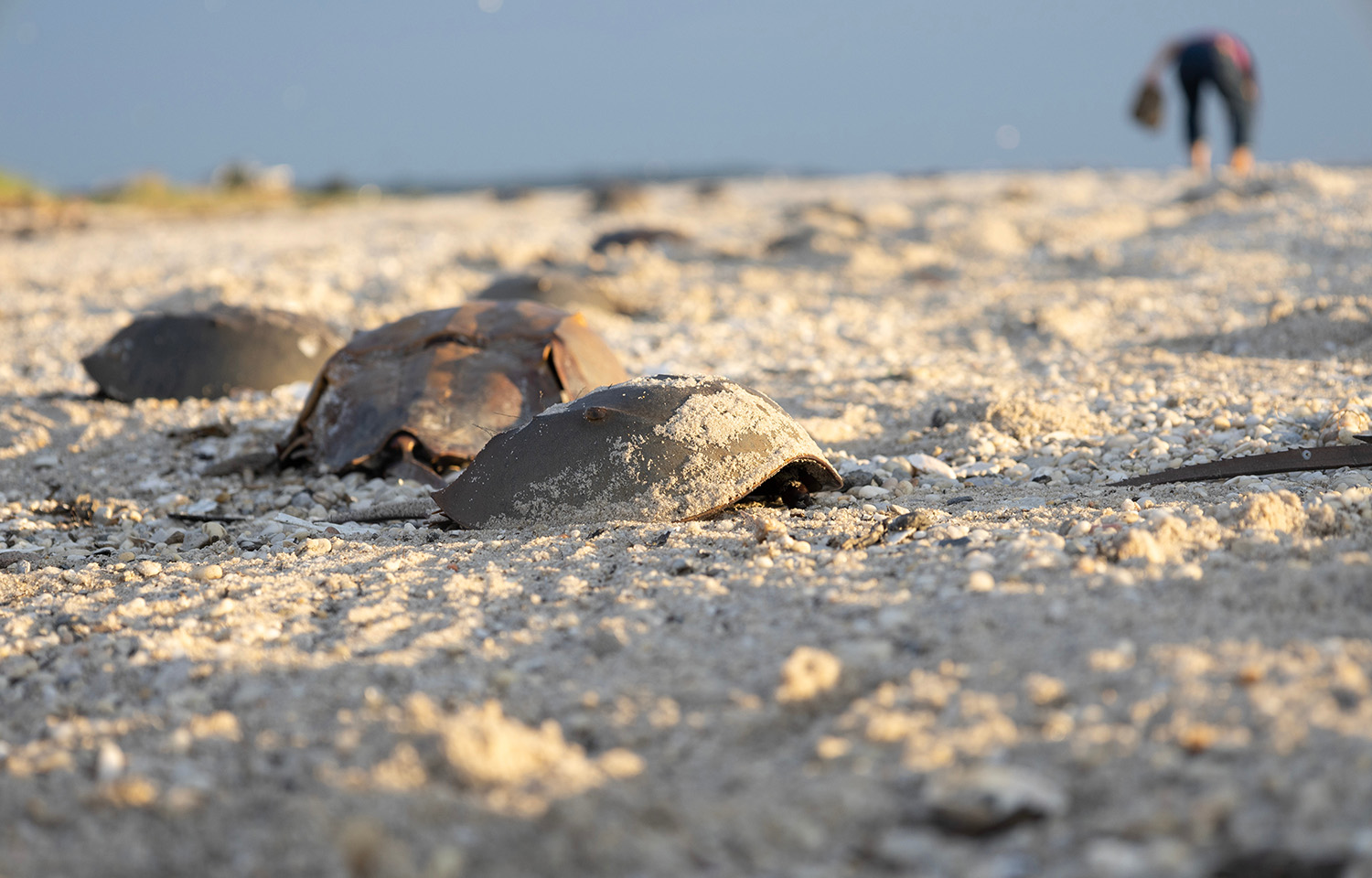
A coalition of conservation groups are trying to pressure pharmaceutical companies worldwide to stop using horseshoe crab blood for medical testing and switch to synthetic alternatives instead.
Horseshoe crabs are harvested for use in bait, but they’re also collected for their blood, which is prized in the pharmaceutical industry for its clotting properties when exposed to bacterial toxins in biomedical testing. The demand has created a lucrative market, with harvesters bleeding crabs and selling the fluid for up to USD 60,000 (EUR 55,500) per gallon.
The Center for Biological Diversity, a Tucson, Arizona, U.S.A.-based wildlife conservation nonprofit, estimates that about 1.1 million crabs are bled alive every year; up to 30 percent of the animals do not survive the bleeding.
Concerned over the crabs’ population and its impact on other species, such as shorebirds that prey on the crabs, conservation groups have pushed for the industry to adopt synthetic alternatives.
“The plummeting horseshoe crab population threatens the delicate balance of our coastal ecosystems,” Horseshoe Crab Recovery Coalition Co-Founder Larry Niles said in a statement. “Shorebirds like the red knot and other marine species rely on these ancient creatures for their protein-rich eggs. Switching to synthetic alternatives for biomedical testing is a simple, effective way to protect horseshoe crabs without compromising public health.”
Now, the Center for Biological Diversity, the Horseshoe Crab Recovery Coalition, and Revive & Restore have released an online scorecard to track the adoption of synthetic alternatives by the 50 largest pharmaceutical companies in the world.
“This scorecard will be an opportunity to celebrate companies that are already helping to protect horseshoe crabs by transitioning to synthetics,” Center for Biological Diversity Southeast Director and Senior Scientist Will Harlan said in a statement. “These companies recognize that synthetics are a far more secure source for medical safety tests than the blood of a dwindling and critically imperiled species.”
According to the Center for Biological Diversity, synthetic blood has already seen significant adoption overseas, but the transition has been held back in the U.S. by a lack of clear guidelines.
However, the U.S. Pharmacopeia (USP) published guidelines recently that accept synthetic replacements for medical use.
To support the scorecard, the conservation groups are surveying the 50 largest pharmaceutical companies on their methodologies and plans to transition to synthetic blood. Survey results and sustainability ratings will be published in February 2025.
“The sustainability scorecard is intended to encourage pharmaceutical companies to do the right thing and to recognize companies already committed to change,” Revive & Restore Executive Director Ryan Phelan said in a statement. “Doing the right thing means stopping the harvest and removing the use of this vulnerable, ancient species from drug-manufacturing processes.”
In October, the Atlantic States Marine Fisheries Commission voted to extend a ban on bait-harvesting female horseshoe crabs in the Delaware Bay over concerns that it would harm the Endangered Species Act-listed red knot. The Center for Biological Diversity is also engaged in a lawsuit with the state of Maryland to release official data on horseshoe crab deaths in the state.
