



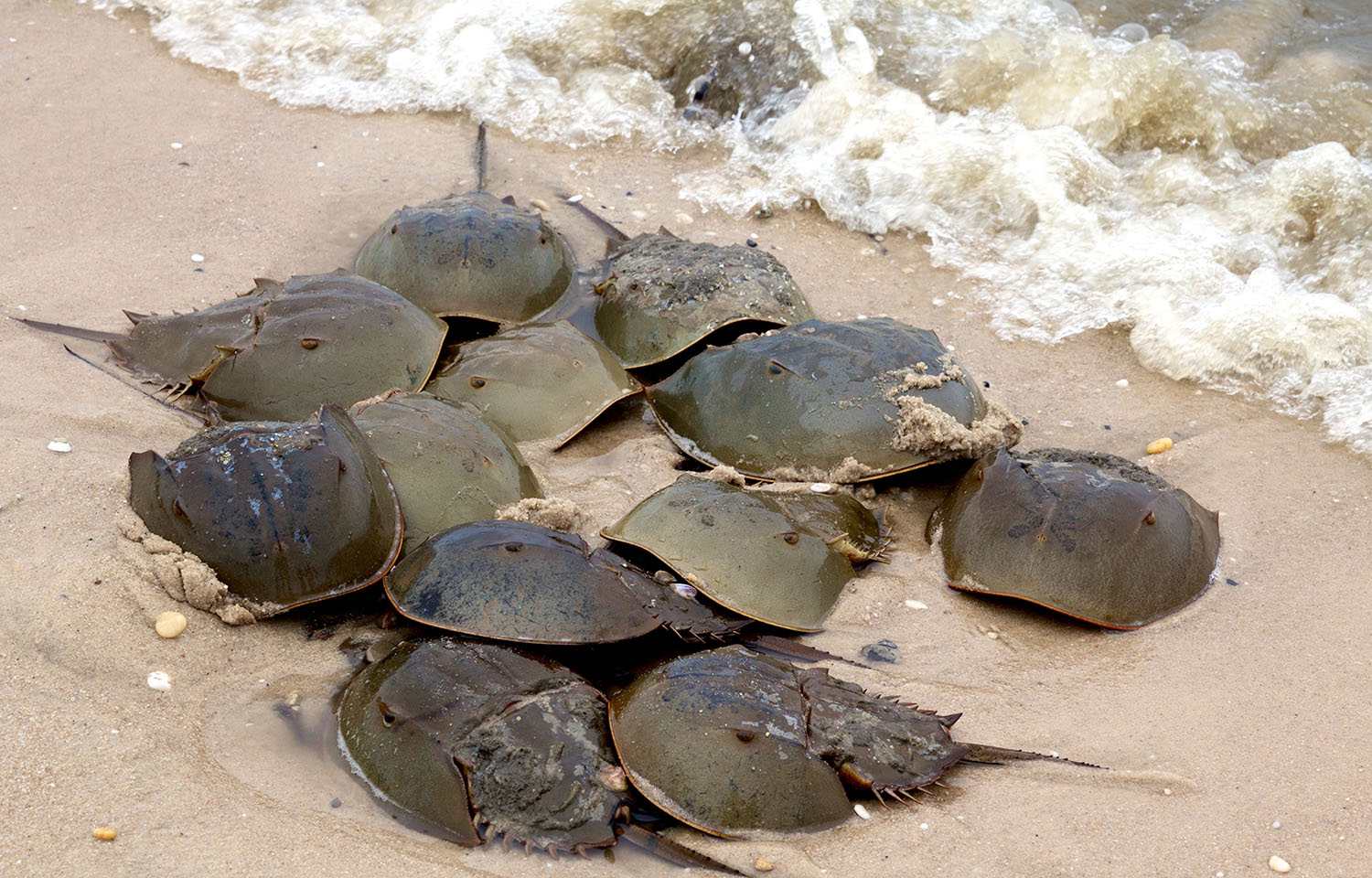
The U.S. Pharmacopeia (USP) has developed new standards that accept the use of synthetic replacements for horseshoe crab blood, and environmental groups are celebrating the decision as a win for conservation.
The blue-colored blood of horseshoe crabs has been harvested for biomedical purposes ever since scientists discovered, in the 1960s, their blood would clot when exposed to various bacterial toxins. The unique properties of the blood made it invaluable for biomedical testing, and it has been used in thousands of different medical applications.
Its use in the medical industry, and the difficulty of harvesting it, has inflated demand for the blood, which can be worth as much as USD 60,000 (EUR 55,500) per gallon – creating a lucrative industry for harvesting and bleeding the crabs.
The high demand for horseshoe crab blood has caused disputes over access to harvesting the species, with environmental groups fighting and, in some cases, launching lawsuits seeking increased protections for horseshoe crabs during times when they spawn. Groups have been critical of a relative lack of consistent regulations, which sometimes allow companies to keep crabs in holding pens with little oversight.
The push for increased conservation measures gained an indirect win from the USP’s Microbiology Expert Committee, with its endorsement of new standards for bacterial reagents that now permit the use of non-animal-derived reagents for endotoxin testing. The USP has been expressly recognized by the U.S. Federal Food, Drug, and Cosmetic Act for its quality standards for medicines, and its standards are binding for dietary supplement manufacturers.
“Endotoxin testing is a critical step in ensuring the quality and safety of many sterile pharmaceutical products,” USP said. The latest inclusion of new rules in Chapter 86 of the USP National Formulary will be published for early adoption in November 2024 and will become official in May 2025.
Inclusion in the chapter will set standards for the biomedical industry to use synthetic horseshoe crab blood alternatives – which are typically cheaper than crab blood – and sets the alternatives on similar regulatory footing in terms of biomedical standards. It also brings the U.S. industry in line with the European Pharmacopoeia, which approved the use of synthetic alternatives to horseshoe crab in July 2020.
“We are delighted that USP has provided guidance that will help place recombinant testing on equal footing with LAL,” Horseshoe Crab Recovery Coalition (HCRC) Co-Founder Larry Niles said. “Recombinant testing provides a reliable, sustainable alternative that is critical to horseshoe crab conservation and a healthy ecosystem throughout the Atlantic coast.”
U.S. Representative Frank Pallone (D-New Jersey) also supported the USP’s new guidelines, and said he’s been advocating for protections for horseshoe crabs.
“For years, I’ve been leading the charge in Congress to track horseshoe crabs, study coastal ecosystems, and modernize our biomedical testing guidelines. Horseshoe crabs predate the dinosaurs and are an iconic Atlantic species,” he said in a release. “Increasing global demand for vaccines and, therefore, horseshoe crab blood is straining their populations and threatening biodiversity. Synthetic alternatives offer a viable solution to get these ancient creatures out of the biomedical supply chain and keep them in their natural habitats.”
Environmental groups have sued to restrict harvesting of the crabs and engaged in a lawsuit against the federal government over harvesting the species in the Cape Romain National Wildlife Refuge, which was established in 1932 as a migratory bird refuge.
Central to the dispute over harvesting the crabs is a species of shore bird: the red knot. The small bird has been listed by the U.S. Fish and Wildlife Service as a threatened species, and one of the bird’s primary food source during its migration period is horseshoe crab eggs. According to the Southern Environmental Law Center (SELC), the red knots arrive in South Carolina at roughly the same time harvesters were collecting the spawning crabs to collect their blood.
The state of South Carolina, the U.S. Fish and Wildlife Service, and environmental organizations involved with the legislation, including the SELC, ultimately settled the lawsuit in August 2023, reaching an agreement that limited horseshoe crab collection on 30 islands across South Carolina’s coast, continued the prohibition of harvesting in the wildlife refuge, and prohibited the placement of female horseshoe crabs in holding ponds so the crabs would be able to spawn in the wild.
Soon after the settlement, the state of South Carolina sued for access to the over 66,000 acres of coastal land which the U.S. Fish and Wildlife Service had limited access to harvesting. Since that time, the Defenders of Wildlife and SELC have filed motions to intervene and dismiss the lawsuit, which is still ongoing.
