






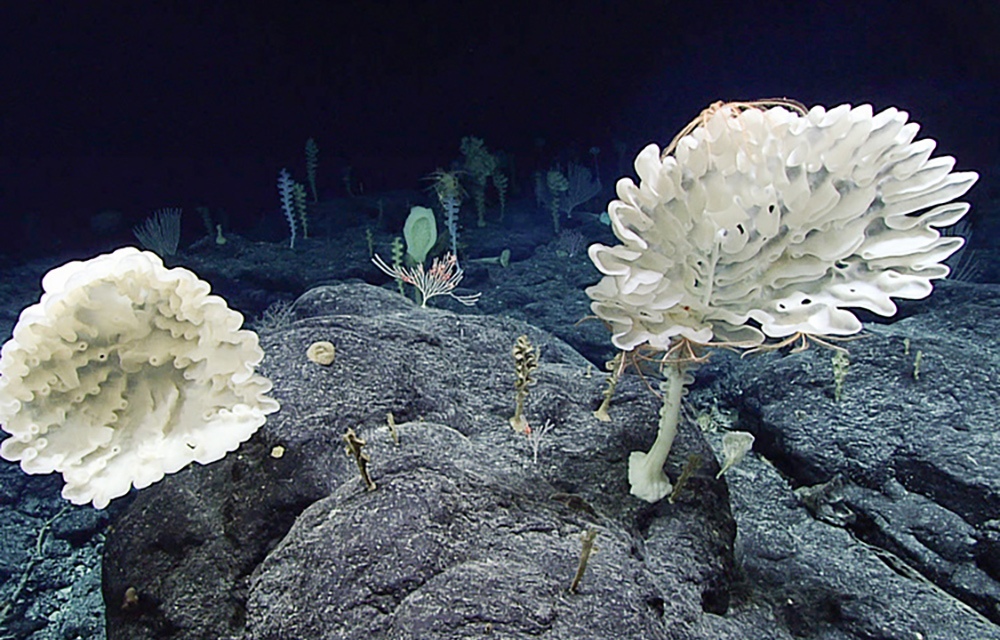
A trio of conservation groups have sued the administration of U.S. President Donald Trump, challenging the president’s recent decision to allow commercial fishing within the Pacific Islands Heritage Marine National Monument.
“President Trump’s proclamation threatens to destroy one of the world’s last healthy and wild ocean ecosystems. Commercial fishing would remove large numbers of fish, sharks, turtles, and other marine life as both intended catch and unintended bycatch. This would completely disrupt the underwater ecosystem and wreak havoc on the food chain. Many of these creatures and areas are culturally important to the people of Oceania, for traditional and modern navigation and as a valuable food source,” Conservation Council for Hawai‘i Executive Director Jonee Peters said in a statement.
Initially established as the Pacific Remote Islands Marine National Monument (PRIMNM) by then-U.S. President George W. Bush, the monument was greatly expanded to more than 400,000 square miles by then-U.S. President Barack Obama. Trump considered shrinking the boundaries of the monument during his first term, but no action was taken before Trump left office.
During his term in office, then-U.S. President Joe Biden attempted to expand the monument boundaries even farther – covering an area of 770,000 square miles – and designating it a national marine sanctuary.
“The Pacific Remote Islands ecosystems face persistent threats from hazards, such as marine debris, invasive species and climate change,” then-NOAA Administrator Rick Spinrad said in 2023. “Designating this incredibly important area as a national marine sanctuary would complement and strengthen existing efforts to preserve the region’s natural, cultural, and historic values.”
However, the Biden administration was unable to complete the national marine sanctuary process before the end of his term. In the final month of his presidency, Biden renamed PRIMNM as the Pacific Islands Heritage Marine National Monument.
Now in his second term, Trump has moved to roll back Biden-era environmental efforts and present himself as a supporter of the domestic seafood sector.
In April, U.S. President Donald Trump issued a proclamation, “Unleashing American Commercial Fishing in the Pacific,” reopening the monument to commercial fishing. The proclamation allows fishing from 50 nautical miles off the shore, although it remains prohibited within 50 miles around Wake Island, Johnston Atoll, and Jarvis Island.
“I find that appropriately managed commercial fishing would not put the objects of scientific and historic interest that the PRIMNM protects at risk,” Trump said in the proclamation. “With respect to fish in particular, fisheries in the region are effectively managed by the National Marine Fisheries Service and the Western Pacific Regional Fishery Management Council. Management of the PRIMNM is doing little to guard fish populations against overfishing as tunas and other pelagic species found within the boundaries of the PRIMNM are migratory in nature and do not permanently reside within the PRIMNM.”
Trump’s proclamation reflects many of the concerns raised by commercial fishing stakeholders, who have long claimed that sanctuary protections are less effective in managing fisheries conservation than science-based management.
“As a result of the prohibitions on commercial fishing, American fishing fleets have lost access to nearly half of the United States’ Exclusive Economic Zone in the Pacific Islands,” Trump said in his proclamation. “This has driven American fishermen to fish further offshore in international waters to compete against poorly regulated and highly subsidized foreign fleets. This disadvantages honest United States commercial fishermen and is detrimental for United States territories like American Samoa, whose private sector economy is over 80 percent dependent on the fishing industry.”
Now, conservation groups are suing the administration to reenact the ban on commercial fishing within the monument. The suit was filed by environmental law organization EarthJustice on behalf of Kāpaʻa, the Conservation Council for Hawai‘i, and the Center for Biological Diversity.
“The islands within the monument are part of Moananuiākea, a term used to describe the Pacific Ocean and its connection to Hawaiian culture, traditions, and values. The practice of commercial fishing and the unavoidable and significant waste of marine resources caused by bycatch is an affront to Native Hawaiian practices and beliefs. President Trump’s proclamation threatens the ability of future generations to survive and thrive,” Kāpaʻa founding member Solomon Pili Kaho’ohalahala said in a statement.
Together, the groups claim Trump’s proclamation – and the subsequent government efforts to carry it out – violate the law. According to the lawsuit, while the Antiquities Act of 1906 gives presidents the authority to designate national monuments, it does not give them authority to strip protections from already established monuments. Additionally, the lawsuit claims that NOAA Fisheries did not go through the proper regulatory process to greenlight fishing in the area.
“We will not stand by as the Trump administration unleashes highly destructive commercial fishing on some of the planet’s most pristine, biodiverse marine environments,” David Henkin, deputy managing attorney in Earthjustice’s Mid-Pacific office, said in a statement. “Piling lawlessness on top of lawlessness, the National Marine Fisheries Service chose to carry out President Trump’s illegal proclamation by issuing its own illegal directive, with no public input. We are counting on the courts to put a stop to the Trump administration’s disregard for the rule of law and to preserve the monument’s precious and vulnerable resources for future generations.”
The lawsuit was filed in the U.S. District Court of Hawai‘i.
