





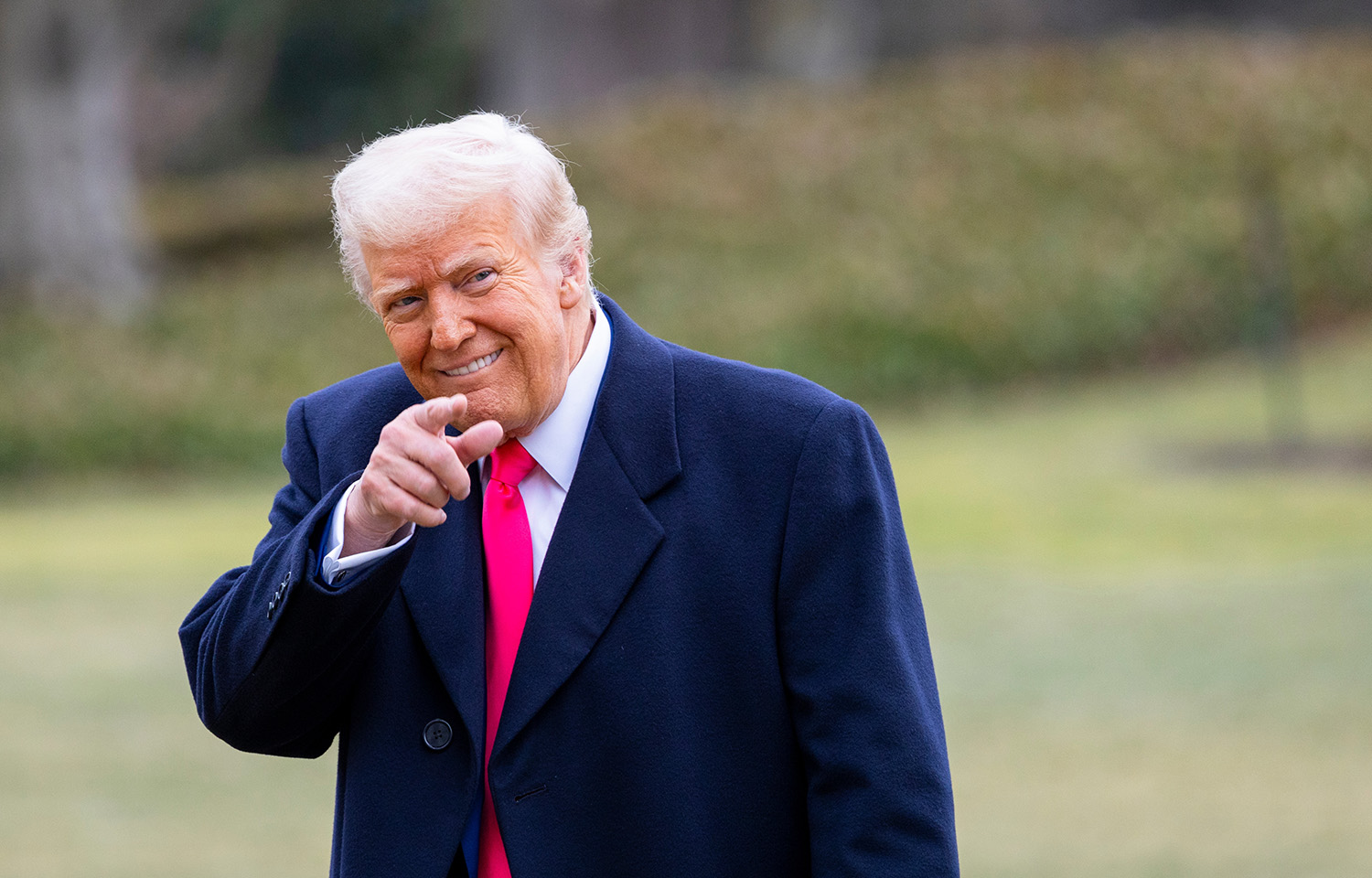
U.S. President Donald Trump signed an executive order and also issued a proclamation on 17 April intended to boost the domestic seafood industry.
One order, “Restoring American Seafood Competitiveness,” contains a set of directives for Secretary of Commerce Howard Lutnick and the National Marine Fisheries Service (NMFS) – along with Secretary of Health and Human Services Robert F. Kennedy Jr. – to identify ways to boost commercial fishing, aquaculture, and fish processing by refining regulations.
“Within 30 days of the date of this order, the Secretary of Commerce shall identify the most heavily overregulated fisheries requiring action and take appropriate action to reduce the regulatory burden on them, in cooperation with the Regional Fishery Management Councils, interagency partners, and through public-private partnerships, as appropriate,” the order states.
That process will include having regional councils identify ways to reduce burdens on domestic fishing, solicit public comment on ideas for improving fisheries management and science within the requirements of the Magnuson-Stevens Act (MSA), push NMFS to incorporate less expensive technology into fisheries assessments, and assess seafood competitiveness in trade.
Another key part of the executive order will see NOAA revise or rescind recent expansions of the Seafood Import Monitoring Program (SIMP). NOAA first launched SIMP in 2016 under the administration of U.S. President Barack Obama and recently unveiled an action plan to expand the program in November 2024.
The U.S. seafood industry has long criticized SIMP, and the National Fisheries Institute has said the program doesn’t accomplish the goals it set out to reach. NFI President and CEO Lisa Wallenda Picard said the organization commends Trump’s new executive order for targeting it and other overregulation in the industry.
“The [executive order] outlines key actions to benefit every link in the supply chain – from hardworking fishermen to parents who serve their family this nutritious and sustainable protein at home,” she wrote. “Importantly, the Order calls for reducing unnecessary regulatory burdens on fishermen and seafood producers while also promoting the many benefits of eating seafood as part of a healthy, balanced diet.”
NFI Communications Manager Kayla Bennett told SeafoodSource SIMP is a perfect example of overregulation of the seafood industry that could be targeted by the order.
Advocates for commercial fishing, along with some members of U.S. Congress who have vocally supported the industry, also immediately welcomed the order.
U.S. Senator Dan Sullivan (R-Alaska), who is the chair of the Senate Commerce Subcommittee on Coast Guard, Maritime, and Fisheries, praised the order. Sullivan has been a vocal proponent of combating the importation of seafood sourced via illegal, unreported, and unregulated (IUU) fishing activity. He, along with fellow Alaskan Senator Lisa Murkowski, also recently introduced legislation to support Alaska’s seafood sector.
“Last month in my speech to the Alaska Legislature, I issued a clarion call about the need to go on offense for our fishermen,” Sullivan said in a release. “I have been working relentlessly with the Trump administration, including with the Commerce and Agriculture departments and the U.S. Trade Representative, to get relief for our fisherman. They listened.”
Sullivan called the new executive order a “shot in the arm” for the industry.
U.S. Representative Jared Golden (D-Maine) also praised the executive order, saying it covered points he wrote to the administration about.
“Washington has failed our coastal communities by leaving them out of meaningful conversations on offshore energy development, right whale regulations, and more,” Golden wrote in a post on his Facebook page. “I'm committed to working with the President to develop a system that finally gives the fishing industry an equal seat at the table.”
In a letter Golden wrote to Lutnick, he called for reforms to fisheries management practices he said are restricting fishing fleets’ ability to make ends meet.
“Last year, the New England groundfish industry significantly underperformed. Regulators informed the industry that it could catch nearly USD 400 million [EUR 351 million] worth of product, yet it only landed a catch valued at only USD 35 million [EUR 30 million],” Golden wrote. “Consequently, many coastal communities are losing out on billions of dollars in economic activity that never crossed the docks into our local economies and millions of pounds of healthy, sustainable seafood that never reached American dinner tables.”
The New England Fishermen’s Stewardship Association also welcomed the new executive order, saying it breaks from “decades of overregulation.”
“Today’s order refocuses fisheries management where it belongs – the success and prosperity of American fishermen,” NEFSA CEO Jerry Leeman said.
Not every organization was in favor of the new executive order. Ocean Conservancy said it risks driving fish stocks into decline, ultimately harming the environment and fishing industry.
“Between firing experts at NOAA, delaying fishing seasons, and disrupting ocean science and data collection, the Trump administration is causing unprecedented chaos,” Ocean Conservancy Senior Director of the Fish Conservation Program Meredith Moore said. “Our fisheries need more investment and support in order to tackle the issues of seafood trade and markets, modernizing our data systems and responding to real-time ocean conditions. A weakened and understaffed NOAA will not be able to deliver on these promises.”
Alongside the new executive order, Trump also issued a new proclamation, “Unleashing American Commercial Fishing in the Pacific,” which would open up the Pacific Remote Islands Marine National Monument (PRIMNM) – a marine protected area (MPA) covering over 400,000 square miles – to commercial fishing.
Fishermen, U.S. representatives, and government officials in the Western Pacific have pushed back against the monument, saying closing the region's fishing grounds has had heavy impacts on the industry. American Samoa was hit particularly hard, as 80 percent of its private sector jobs and exports are tied to fishing and canning.
“American Samoa is repeatedly left out of the conversation of what is best for our communities,” Lemanu Mauga, who was governor of American Samoa from 2021 to 2025, said.
The proclamation says fisheries in the region are effectively managed by the Western Pacific Fishery Management Council but the monuments have threatened livelihoods for fishermen in the region.
“As a result of the prohibitions on commercial fishing, American fishing fleets have lost access to nearly half of the United States’ exclusive economic zone in the Pacific Islands,” the proclamation said. “This has driven American fishermen to fish farther offshore in international waters to compete against poorly regulated and highly subsidized foreign fleets.”
The new proclamation opens up the monument area and said the Secretary of Commerce will not prohibit fishing within its boundaries. It also directs action under the MSA to regulate fisheries.
