






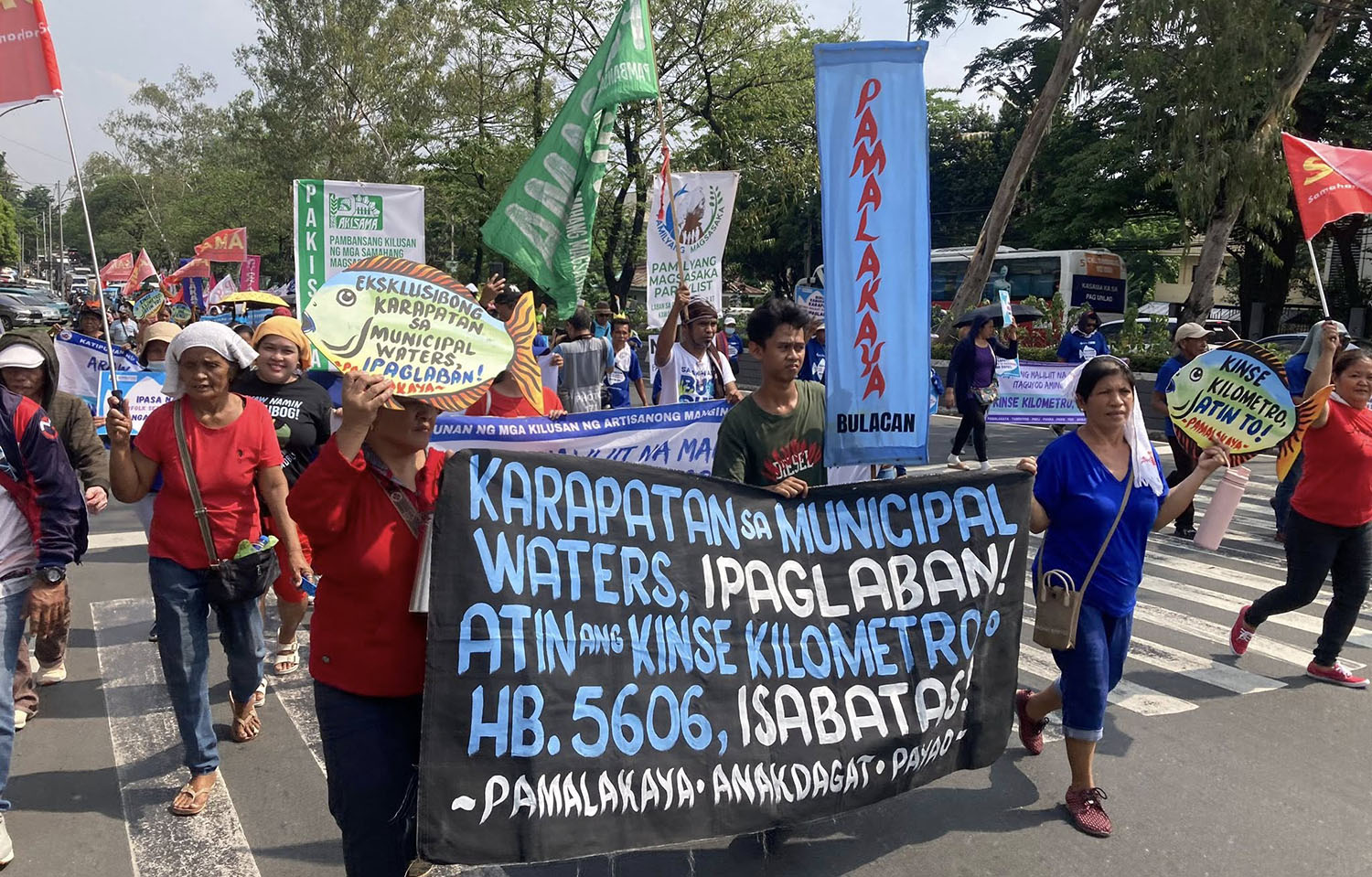
Through climate and environmental advocacy groups, small-scale fishermen in the Philippines have raised concerns over severe threats to their livelihoods, including sharp drops in catches, an unprecedented surge of commercial vessels plundering local waters, and crippling increases in fuel prices.
According to data from the Philippine Statistics Authority (PSA) cited by the Philippine Movement for Climate Justice (PMCJ), national fisheries output this year has contracted 15 percent compared to last year’s levels, a decline primarily triggered by the El Niño weather phenomenon, Philstar reported.
“This would reduce the oxygen available to fish to survive in the seas, causing a drastic decline in production in fisheries and aquaculture,” PMCJ National Coordinator Ian Rivera said in a statement.
Citing data from marine conservation organization Oceana, PMCJ said the country has lost 591,136 metric tons (MT) of fish since 2010, a trend that is already manifesting as "generational poverty" across vulnerable coastal communities.
Compounding the decline of fish stocks for many Philippine fishers has been the rapid influx of large-scale commercial vessels into municipal water zones traditionally reserved for small-scale fishers.
Under the Philippine Fisheries Code, municipal waters extending 15 kilometers from the coastline are legally designated for small craft. However, a 2024 Supreme Court ruling struck down these protections, granting large commercial operations legal entry into these shallow, biodiverse zones.
Data from maritime monitoring group Karagatan Patrol showed that commercial fishing vessel detections within municipal waters peaked in March of this year, the highest level recorded over a five-year period.
To bring attention to the issue, fishermen organizations, led by Pambansang Lakas ng Kilusang Mamamalakaya ng Pilipinas (PAMALAKAYA), staged a protest at the Philippine Department of Agriculture (DA) on 28 May.
"[The court ruling] severely affected the livelihood of small-scale fisherfolk because the big vessels get all the fish and other resources in the waters," PAMALAKAYA National Chair Fernando Hicap said.
Hicap criticized the government, specifically the Department of Agriculture (DA) and the Bureau of Fisheries and Aquatic Resources (BFAR), for failing to take clear steps to address the crisis.
“The DA and BFAR take no concrete action to protect fishermen's livelihoods from big businesses. It seems that such departments have already neglected the traditional fishing of small-scale fishermen,” Hicap said.
Additionally, fishermen have had to deal with a spike in operating costs, with local oil prices rising sharply since the onset of war in Iran. PMCJ Senior Campaign Officer Laica Rayel said that the price for 10 liters of fuel has skyrocketed to PHP 1,200 (USD 19.40, EUR 16.70), up from between PHP 400 and PHP 550 (USD 6.50 and 8.90, EUR 5.60 and 7.60) in February 2026.
"Because of this, most [fishermen] would rather choose not to fish instead and look for a new source of income," Rayel said.
While the government distributed a one-time PHP 3,000 (USD 48.60, EUR 41.70) fuel subsidy to the sector, PMCJ said that fishers find the amount deeply insufficient to recover losses.
