



Following U.S. President Donald Trump’s decision to allow commercial fishing in parts of the Pacific Islands Heritage Marine National Monument, the Western Pacific Regional Fishery Management Council (WPRFMC) has asked the president to do the same for the Papahānaumokuākea National Marine Sanctuary.
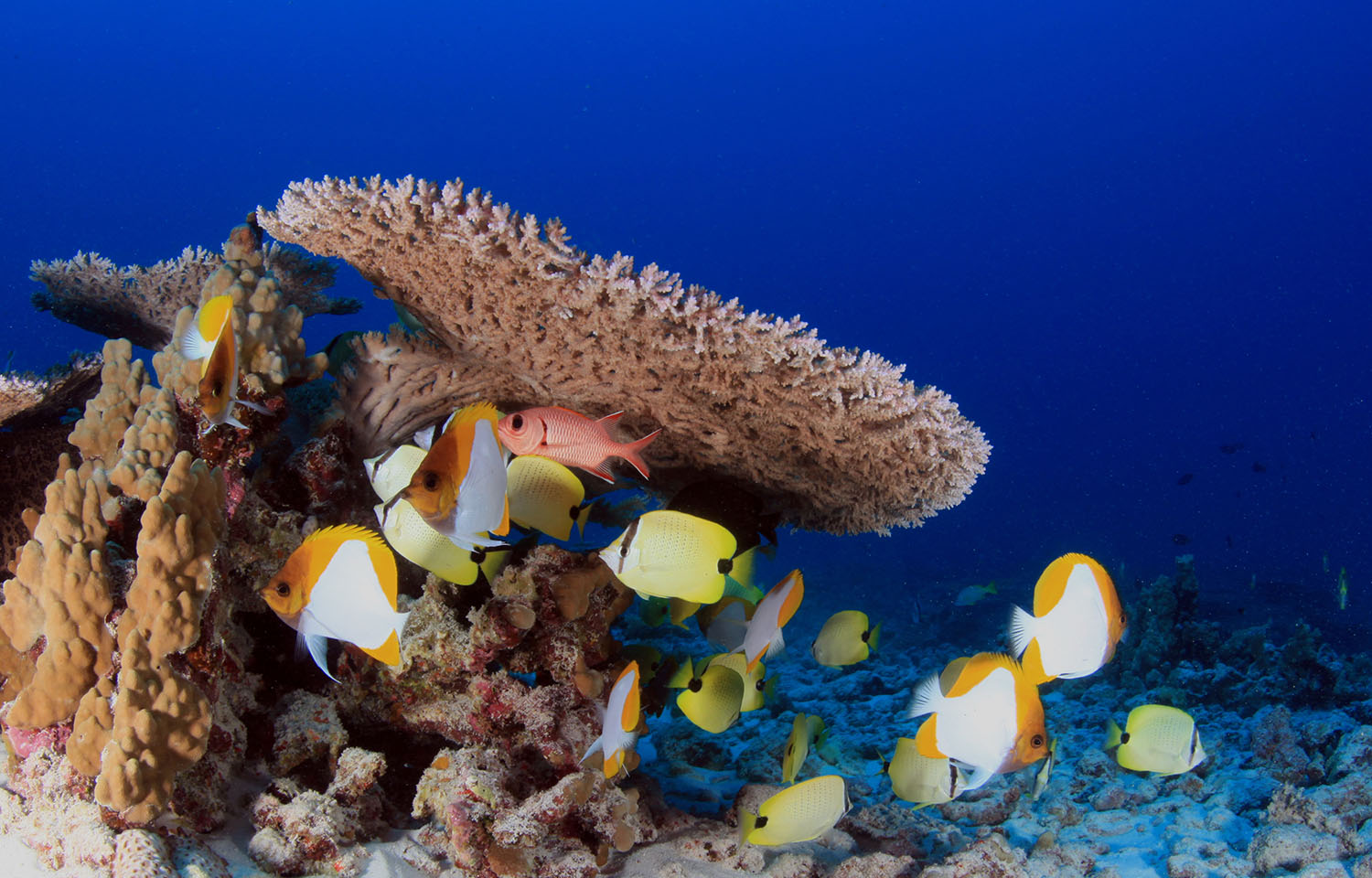
Comprising several islands and atolls, the Northwestern Hawaiian Islands Marine National Monument was first established in 2006, and commercial fishing was banned within the monument in 2010. The monument was later expanded by former U.S. President Barack Obama to 582,578 square miles in size, making it the nation’s largest marine protected area.
In his final days in office, U.S. President Joe Biden designated the marine portions of the monument as Papahānaumokuākea, the nation’s 18th marine sanctuary.
“National marine sanctuary designation will bring a stronger framework for marine conservation and protection to the waters of Papahānaumokuākea,” then-NOAA Administrator Rick Spinrad said at the time. “The sanctuary will also facilitate scientific research, resource monitoring, and coordinated efforts to ensure the long-term health of this natural, cultural, and historically significant area.”
The WPRFMC has long opposed the prohibition on commercial fishing within Papahānaumokuākea, and Trump’s recent moves to allow fishing in other protected areas has given the issue new life. In April, the president issued a proclamation titled “Restoring American Seafood Competitiveness” and issued an executive order allowing commercial fishing from 50 to 200 nautical miles off the shore within the Pacific Islands Heritage Marine National Monument, one of the other largest marine protected areas in the country.
“As a result of the prohibitions on commercial fishing, American fishing fleets have lost access to nearly half of the United States’ exclusive economic zone in the Pacific Islands,” the proclamation said. “This has driven American fishermen to fish farther offshore in international waters to compete against poorly regulated and highly subsidized foreign fleets.”
While conservation groups have sued the federal government to restore the ban on commercial fishing in the Pacific Islands Heritage Marine National Monument, WPRFMC members have seized on Trump’s declaration to make a renewed push for commercial fishing in Papahānaumokuākea.
“This executive order gives us a real opportunity to reform outdated policies and support our fisheries more effectively,” Council Executive Director Kitty Simonds said in a release.
In June, the council approved a measure urging Trump to lift the ban on commercial fishing in Papahānaumokuākea, claiming that commercial fisheries within the monument were sustainably managed before the ban was implemented.
Conservation groups were quick to push back, with the Office of Hawaiian Affairs (OHA) and the Native Hawaiian Cultural Working Group (NHCWG) stating that they recognize “the sacredness of the region and ensuring the continued vitality of marine species and cultural practices.”
“The Office of Hawaiian Affairs is steadfast in its commitment to Papahānaumokuākea,” OHA Board Chair Kaialiʻi Kahele said in a statement. “This is a pu‘uhonua that allows our people to revitalize practices like navigation that depend on healthy ecosystems and helps fish populations recover which benefits all Hawai‘i nei. Our marine monuments are fulfilling their purpose – there is no need to alter what is already working.”
The two groups disputed WPRFMC’s characterization that commercial fisheries were well managed prior to the ban.
“Native Hawaiian relationships with the world around us are familial and based on reciprocity,” NHCWG member Pelika Andrade said in a statement. “Fishing outside of the ahupuaʻa and the localized areas we call home is not Hawaiian. Commercial extraction and locust-like behavior creating unbalance in the world is not Hawaiian. These protected/no-take areas are a contemporary Native Hawaiian solution to restoring balance from commercial extraction. The protections of Papahānaumokuākea are only necessary because of how industries, like commercial fishing, have depleted our oceans. Our ultimate goal, as native Hawaiians, is ʻāina momona, and what the council is proposing does not align with that.”
In a separate release, Earthjustice – one of the groups suing the Trump administration over its decision to allow commercial fishing within the Pacific Islands Heritage Marine National Monument – criticized the council’s vote.
“Opening Papahānaumokuākea to commercial fishing would be disastrous for the environment. As Hawaiians have long known, putting a kapu on fishing in key areas promotes greater overall ocean health and biodiversity,” Earthjustice attorney David Henkin said in a statement. “Since the ban on commercial fishing in Papahānaumokuākea was expanded in 2016, the abundance of tuna in the waters adjacent to the monument has increased dramatically, benefiting commercial fishers. Wise, science-based management for the benefit of current and future generations requires keeping commercial fishing out of Papahānaumokuākea.”
A later analysis by the University of Washington's Sustainable Fisheries Lab disputed how much Obama’s expansion of the monument impacted tuna species, calling the original study’s conclusions “outlandish.”
