






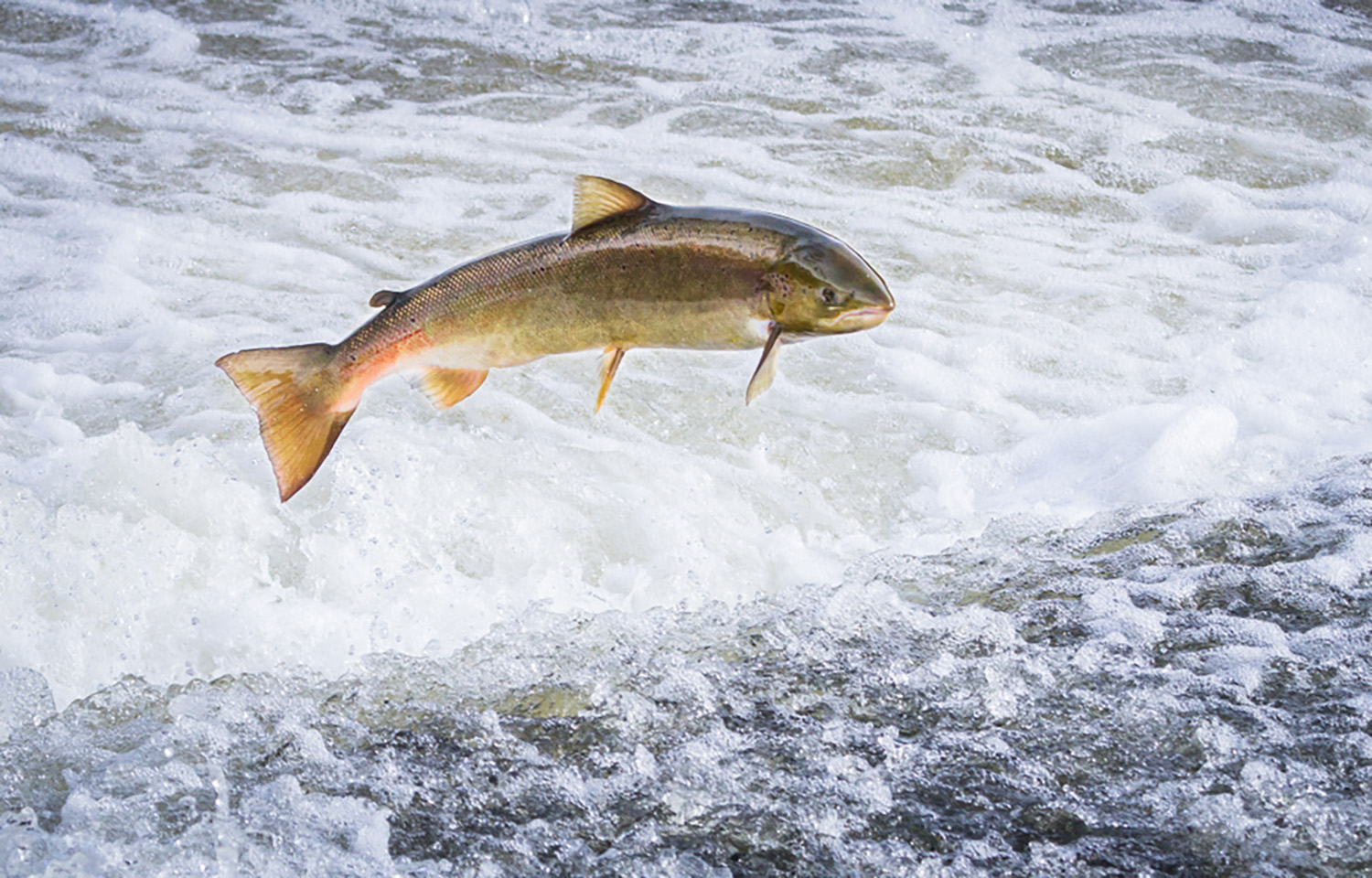
Salmon populations in England and Wales have dropped to their lowest level since the country’s authorities began keeping records of the fish in 1997, according to a new report from the country’s Environment Agency (EA) and the Center for Environment, Fisheries, and Aquaculture Science (Cefas).
EA’s and Cefas’s joint “Atlantic Salmon Stock Assessment for 2023” report found that 90 percent of principal rivers salmon use in England and Wales are classified as either “at risk” or “probably at risk,” meaning salmon numbers are below minimum levels required to support sustainable populations in most of the nation’s rivers.
The organizations said the decline of salmon stocks is an international trend, with similar findings reported in Ireland, Iceland, Sweden, and Canada; however, the U.K. has shown the most significant decline.
According to the report, habitat degradation is one of the key causes of the decline, with agricultural pollution, sedimentation, and chemical runoff impacting river water quality. Other causes include manmade barriers to migration and persistent challenges from climate change and warming seas.
In a press release, EA and Cefas said Atlantic salmon is an “indicator species,” reflecting the general health and cleanliness of marine and freshwater ecosystems. They said a shrinking salmon population is a warning sign that much more conservation work is needed on these environments overall.
EA and governmental department Natural England have called on English landowners and farmers and the energy, waste, and water sectors to do more to protect what they called an “iconic and pivotal species.”
EA Chair Alan Lovell said that 40 years ago, an estimated 1.4 million salmon returned to U.K. rivers each year; now, just one-third of that number return. The total is an all-time low and is evidence of a wider, growing biodiversity crisis, he said.
“EA is already taking action to tackle water pollution, address barriers to migration, and restore and improve habitats [but] we need all those who pollute to clean up their act,” he said.
The U.K. government is considering passage of a new measure, titled the Water (Special Measures) Bill, which Lovell said will introduce the greatest increase in pollution enforcement powers in a decade.
"We will continue to press on and improve our regulation of water quality, and that is why I am pleased by the benefits the new Special Measures Bill brings, which will improve EA’s ability to hold polluters to account," Lovell said.
EA also has other projects underway, including in 2023, when it completed the largest fish pass project in the U.K. – at Colwick in Central England – with a new route established for migrating wild fish to reach the Trent River that has shown to be effective.
Natural England Chair Tony Juniper said the latest reports clearly indicate more work needs to be done.
“As a critical indicator species, England’s dwindling salmon population is a warning of the deteriorating health and connectivity of our waterways and signals a threat to other wildlife species and local economies,” he said. “Working in partnership to restore rivers and seas will bring widespread environmental and ecological benefits, driving broader nature recovery.”
