




A first-of-its-kind case study on the living conditions on board the Papua New Guinea (PNG) tuna fleet has revealed how third-party certifications can help benefit workers.
The study was performed by the Fishing Industry Association of Papua New Guinea (FIA PNG), which collaborated with the Australian National Centre for Ocean Resources and Security (ANCORS) and the University of Wollongong to analyze data on non-conformities found during its crew welfare certification process.
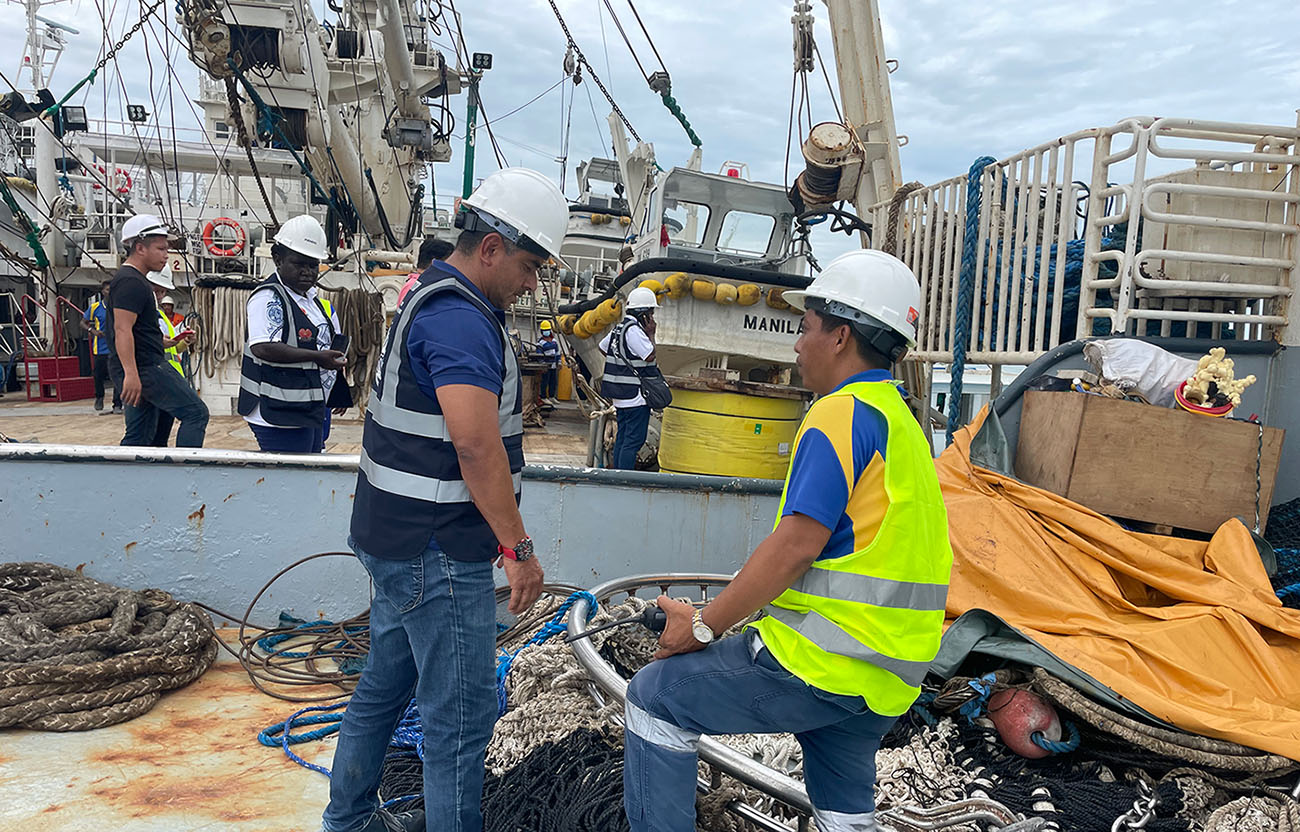
PNG’s tuna fishery achieved FISH Standard for Crew certification in 2023, after a lengthy auditing process starting in May 2022. FISH, which stands for Fairness, Integrity, Safety, and Health, is a third-party accreditation for labor practices on board wild-capture fishing vessels.
Through its certification process, FIA PNG identified non-conformities to the crew welfare standard, and those non-conformities were what FIA PNG invited an investigation of.
“This research aimed to provide insights into the third-party audit process for FISH standard certification of the FIA PNG tuna fishery, including the most commonly encountered compliance issues and the industry response to findings of non-compliance,” FIA PNG said in a release.
The paper investigated five main issues: Lack of policies and procedures, lack of communication between employer and crew, contract-related issues, different treatment of local crew, and concerns regarding health and safety.
Across the research, the white paper determined that, in the absence of formal governance requirements, third-party tools like FISH can help meet the goal of achieving social accountability in the fishing industry.
“We suggest that private certification can be a useful addition to the suite of tools that seek to achieve social accountability in the fishing industry,” the paper said.
FISH Standard CEO Mike Kraft told SeafoodSource papers like the one investigating FIA PNG are “especially valuable” to labor certification standards – especially as they are relatively new compared to similar labor tools that focus on land-based social issues.
“Papers and case studies like this help demonstrate that rigorous certification programs can drive improvement of conditions for fishers,” Kraft said. “When we see organizations like FIA PNG implementing changes and improvements based on vessel audits and crew interviews in order to meet the standard, it tells us we’ve set a high but reachable bar with a correspondingly strong process able to identify issues.”
Kraft said the organization is always monitoring whether it is achieving its objectives and impacting the sector in some way – and while it regularly reviews its assessment results reports like the one on FIA PNG’s fishery are valuable ways of getting feedback from on the water.
Kraft also said the paper reinforces the role the FISH Standard and third-party certification as a whole can play in addressing labor concerns.
“The paper points out something we at FISH regularly make a point of as well, which is that third party certification is just one of the tools available to address labor concerns on fishing vessels,” Kraft said. “While the paper highlights the significant work FIA PNG undertook and the tools they utilized leading up to third party certification, ultimately the FISH Standard process identified non-conformances in their fleets which needed to be addressed and corrected to meet the standard. The actions and processes required to correct the non-conformances directly improves the welfare and conditions of fishers.”
Kraft said FIA PNG’s effort to address labor concerns should be recognized, as should its effort to be as transparent about its shortcomings as possible by revealing them publicly in a white paper.
“With concerns among seafood supply chain actors and external stakeholders around the conditions of fishers remaining high, practical approaches to address these concerns are needed,” Kraft said. “Responsible harvesters want to show their customers that they are treating their crews fairly, while brands and retailers are looking for ways to mitigate risk of labor issues on fishing vessels in their supply chains. While there are no ‘silver bullets’ in this area, voluntary certification programs like FISH offer tangible measures that can play an important role in addressing fisher welfare.”
