



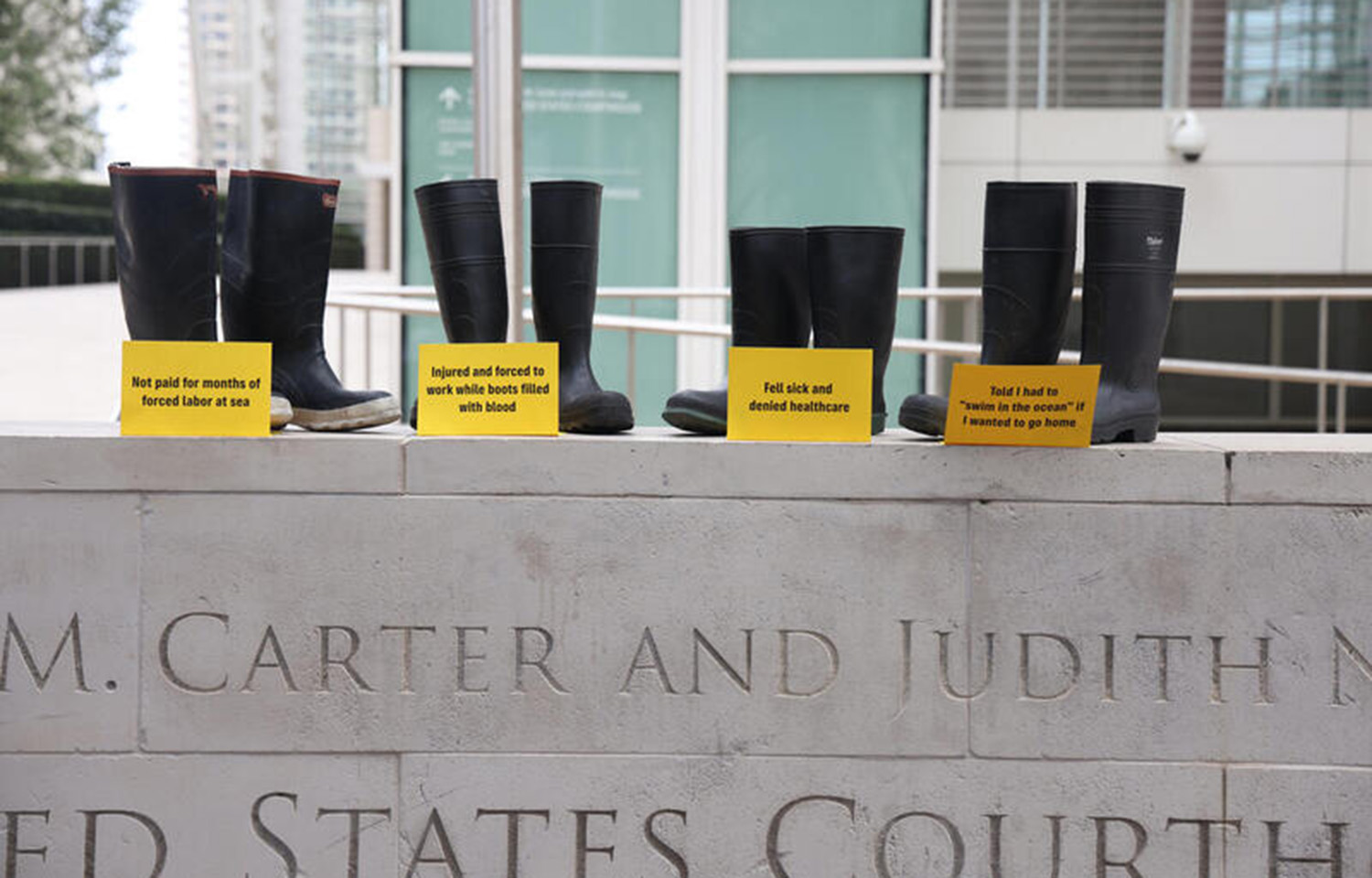
Tuna company Bumble Bee Foods will continue to face a lawsuit stating it is financially liable for forced labor that allegedly took place aboard some of the vessels that supply the company with tuna.
Bumble Bee won a partial victory in early June that denied plaintiffs in Akhmad et al. v. Bumble Bee Foods injunctive relief, meaning the company was not forced to grant several requests by the plaintiffs. In another court filing on 11 June, Bumble Bee was denied a separate motion for reconsideration, meaning Chief Judge Cynthia Bashant has allowed the fishers to continue to pursue the forced labor lawsuit.
"This important decision affirms that our clients – Indonesian men who were looking for good jobs to build a future and instead say they were trapped and isolated at sea – have every right to pursue their claims against Bumble Bee here in the United States,” Agnieszka Fryszman, co-counsel for the plaintiffs, said in a release. “We thank the Court for this thoughtful ruling and look forward to advancing our clients' pursuit of justice."
The plaintiffs are suing Bumble Bee under the Trafficking Victims Protection Reauthorization Act (TVPRA), which expanded on the Trafficking Victims Protection Act. The plaintiffs in the lawsuit argue the TVPRA expanded the liability of companies, meaning Bumble Bee is still responsible for damages even though the alleged labor abuses took place outside the U.S.
“Plaintiffs alleged that Bumble Bee Foods had sourced its albacore tuna, for resale to grocery stores in the United States, from fishing vessels that Bumble Bee Foods knew relied upon Plaintiffs’ forced labor,” Bashant’s decision states.
Bashant wrote the court had earlier found that the TVPRA claims could apply to extraterritorial conduct outside the U.S. and maintained that finding in her order denying Bumble Bee Foods’ motion to reconsider.
It also found that Bumble Bee Foods qualified for the “knowingly benefited” aspects of the TVPRA, largely because Greenpeace USA issued several reports on labor rights problems it sent directly to Bumble Bee executives.
Bashant further wrote Bumble Bee may not have had specific knowledge of forced labor issues on the vessel the fishers worked on but found it plausible that Bumble Bee should have had general knowledge of the forced labor issues and TVPRA violations.
Greenpeace USA celebrated the decision, calling it a win for worker rights.
“The allegations in this case are serious, and they are not going away. Bumble Bee must answer for its role in a supply chain where forced labor and horrific abuse are endemic,” Greenpeace USA Senior Human Rights Advisor Sari Heidenreich said.
Heidenreich said the lawsuit is an indication that the “tide is turning” and that companies need to improve their human rights due diligence.
“Bumble Bee and the rest of Big Seafood know how to address the risk of abuse in their supply chains: guarantee access to communication, limit time at sea, and strengthen transparency and oversight. The allegations in this case are a stark reminder of why those safeguards are necessary and what can happen when workers are isolated at sea without them,” Heidenreich said. “Worker protections are not optional, and companies can no longer treat them as an afterthought. A seafood industry free from forced labor is not only possible – it is the standard workers, communities, and consumers expect.”
