




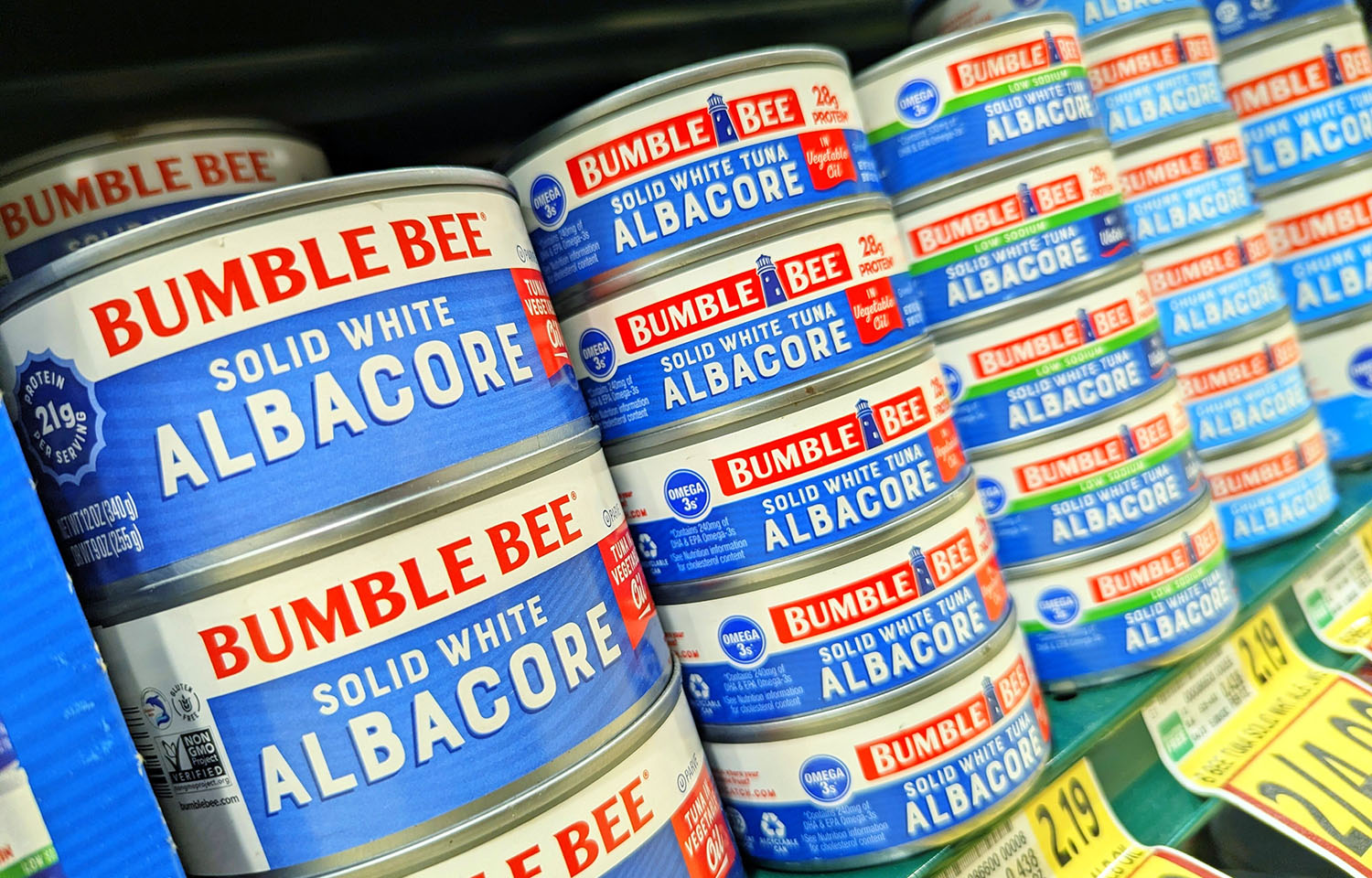
A U.S. federal judge has ruled that a group of Indonesian fishers can continue with their lawsuit against tuna giant Bumble Bee in their attempt to hold the company responsible for forced labor occurring on fishing vessels from which it sources tuna.
“I’m actually in tears. I am happy and overwhelmed,” Syafi’i, a plaintiff in the case, said in a release from NGO Greenpeace USA, which is providing legal support to the plaintiff fishers. “This gives me hope for justice for me and my fellow plaintiffs as we struggle for justice and change for the better. Our fight and sacrifice are not in vain in order to get justice for all of the fishers. I remain steadfast, strong, and enthusiastic.”
The four fishers sued the Bumble Bee in March under the Trafficking Victims Protection Reauthorization Act (TVPRA), alleging that they were the victims of forced labor and human trafficking while working on vessels that supply tuna to Bumble Bee. In their suit, the plaintiffs claim that Bumble Bee should have been aware of the labor violations occurring in the tuna fleet due to their special relationship with the owners and operators of those vessels – Rongcheng City and Rongcheng Ocean.
“This ruling once again affirms that U.S. companies have a responsibility to ensure the products they sell – including tuna that they market for you to pack for lunch – were not produced with the abhorrent crimes of forced labor and modern slavery,” Greenpeace USA Senior Human Rights Advisor Sari Heidenreich said in a release. “Allegations as horrific as those in the suit should never happen to these fishers or anyone else. Seafood companies cannot continue to put profits over all else; they cannot continue this rabid exploitation of workers, the oceans, and marine life.”
Bumble Bee previously stated it would not be commenting on the legislation and, in June, made a motion to dismiss the lawsuit, claiming the fishers lacked standing to sue the company and that their claims were extraterritorial.
However, U.S. District Court Judge Cynthia Bashant rejected those positions in her 12 November ruling, determining that the Indonesian fishers had standing to sue and their allegations met the requirements of the TVPRA. Bashant also denied Bumble Bee’s motion to dismiss the fishers’ negligence claims, finding that the company did indeed have a special relationship with the fishing vessels supplying its tuna.
“The Court concludes Defendant’s special relationship with Rongcheng vessels, the Rowland factors, and Defendant’s misfeasance establish that Defendant had a duty to protect Plaintiffs from becoming victims of forced labor on Rongcheng’s vessels through reasonable protective measures,” Bashant explained. “The Court, therefore, DENIES Defendant’s motion to dismiss Plaintiff’s negligence claims.”
Greenpeace claims the lawsuit is the first “of its kind against the seafood industry in the U.S.” and one of only a few TVPRA cases to not be dismissed.
“This is a historic moment and an incredible victory for the fishers and the ocean,” Heidenreich said. “By allowing this case to move ahead, the court has given these fishers’ voices the space they deserve. We celebrate that the fishers will be allowed their day in court, recognizing this is monumental not only for these four men, who are brave enough to stand up to a giant U.S. corporation, but for hundreds of thousands of fishers globally.”
Although Greenpeace and the plaintiffs celebrated the judge’s decision to let the lawsuit move forward, the court did rule against their request for injunctive relief. The plaintiffs had asked the court to force Bumble Bee to implement several policies to prevent labor violations, including ensuring workers are paid in full, have access to medical equipment aboard vessels and secure Wi-Fi, and regularly return to port with paid shore leave. In her ruling, Bashant pointed out that the TVPRA does not provide for injunctive relief and concluded that the fishers had not demonstrated that they would continue to be harmed by Bumble Bee’s policies in the future.
The tuna company has been accused of forced labor before and targeted by Greenpeace and other labor activists. In 2022, Bumble Bee and its parent company Fong Chun Formosa (FCF) were sued by nonprofit group Global Labor Justice-International Labor Rights Forum over allegedly dangerous labor practices. The case was settled in 2023.
