



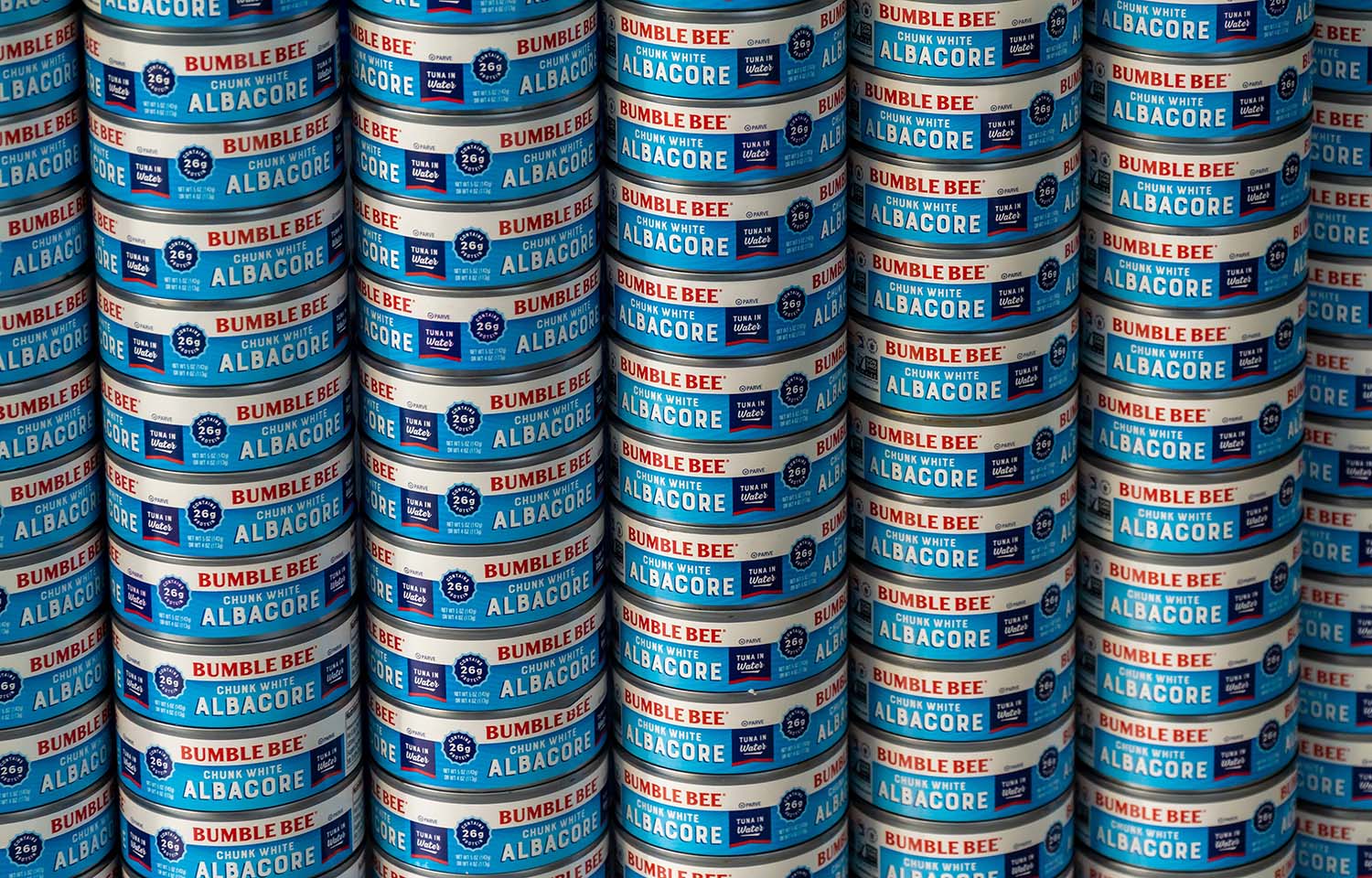
A group of four fishermen from Indonesia, co-counseled by attorneys for NGO Greenpeace USA, have sued Bumble Bee Foods, claiming they experienced forced labor and human trafficking while working on fishing vessels supplying the company.
The four fishers filed the suit in the U.S. District Court for the Southern District of California under the Trafficking Victims Protection Reauthorization Act (TVPRA), a law first passed in 2000 to combat forced labor and human trafficking. They allege they experienced both human trafficking and forced labor aboard tuna vessels that provided Bumble Bee Foods with tuna that was later sold in the U.S.
According to the complaint, the fishers allege they applied for jobs and were put to work on vessels that are part of a “trusted network” of fishing vessels that supply Bumble Bee with albacore tuna.
“These men were looking for good jobs so they could provide for their families and build a future. Instead, they allege, they were trapped – isolated at sea, beaten with metal hooks, not getting enough food, working around the clock – and facing financial penalties if they tried to leave,” Agnieszka Fryszman, a partner at law firm Cohen Milstein and the chair of its human rights practice, said in a release. “The complaint outlines how each of them asked to be released but were kept on board against their will – and in some cases didn’t take home a single penny for their labor.”
A spokesperson for Bumble Bee told SeafoodSource that the company became aware of the legal filing on 12 March and will not be commenting on any pending litigation.
According to a press release from Greenpeace USA, the suit is “believed to be the first of its kind against the seafood industry in the U.S.” It alleges Bumble Bee knew, or should have known, about the conditions and that it benefited from the poor labor conditions.
The suit also claims the fishers were subject to physical violence and abuse, including threats against members of the crews’ families.
One plaintiff in the lawsuit, an Indonesian citizen named Angga, said in the complaint that the fishers on board were fed so little they resorted to eating bait fish, and when he finally returned home, he learned his family had never received any of his pay for his months at sea.
The fishers also allege they did not receive any medical treatment when injured. One complainant named in the case, Akhmad, said at one time he was injured and then forced to continue working.
“I was ordered to keep working. I thought there was water filling my boot, but I realized it was my own blood. I could see the bone in my leg,” he said. “I was left to clean and bandage my leg myself, without sterile medical supplies, and I kept bleeding for two weeks. It still hurts and probably always will.”
The lawsuit requests the court order Bumble Bee to enforce a set of policies, including ensuring workers are paid in full, ensuring fishing vessels have the appropriate medical equipment on board, ensure vessels return to port every three months or less, allowing for 10 days of paid shore leave, ensuring vessels have accessible and secure Wi-Fi, and more.
Bumble Bee is owned by Fong Chun Formosa (FCF), and both companies have been accused of forced labor in lawsuits before.
In 2022, the company was targeted by a lawsuit by the nonprofit group Global Labor Justice-International Labor Rights Forum alleging both Bumble Bee and FCF had a history of engaging in dangerous labor practices. Bumble Bee said it adamantly disagreed with the allegations and said it works within its own supply chain and with others in the tuna industry through the Seafood Task Force to “make the responsible recruitment and treatment of all workers an ongoing top priority."
The company settled the lawsuit in March 2023 and agreed to remove the statements “fair and safe supply chain” and “fair and responsible working conditions” from its marketing material.
Greenpeace has also targeted Taiwan’s seafood sector in general repeatedly, calling for more transparency in its fisheries and authoring reports on alleged incidents involving Indonesian fishers in 2019 and in 2021.
The Taiwanese fishing industry has also been scrutinized by the U.S. government, and Taiwan was listed on the 2020 “List of Goods Produced by Child Labor or Forced Labor” after a campaign by 19 NGOs urged the U.S. Department of Labor to include the country due to discoveries of forced labor on fishing vessels.
That push was also thanks to a Greenpeace report which alleged forced labor onboard fishing vessels in Southeast Asia, including on vessels in Taiwan.
NGOs also pushed the U.S. government to further downgrade Taiwan in an annual Trafficking in Persons Report – but the country maintained its position in “Tier 1,” meaning it is of least concern.
The lawsuit also mentioned the Outlaw Ocean project and its work finding evidence of forced labor in the U.S. seafood supply chain. Based on the Outlaw Ocean’s “Bait-to-plate” resource, none of the vessels named in the fishers’ lawsuit were associated with the Outlaw Ocean report.
