



The International Coalition of Fisheries Associations (ICFA) is calling on member nations of the Convention on International Trade in Endangered Species (CITES) to carefully consider multiple new species restriction proposals during its 20th conference of parties (CoP20).
The latest meeting, running from 24 November through 5 December, will cover over 100 proposals to adjust its rules regarding the handling of threatened or endangered species. Among those proposals ICFA said it is concerned about and is urging CITES to reject includes one that would change the listing of tope shark and smooth-hound sharks. Another involves changing the listing of Japanese eel and American eel, and a third covers sea cucumbers.
“ICFA has serious concerns about the three proposals under consideration, each of which could have significant implications for sustainable fisheries management, legal trade, and international cooperation,” the association said in a release.
ICFA said one of its chief concerns is the use of the “look-alike” criterion in decision-making, which in some cases has CITES list species that have no conservation concerns due to their similarity to another species that does, essentially giving a restrictive listing a lower threshold to pass.
“These listings can produce unintended and harmful consequences, including increased illegal trade, market distortions, and the disruption of established and effective management cooperation,” ICFA said. “In many instances, such listings are premature or inappropriate.”
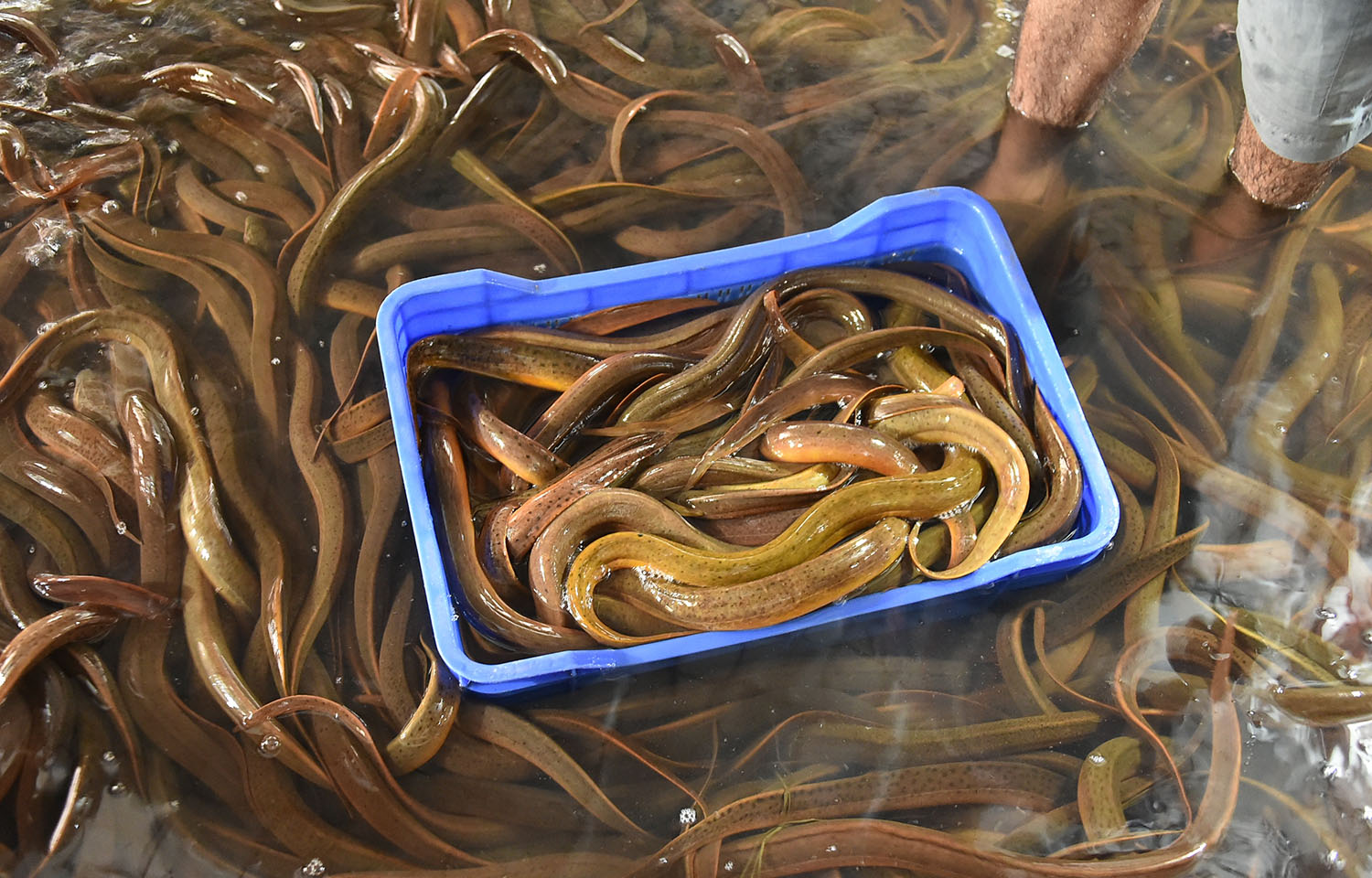
ICFA said one such case is the push to add 17 different eel species to Appendix II of CITES, a move which has been pushed for by conservation groups in a bid to try and control smuggling of the endangered European Eel (Anguilla anguilla). The species is already listed under Appendix II, and the E.U. has banned trade of the species with countries outside of the E.U. since 2010, but it has continued to decline and eel smuggling has continued.
Two key species would be listed in that push to list all eel species: Japanese eel (Aguilla japonica) and American eel (Anguilla rostrata). According to ICFA, both species are considered to have robust populations, making a listing restricting their trade harmful to the industries that rely on them.
The American eel is fished in the U.S. state of Maine and in Atlantic Canada. In 2024, Maine’s eel fishery was the state’s fifth most valuable fishery, and in 2023, it took second place in value terms by bringing in USD 19.5 million (EUR 16.8 million).
ICFA said the restrictions on the legal eel trade are relying on questionable assumptions about the potential future of the species in a way that could jeopardize the commercial viability of the fisheries as companies that tout sustainability shy away from purchasing the products.
“This is a one-sided move by the E.U. that shifts administrative burden of addressing illegal trade of European eel to other regions, disproportionately affecting the Asia-Pacific region, especially to small-scale fishers/aquaculture farmers,” ICFA said. “ICFA believes the most effective and sustainable path to eel conservation should be found not in a blanket listing to appendices but in international cooperation, knowledge-sharing, and improved management practices.”
ICFA said its reasoning against the sea cucumber listing is similar, in that it again uses the look-alike criterion and that a United Nations Food and Agriculture Organization (FAO) Expert Panel report concluded the proposal does not meet the scientific threshold for listing under Appendix II. ICFA specifically noted that Actinopyga species are highly productive and don’t meet Appendix II thresholds, per the expert panel.
“Listing of Actinopyga spp. in Appendix II could result in substantial issues for fishers and authorities in developing range states where capacity and resources are constrained for managing these extensive, dispersed, and mostly small-scale fisheries,” ICFA said. “Remote communities are often heavily reliant on sea cucumber resources, which offer one of their few opportunities for cash incomes.”
ICFA also said the proposal to add multiple smooth-hound shark species to Appendix II goes too far and “fails to reflect the biological and fisheries diversity” of the species in different regions.
“In the Northeast Atlantic, catches concern almost exclusively the starry smooth-hound (Mustelus asterias), a species abundant and sustainably exploited according to the 2025 ICES scientific advice,” ICFA said. “By contrast, the common smooth-hound (M. mustelus), which is the main focus of the proposal, is rarely encountered in European fisheries.”
The proposal to list sharks is supported by environmental organizations like the Wildlife Conservation Society, which said the move would bring most of the global fin trade and shark meat trade under CITES control – helping protect shark species including populations that have dropped in recent years.
“Recent science shows that we are quickly approaching a conservation tipping point for sharks and rays. We are running out of time to enact and enforce global measures that will prevent widespread extinctions,” WCS Vice President of International Policy Susan Lieberman said. “These proposed listings bring CITES in line with other global commitments and send a clear signal that the world intends to protect these amazing sharks and rays before it is too late. This is how we turn the tide.”
ICFA said it is pushing back against the listings because, in certain cases, FAO advice runs counter to the proposals, and it is also calling for CITES members to support a proposal by the U.K. that would refine the principles behind the look-alike species provisions. It said the current principles are “ambiguous and open to broad interpretation” and not supported by any guidance structure.
“The absence of equivalent guidance for look-alike selection potentially affects the rigor and transparency of listing decisions based on look-alike concerns,” ICFA said. “ICFA shares the concern that increasing use of look-alike listings is creating additional, unnecessary burden on parties with little to no conservation benefit to the species being resembled.”
ICFA Chair Ivan Lopez Van der Veen called on CITES to respect its earlier commitment to following scientific advice.
“The CITES Secretariat and FAO signed an MoU in 2006 in which CITES committed to respecting FAO’s scientific expertise on aquatic species. But, it is not living up to that commitment,” he said. “We have seen this time and time again. The parties need to reaffirm their support for the MoU.”
