



Ahead of the upcoming Conference of the Parties of the Convention on International Trade in Endangered Species of Wild Fauna and Flora (CITES) in Samakand, Uzbekistan, the Sustainable Eel Group (SEG) is urging countries to follow through on a proposal to make all species of eel listed on CITES Appendix II.
The upcoming meeting in Uzbekistan will be the 20th conference of parties held by CITES. The conference meets every two to three years, bringing together countries from around the world since 1976 to discuss international protections for a range of different species.
This year, the European Union, Honduras, and Panama are proposing a CITES Appendix II listing for all eel species globally – which designates a species that may or may not be threatened with extinction but requires strict trade regulation – in some cases due to association with a separate endangered species.
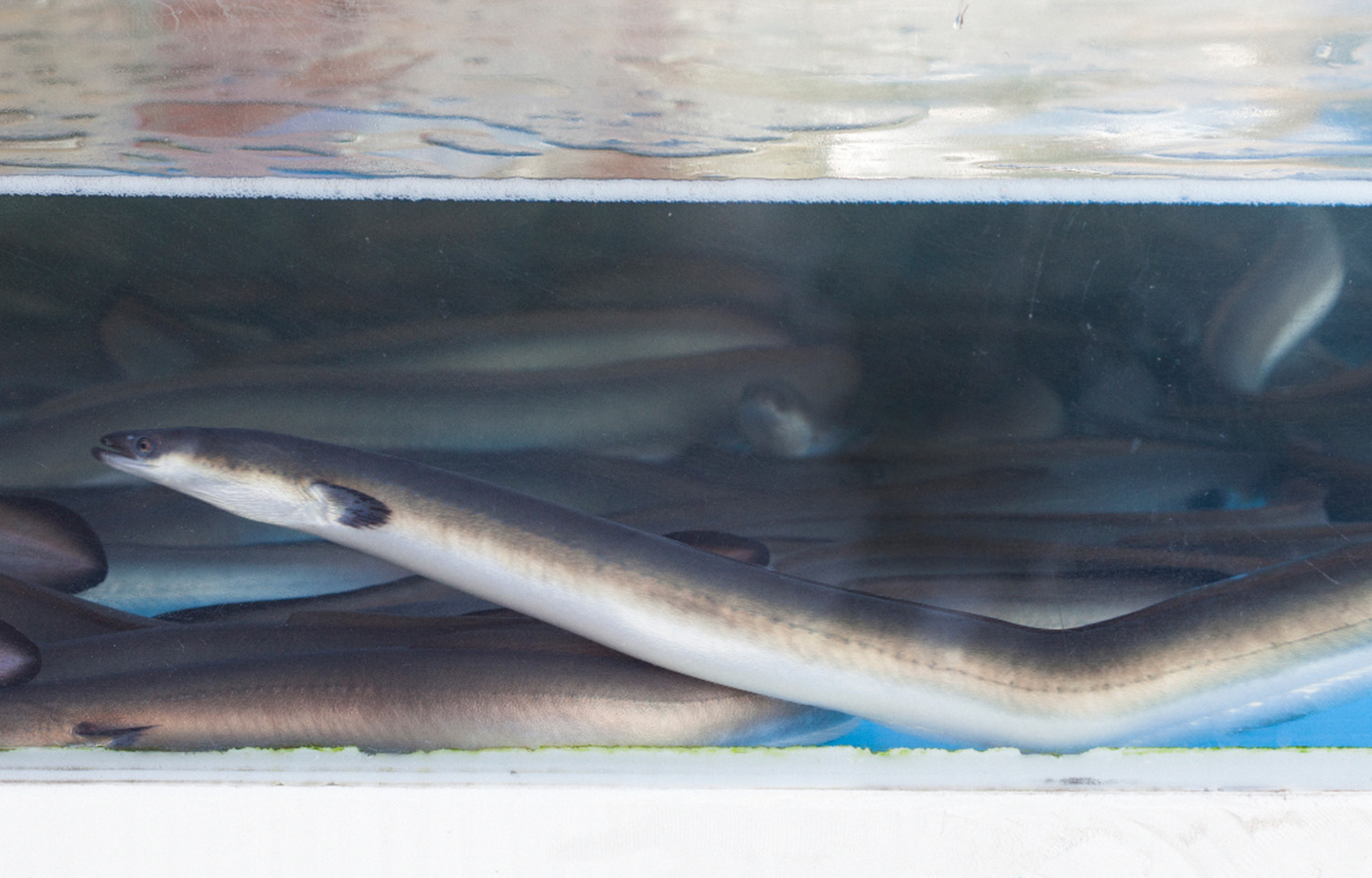
The European eel, Anguilla anguilla, is currently listed under Appendix II, and the European Union has banned trade of the species with countries outside of the E.U. since 2010 following its listing on CITES in 2009. The International Union for Conservation of Nature and Natural Resources (IUCN) has also listed the European eel as a critically endangered species since 2008, and according to the E.U. Fisheries Secretariat, the species has declined by over 90 percent since the 1980s.
Despite the continued efforts to list the European eel as endangered and restrict trade, eel smuggling has continued, according to Europol – the law enforcement agency of the European Union. Eels are a target of poachers and smugglers due to their potentially high value; baby eels, known as “elvers,” can be worth EUR 1.00 (USD 1.16) each, with just 1 kilogram of the tiny eels worth thousands.
Law enforcement has engaged in widespread anti-trafficking operations and have managed to arrest hundreds of people connected to smuggling.
According to SEG, the new proposal to list all eels on CITES Appendix II will help law enforcement more efficiently tackle the challenge of preventing the illegal trade of eels.
“Attention to structural challenges in the international eel trade ensures that pressures are not merely shifted from one species or region to another and that compliance remains achievable without imposing disruptive operational changes,” SEG said.
According to the group, smugglers and criminal networks continue to exploit gaps in existing protections for eels to continue the illegal trade. Each species, SEG explained, is “almost identical in appearance” when they are in the elver stage of the life cycle, making it easy for criminals to deliberately substitute one species name for another.
“This lack of traceability undermines legal fisheries, distorts market prices, and compromises the sustainability of wild stocks,” SEG said. “By establishing a genus-wide uplisting, all traded anguillid species would be subject to consistent reporting, permitting, and non-detriment assessments, facilitating enforcement, supporting lawful operations, and creating a level playing field for compliant producers in every region.”
Under Appendix II, all existing legal trade of the species will be able to continue and is fully compatible with the uplisting, which SEG said serves to help the industry more than hurt it.
“Farms, processors, and exporters can continue operations but in a more predictable and manageable marketplace, reinforced by standardized customs procedures and improved oversight,” SEG said. “From a European standpoint, operators can gain confidence in cross-border trade under a clear regulatory framework, contributing to stabilization of markets previously affected by unmonitored flows of eel products.”
