
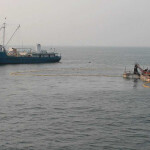

Civil society groups are pushing political leaders in Ghana to commit to more transparency in an effort to tackle illegal, unreported, and unregulated (IUU) fishing, especially by unauthorized foreign fishing vessels operating in Ghanaian waters.
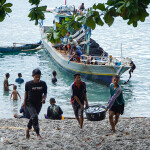
The Coalition for Fisheries Transparency (CFT), which is composed of several global civil society organizations, said Ghana has done little to make fishing information public, which has opened opportunities for illicit fishing operations to proliferate. This, according to CFT, has posed a risk to the livelihoods of at least 3 million people who rely on small-scale fishery operations across the country.
In response to the issue, CFT has launched a pledge and urged political candidates of all parties in Ghana to commit toward implementing the comprehensive transparency principles outlined in CFT’s Global Charter for Fisheries Transparency.
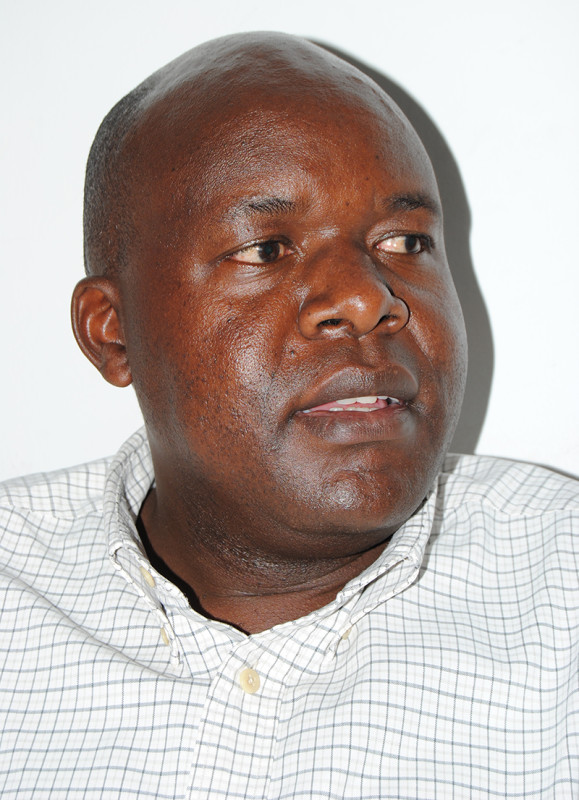
“Our research has clearly shown how illegal fishing and overfishing is a direct threat to human rights, coastal livelihoods, and sustainable fisheries in Ghana,” said Steve Trent, the CEO and founder of the Environmental Justice Foundation (EJF), which is a member group of the CFT. “Despite having some of the richest fishing grounds in the world, the country is in the perverse situation of being forced to import large amounts of seafood to meet domestic demand.”
Besides the country’s fishers missing out on opportunities, the country is also missing out on funds it could collect from enforcing penalties on IUU fishing, according to Trent.
“Ghana is waving away funds that it could and should accrue by leveraging the deterrent sanctions mandated under its own laws, failing to enforce penalties against foreign vessels that have been caught fishing illegally,” he said.
However, without codified transparency, it makes it difficult to even know which vessels, companies, and countries are committing infractions, Trent said.
“Without knowing who is fishing for what, when, and how, it is hard – if not impossible – to identify those responsible for illegal fishing and hold them to account,” he said.
By implementing Global Charter for Fisheries Transparency principles into the country’s laws, though, Trent said that Ghana can empower its relevant fisheries sector institutions to “fully enforce its own laws and ensure the systematic monitoring, control, and surveillance that would underwrite enforcement.”
“By delivering truly sustainable, legal, and ethical fisheries, Ghana’s coastal livelihoods will be safeguarded, the country’s fisheries will benefit Ghanaians rather than foreign fleets, and food security will improve as those fisheries return to reliability,” Trent said.
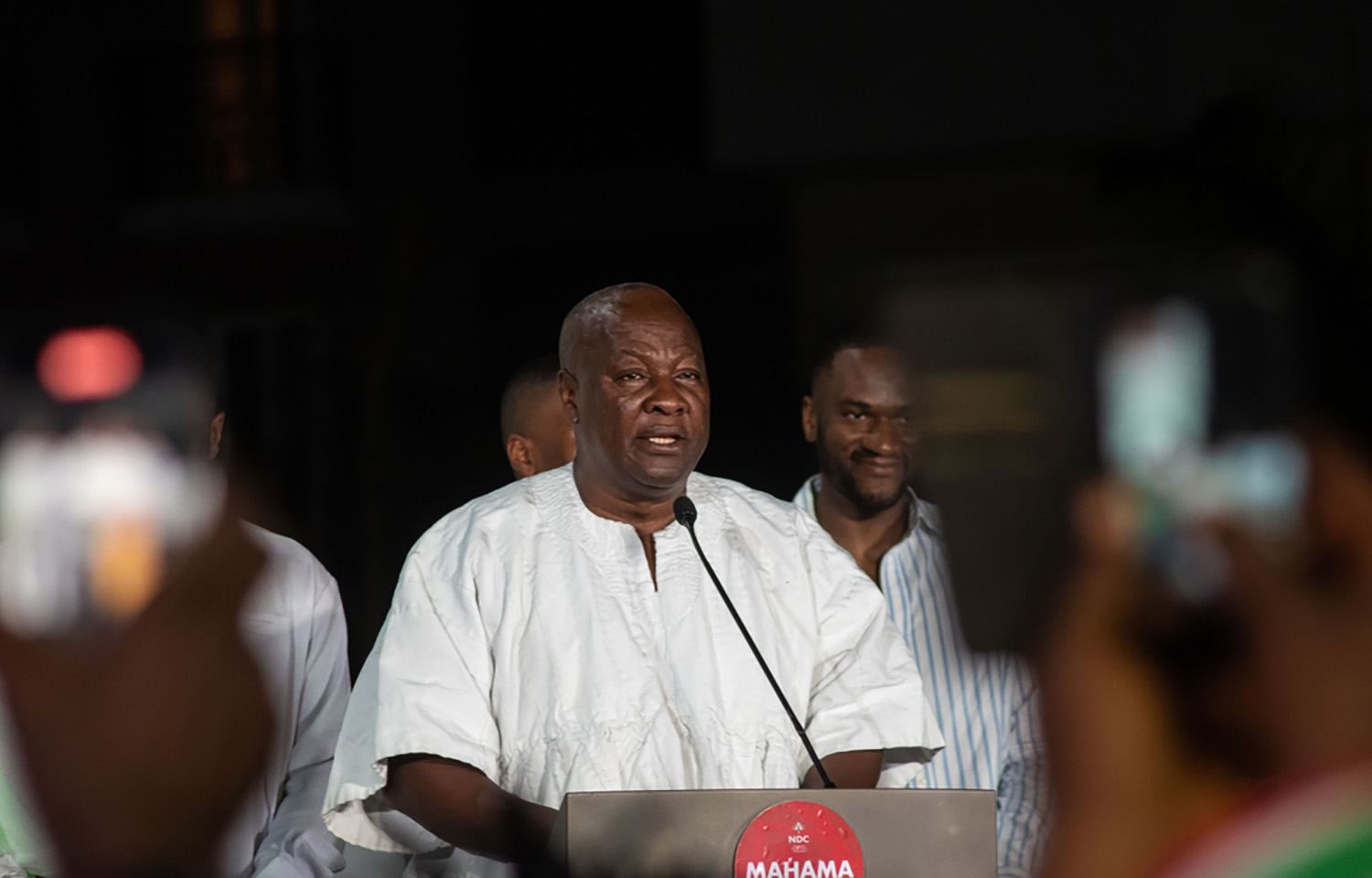
Ghana recently held a presidential and parliamentary election that saw John Mahama, who previously served as the nation’s president from 2012 to 2016, elected again to the country’s top post. All 276 parliamentary positions were also up for election.
With the election now completed, Trent said civil society groups “will conduct regular check-ins with signatories,” ensuring that the new government makes the transparency initiative a priority.
“Our goal is that Ghana and Ghanaians get the full benefit of their own fisheries resources and an end to the wholly unsustainable and all-too-often illegal exploitation of Ghana's fisheries by foreign interests and a tiny number of rogue nationals,” he said.
Ghana has implemented some measures in the past to curb IUU fishing, but most efforts have suffered from inconsistent or completely abandoned enforcement.
In 2016, the country subscribed to the Food and Agriculture Organization (FAO) agreement on port state measures to prevent, deter, and eliminate IUU fishing.
Ghana has also attempted to invest in more patrol boats, sign pacts with neighboring nations, force trawlers to reapply for permits, and other actions to alleviate the issue.
Nevertheless, the UN has said IUU fishing has continued to proliferate in the Ghanaian exclusive economic zone “due to weak enforcement; inadequate monitoring, control, and surveillance; poor management; and the lack of political will, among other things.”
In June 2024, the U.S. Agency for International Development (USAID) said it was working with Ghana’s government in implementing 100 percent electronic monitoring on all industrial fishing vessels by 2025.
Meanwhile, President-elect Mahama’s party, the National Democratic Congress (NDC), has pledged in its election manifesto to “establish a blue economy commission to sustainably harvest and regulate Ghana’s marine and freshwater resources.”
