





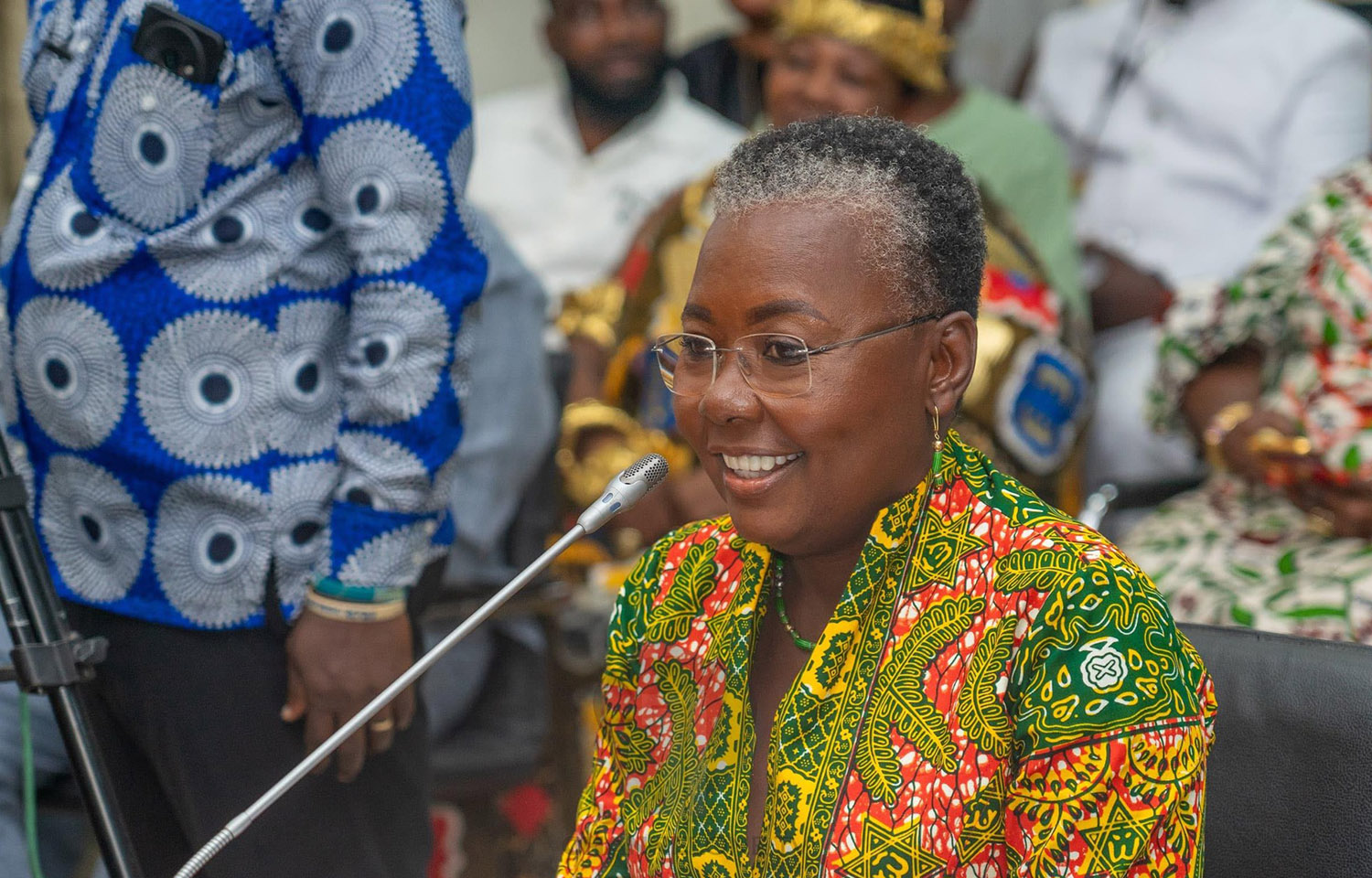
Emelia Arthur, Ghana’s new fisheries and aquaculture development minister, has pledged to address accusations of high-level corruption in the West African nation’s fisheries sector, a lack of transparency, and other concerns that were raised when the European Union issued the country a second yellow card in 2021.
The minister, who succeeds Hawa Koomson in the role, told a parliamentary vetting committee ahead of her late January ministerial appointment by new Ghanaian President John Mahama that the E.U. “has outlined a number of things that need to be sorted out so that the yellow card can be lifted.”
“I pledge to move quickly to address these issues and have the E.U. take off the yellow card from Ghana, because the status is affecting the industrial fishers who catch and export tuna that brings nearly USD 400 million [EUR 382 million] to Ghana,” she said.
Arthur said that Ghana’s fisheries sector is plagued by several challenges, such as overfishing, illegal fishing, limited funding, and inadequate data collection, but added she is committed to “do the right thing so that the trade goes on and foreign exchange can come in.”
Stakeholders in Ghana’s fisheries sector have previously claimed that the ownership of fishing vessels operating off of Ghana’s waters is unclear, and there is little transparency surrounding the issuance of fishing permits, especially for foreign nations like China and South Korea.
NGOs, meanwhile, have been pushing Ghanaian authorities to clearly publish the identity of people or businesses holding marine fishing permits, as well as the beneficial interests behind the licenses.
“The abuse of domestic front companies that are ultimately owned by Chinese individuals to misappropriate Ghanaian fishing licences has been extensively documented,” a past Environmental Justice Foundation report said. “Many companies with Ghanaian directors hold the fishing licences but are ultimately controlled by external parties. One investigation estimates 90 percent of Ghana’s industrial fishing vessels have some degree of Chinese involvement, subverting the Ghanaian policy aims to foster domestic involvement in fisheries.”
Nevertheless, civil society groups in Ghana have expressed optimism Arthur will effectively address these challenges and even help to bolster the section to new heights.
To the latter end, the National Democratic Congress party under which Arthur was appointed has pledged over the next four years to revitalize fisheries and the aquaculture sector and promote development of the blue economy.
Ghana Chamber of Aquaculture Jacob Adzikah CEO told SeafoodSource his organization has “yet to meet the minister for fisheries and aquaculture,” but promised to share some insights on the aquaculture market’s expectations once the meeting between Arthur and the country’s fish-farming community is held.
Elsewhere, the Coalition for Fisheries Transparency and Ghanaian local environmental organizations have congratulated Arthur and said they expect her to “protect coastal communities from the consequences of illegal fishing and associated abuses.”
One immediate act Arthur has taken to demonstrate her seriousness in tackling Ghana’s fishery challenges is the review of Fisheries Act 625, the tabling of which under the previous government drew E.U. concerns.
The act outlines the creation of both a Fisheries Commission and Fisheries Development Fund, as well as regulations on the management and conservation of fishery resources of Ghana, including aquaculture and small-scale fishing.
The act, which was sitting in legislative limbo, has since been withdrawn for amendments to enhance the provisions for both inland fisheries and aquaculture that had been omitted in the original version.
“I want to be remembered as a minister under whose regime Ghana’s production went up and Indigenous knowledge was respected and integrated with scientific knowledge in improving fisheries in this country,” Arthur said.
Though Arthur has made promises to effect change in the country, countries like China that have long track records of illegal fishing have maintained a large presence in the nation.
For example, Chinese fishing firm Rongcheng Ocean Fisheries is nearing completion on a USD 21 million (EUR 19.5 million) port project in Ghana, despite allegations that the firm has engaged in illegal fishing practices in the country’s waters. The project has caused consternation among NGOs and local fishers.
