






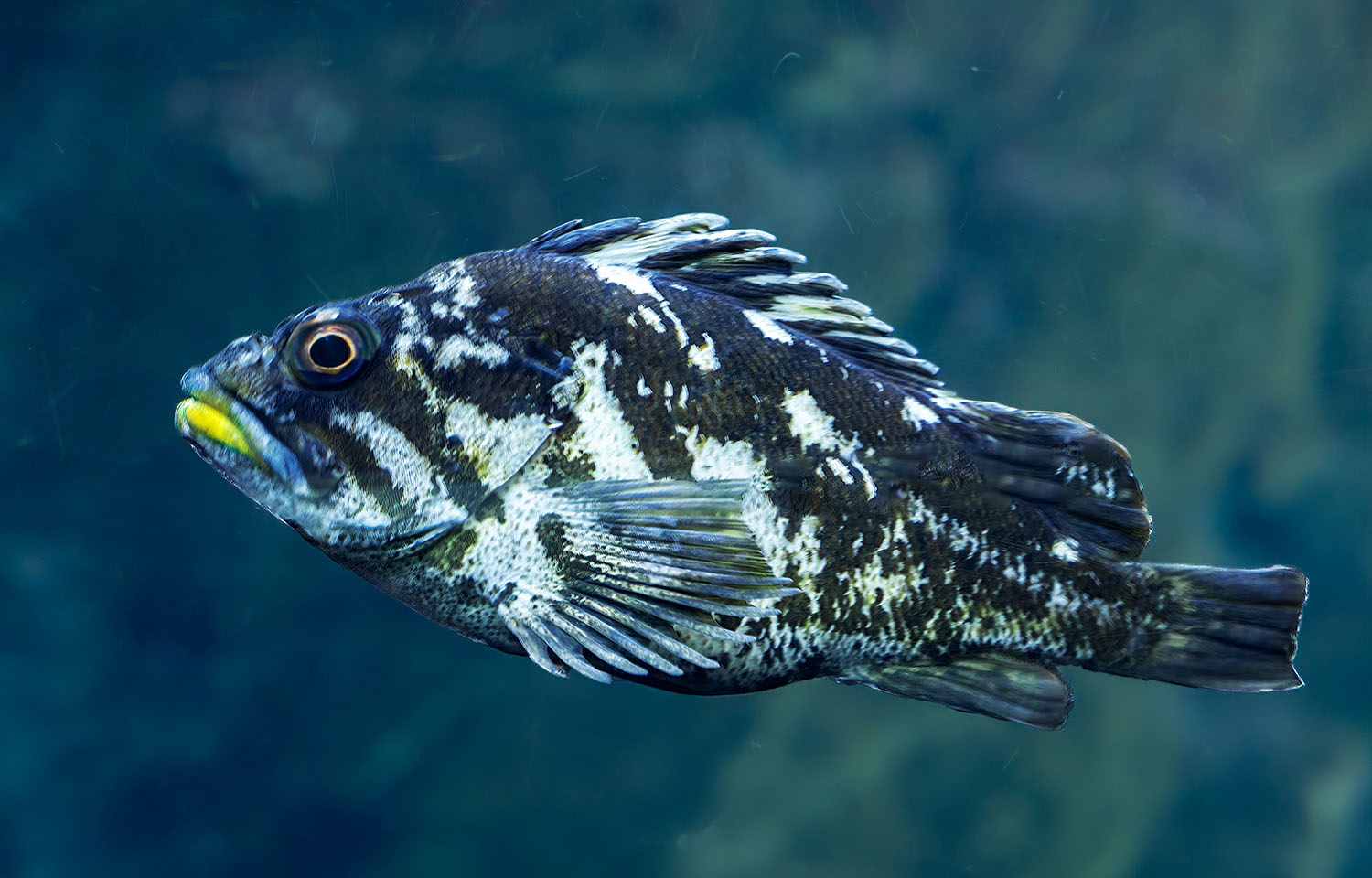
NOAA Fisheries has developed an improved environmental DNA (eDNA) tool that will enable scientists to better understand rockfish species and could inform management of the U.S. commercial fishery.
Environmental DNA tools test for genetic material in collected water samples, allowing scientists to detect the presence of various animals. NOAA Fisheries has worked to adopt eDNA tools to help improve its species management, especially with fish that are difficult or cost prohibitive to track otherwise. Rockfish, for instance, live in rocky areas that are not conducive to trawling and are not distributed evenly. By using eDNA, scientists can get a better picture of where rockfish are present in a body of water.
"A key goal of eDNA research is to use genetic data to inform management and conservation of wild populations," Kim Ledger, a research biologist with NOAA's Auke Bay Laboratories, said in a release. "While eDNA metabarcoding holds immense promise, a frequent limitation has been its inability to differentiate closely related species of interest."
With more than 110 documented species of rockfish, previous eDNA tools have struggled to differentiate individual rockfish species within samples. However, NOAA Fisheries claims its latest eDNA tool, the Sebastes D-loop primer set, has shown “unprecedented accuracy in identifying a wide range of rockfish species.” NOAA Fisheries researchers recently completed a study showing the tool accurately identifying almost all of the 42 rockfish species tested.
“Our results show that the Sebastes D-loop primer set can accurately detect different rockfish species,” Ledger said. “This makes it a powerful tool for improving species identification and relatedness in eDNA studies and reliably monitoring and assessing rockfish populations.”
NOAA Fisheries said it is already looking into using eDNA for rockfish fisheries management.
“This new eDNA primer set represents a powerful addition to the fisheries management toolkit,” NOAA Fisheries noted in a release. “It offers a less invasive and more comprehensive way to assess rockfish populations, particularly in hard-to-reach habitats. The ability to accurately identify these vital species at a higher resolution will provide critical data for ensuring the long-term sustainability of Alaska's rockfish fisheries.”
The tool still struggles with some similar species pairs, however, such as dusky and dark rockfish, according to NOAA.
