



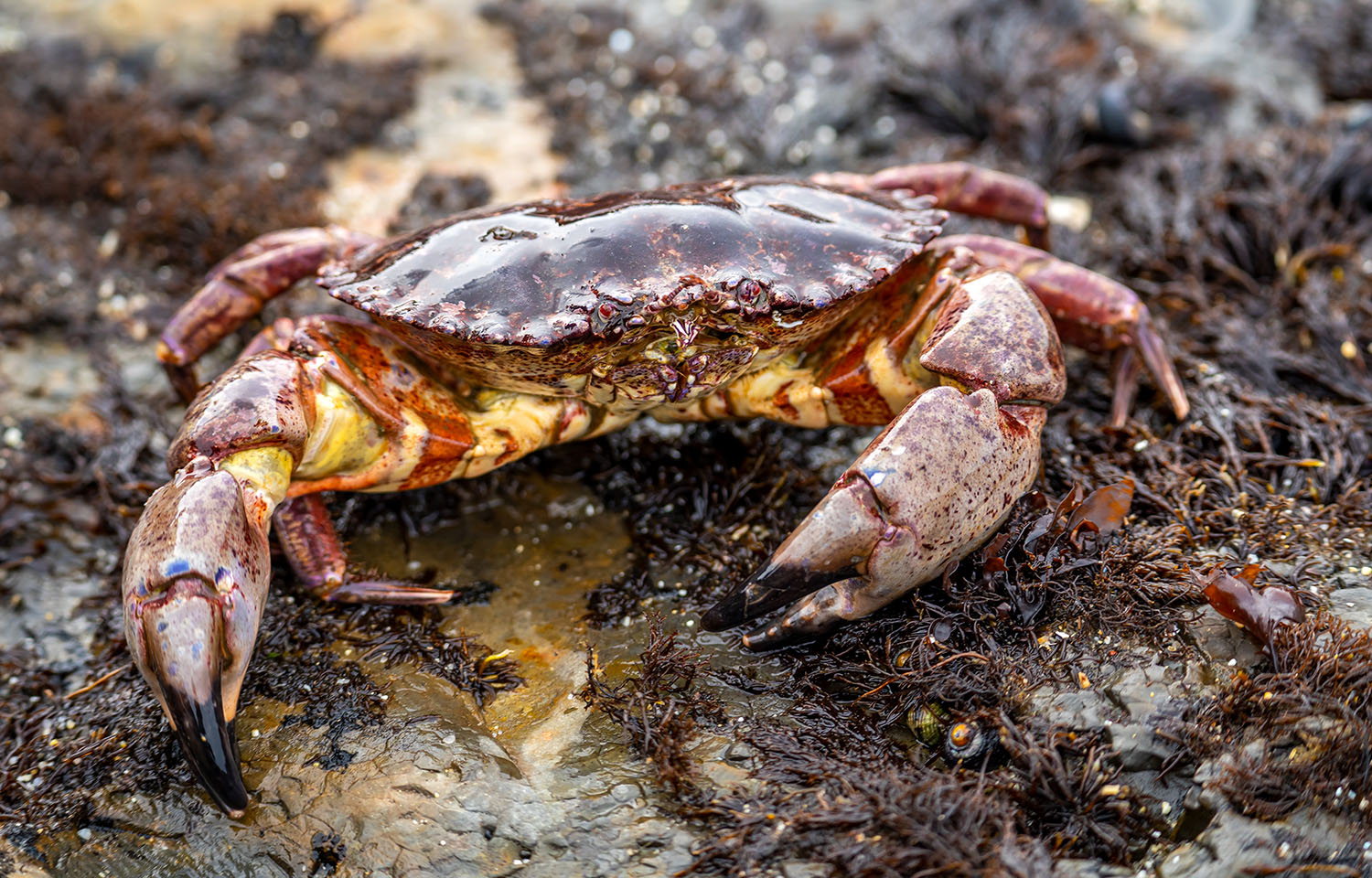
California state regulators have decided to open the Northern California commercial rock crab fishery for the first time in a decade after determining the shellfish are now safe to harvest and consume.
The fishery was first closed in 2015 through an emergency rule following the largest outbreak of domoic acid on the West Coast of the United States. However, with a lack of testing done to confirm the quality of the crab meat, the precautionary action remained in place for years after the domoic acid outbreak had ended.
“Although the domoic acid event eventually dissipated, the fishery could not reopen until testing confirmed domoic acid levels in rock crab were below federal action levels,” the California Department of Fish and Wildlife (CDFW) said in a statement.
Recently, the state has gathered enough test samples, and on 23 April the Office of Environmental Health Hazard Assessment (OEHHA) announced rock crab from the northern fishery were safe to consume. The next day, CDFW opened the fishery, which extends from the north jetty of the Humboldt Bay entrance to the Oregon border.
The fishery has not proven terribly lucrative in the past; landings totaled just 365 pounds and a value of USD 1,000 (EUR 881) for the five years prior to the closure, according to CDFW. Still, the department warned any fishers who choose to take part in the fishery to take precautions to avoid whale entanglements.
“With this reopening, CDFW reminds all fishery participants to avoid setting gear when whales are present to minimize entanglement risk and to implement best fishing practices, including minimizing excess lines floating on the surface, reducing slack surface line, and keeping vertical lines taut,” CDFW said in a statement.
