



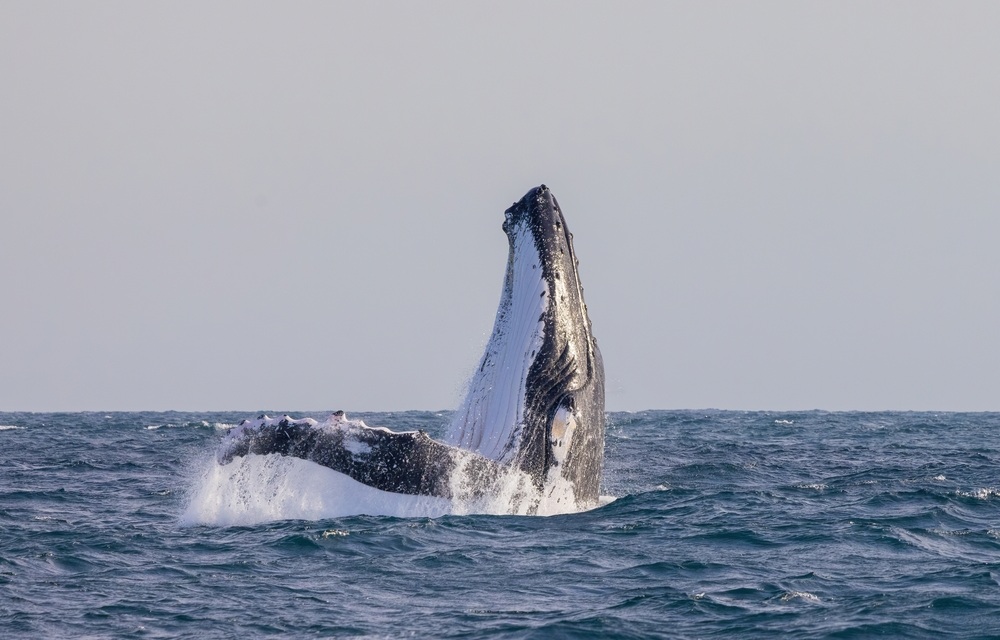
The U.S. state of Oregon has moved up its “late-season” Dungeness crab gear regulations by a month in an effort to reduce the likelihood of whale entanglements.
The late-season rules – which prohibit setting gear in waters deeper than 40 fathoms and require fishers to use 20 percent fewer pots and special buoy tags on each pot – were slated to go into effect 1 May. However, the Oregon Department of Fish and Wildlife (ODFW) has decided to move up the start date to 1 April in a bid to prevent any humpback whale entanglements.
"While our current pot limit reduction and depth restriction has reduced the number of vertical lines in the water after 1 May, newer research shows that starting these measures in April will do even more to reduce entanglement risk," ODFW Marine Resources Program Manager Justin Ainsworth said in a release. "Whale distribution in Oregon waters varies each year, but limiting commercial Dungeness crab fishing to shallower waters in April will help reduce overlap with crab gear."
NOAA linked seven humpback whale entanglements to Oregon Dungeness crab gear over the last two years, including the high-profile stranding of a juvenile whale in November 2025. Following that latest entanglement, four conservation groups – the Center for Biological Diversity, Oceana, Natural Resources Defense Council (NRDC), and the American Cetacean Society – filed a petition asking the Oregon Fish and Wildlife Commission to take several steps to reduce the risk of entanglements. The groups said they would like to see a prohibition on conventional pot gear starting 1 April, the approval of popup gear, and the closure of the commercial fishery once an entanglement occurs.
In a statement, Oceana praised Oregon regulators for moving up its “late-season” regulations.
“Whales in Oregon have had a rough couple years with several entanglements, and the state is doing the right thing by taking more precautions with crab fishing gear,” said Ben Grundy, an oceans campaigner at the Center for Biological Diversity. “To keep endangered whales safe, we have to look at the reality of where they’re feeding in a changing climate, not just rely on old patterns. These measures will help prevent more animals from painful entanglements and ensure the population can recover.”
