


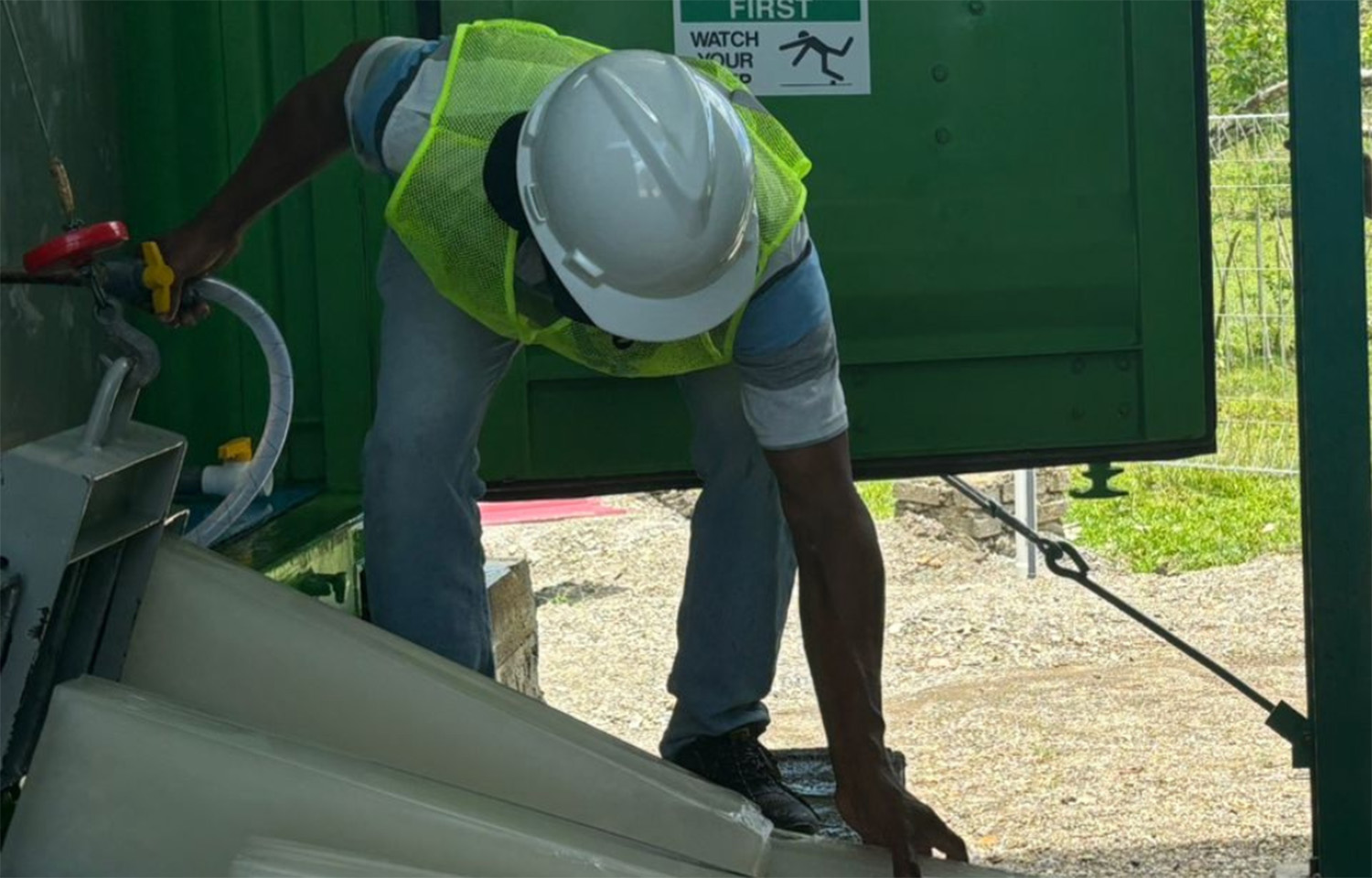
A pilot project which installed a solar-powered ice maker in a remote coastal community in Indonesia has added USD 120,000 (EUR 102,000) to the local tuna fishing value chain while reducing emissions and plastic use.
The project, performed by a coalition of nonprofits including the International Pole and Line Foundation (IPNLF) and Deutsche Gesellschaft für Internationale Zusammenarbeit (GIZ), first gained backing from the United Nationals Development Program in 2022 after it was chosen as the winner of its Ocean Innovation Challenge. The project officially launched 12 months ago in Kawa, Maluku, East Indonesia, and has already benefitted the environment and local fishers.
“What we see here is a revolution in the making. Locally available solar energy now freezes water into ice – preserving fish quality and preventing post-harvest losses across the fishery supply chain,” GIZ Industry Decarbonization & Energy Island Solutions Lead Frank Stegmüller said.
IPNLF said in its first year of operation the solar-powered ice maker generated 176 metric tons (MT) of ice and replaced 4,290 liters of diesel energy with solar energy, saving 40 MT of carbon emissions. It also helped eliminate the use of 223,520 plastic bags, which previously were used as single-use ice packaging.
According to IPNLF, previously fishers in Kawa used ice produced in home freezers and supplied in plastic bags. Frequent power outages often threatened the supply of ice, causing losses for the fishers, and the bags ended up as trash.
IPNLF said that the solar ice supply has been steady and reliable, and benefited communities outside of Kawa.
“We’re delighted to see how the community in Kawa has embraced the solar ice maker,” IPNLF Sustainable Fisheries Officer Ismail Noval said. “This project is a great example of international and local collaboration in action, showing how joined-up thinking across the value chain can deliver real impact. The innovation has improved fishers’ access to market, lowered environmental impacts, and reduced costs for local fishers – helping these vital producers secure a stronger foothold in the market.”
The project also trained local fishers in fish handling best practices to improve fish quality, adding further benefits to the solar ice maker.
The end results is fishers have an improved catch quality thanks to the ice, and can stay at sea for longer and catch more fish while reducing operating costs by providing more affordable ice.
“We completely replaced fuel for electricity generation and at the same time added USD 120,000 per year to the value chain, without the additional ice would have been lost,” Stegmüller said. “This makes it a great business case – aside from its environmental and socio-economic advantages. We thank our partners who believed in the idea and are happy to see its impact after one year of successful operation.”
