



A team of researchers working in the Barents Sea found a simple “escape hatch” modification to snow crab pots could have big benefits for the fishery’s sustainability and efficiency.
The research, lead by Heriot-Watt University and UiT The Arctic University of Norway found adding circular “escape gaps” to traditional crab pots used in the snow crab fishery allowed smaller crabs to escape the gear before it was retrieved by fishing vessels.
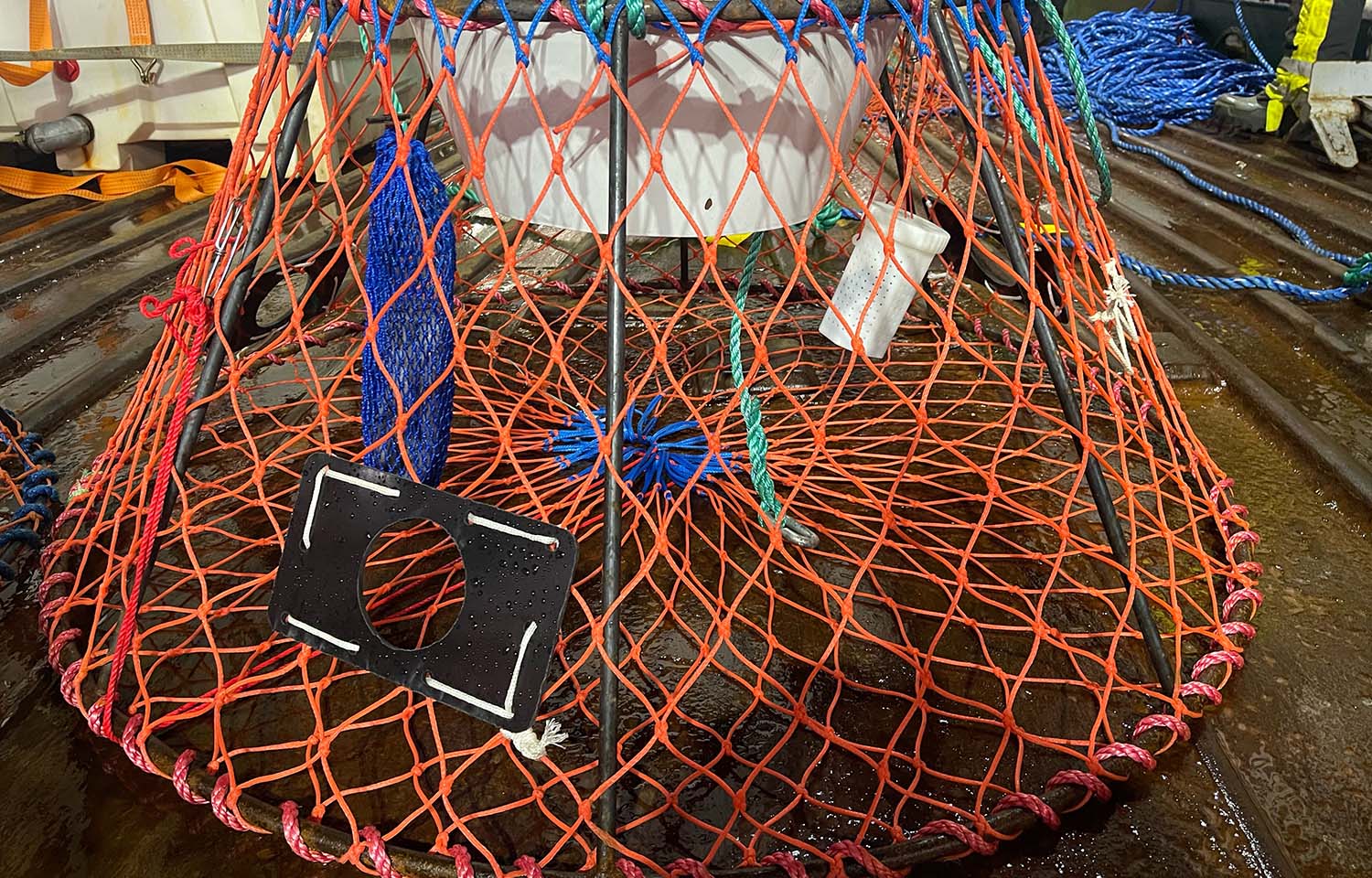
Historically crab pots in the Barents Sea are conical and covered in diamond-mesh netting, which should allow smaller crabs to crawl back out of the pots before harvesting. However, researchers said the reality is most crab pots end up having some amount of undersized crab that needs to be sorted and tossed back into the sea, adding labor and potentially exposing young crabs to harmful environmental conditions.
The study found small circular “escape hatches” that are big enough for small crabs to escape, but too small for commercially viable crabs to fit through, reduced the amount of small crabs making it on board.
“Anything we can do to reduce sorting on deck is a win both for fishers and for the crabs,” Kristine Cerbule, a researcher with the International Centre for Island Technology at Heriot-Watt, said in a release. “Improving size selectivity helps avoid unnecessary harm in this cold-water fishery.”
Researchers said they tested pots with three circular escape gaps measuring 9.5 centimeters in diameter, and performed research trials on a commercial fishing boat. According to the researchers, the catch of commercially viable crab was unaffected, while the content of smaller crab in the pots was reduced. Researchers also verified that none of the larger crabs could fit through the escape holes, which are a relatively inexpensive modification to existing traps.
Cerbule said the promising testing results could be mirrored in other crab fisheries around the world, including other snow crab fisheries like the ones in Greenland, Canada, Russia, and the U.S.
“If you get the design wrong, you risk letting valuable catch escape. But with careful testing, simple additions like these can make fisheries more sustainable,” Cerbule said.
