





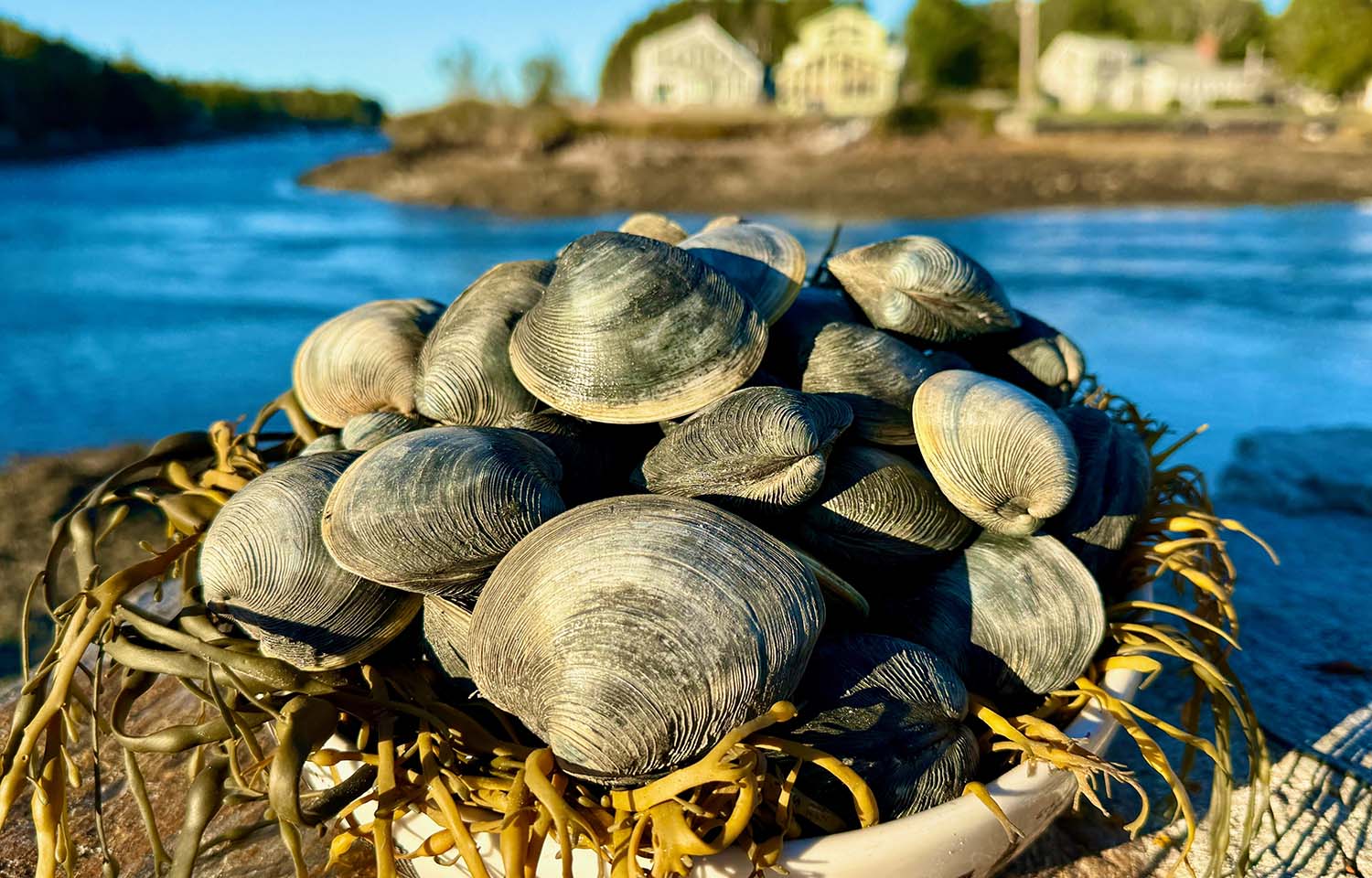
Bristol, Rhode Island, U.S.A.-based Roger Williams University’s (RWU) Center for Economic and Environmental Development (CEED) is working on a research project aimed to strengthen the state’s quahog fisheries in Narragansett Bay.
The project combines aquaculture, disease testing, and hands-on student training to support the wild shellfish populations, which in turn strengthens the state’s seafood economy, the university research center said in a release.
“The aim of this work is to address commercial and recreational harvester concerns about the declining clam population in Narragansett Bay,” RWU Assistant Professor of Marine Biology and CEED’s Shellfish Aquaculture and Hatchery Specialist Robert J. Holmberg said. “They’ve declined over decades due to several factors, but this project specifically focuses on understanding how disease and reproductive health impact quahog populations.”
Researchers on the project are taking samples of quahog populations from four locations along Narragansett Bay over the winter. Once collected, the clams are divided into two groups and transported to either CEED’s Luther H. Blount Shellfish Hatchery to be conditioned as broodstock for seed production or CEED’s Aquatic Diagnostic Laboratory (ADL) to test for diseases. One of the main infections affecting the clam species is hemocytic neoplasia, which the research center said is a contagious clam disease similar to leukemia. The other disease is unknown, therefore categorized as Quahog Parasite Unknown (QPX). Neither disease is harmful to humans but often weaken and even kill clams.
Once spawned at the hatchery location, the young quahogs are transferred to Rhode Island Shellfisherman Association’s (RISA) floating upweller nursery system in Warwick, Rhode Island, to continue growing until the fully grown species can be safely placed in state waters for harvest. The team plans to produce around 100,000 young quahogs from all four populations to aid with restoration. Once winter collection is done, scientists will return to the same sites in the spring to assess reproductive health after the winter dormancy period.
“Recreational clamming is an important part of the state’s culture and coastal economy,” RWU Hatchery Technician Kimberly Soule said. “By strengthening wild populations, the project supports local fishermen, protects working waterfronts, and helps stabilize a seafood industry that is vital to Rhode Island’s identity and economy The work supported by this collaboration will significantly benefit the state. Quahogs are one of Rhode Island’s most valuable commercial fisheries, generating millions of dollars annually.”
Funding for the project comes from a Partnership for Research Excellence in Sustainable Seafood (PRESS) grant at the University of Rhode Island’s College of the Environment and Life Science, as well as support from NOAA. CEED is also supported for future wild quahog population research by RISA.
