



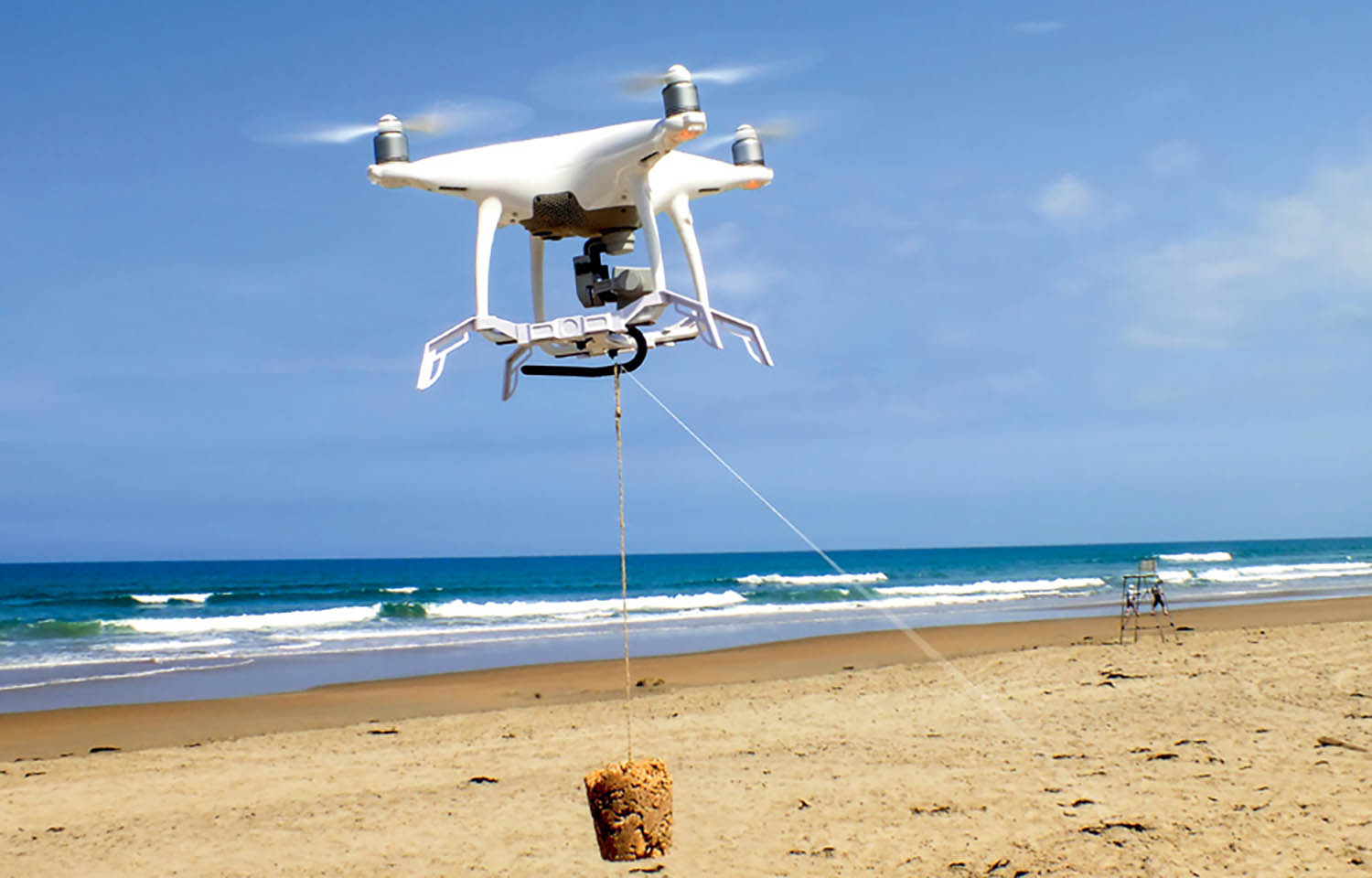
The South Africa Supreme Court of Appeals has upheld a ban implemented by the country’s Department of Forestry, Fisheries, and the Environment (DFFE) on the use of drones used for fishing purposes in an attempt to protect the country’s marine fish populations.
In doing so, the court dismissed an appeal case filed against the DFFE by several business entities involved in the manufacture, import, market, and selling of angling equipment, such as bait-carrying drones and other remote-controlled devices in South Africa.
The DFFE ban first arose in February 2022 and specifically declared illegal the use of “motorized devices, such as, but not limited to, bait-carrying drones, bait-carrying remote-controlled boats, and other remotely operated vehicles, as well as motorized electric reels for angling.”
“Drone fishing significantly enhances the reach and efficiency of anglers, allowing them to target species in areas that are otherwise difficult to access,” DFFE spokesperson Peter Mbelengwa told SeafoodSource. “This can lead to overfishing, particularly of vulnerable or protected species, as well as increased bycatch, where non-target species are unintentionally caught, hence disrupting the balance of marine ecosystems, leading to a decline in fish populations, and negatively affecting biodiversity.”
He also said drones can, at times, “be used to locate and target fish aggregations, which can result in concentrated fishing efforts in critical habitats, such as spawning or nursery areas, thus hindering the natural replenishment of fish stocks, ultimately threatening the long-term sustainability of marine resources.”
“Some drone operators increase their time spent fishing, catch more than is permitted, and then sell the catch to recuperate the cost of the drones, which is illegal commercial fishing, unsustainable, and leads to stock depletion,” Mbelengwa said.
However, Mbelengwa explained DFFE itself, as well as other law enforcement agencies, are allowed to utilize drones in conducting daily and/or specialized operations in a prescribed manner “that provides for a more focused approach to tackling illegal activities.”
“Using drones for law enforcement purposes has a completely different purpose and function and is entirely distinguishable from the use of drones as a fishing method,” he said.
The ban stated the use of devices by anglers was a violation of the Marine Living Resources (MLRA) of 1988, but those who appealed the ban argued their use of a remote-controlled, bait-carrying device such as drones “does not derogate from the fact that the anglers who use these devices apply the old, recognized method of fishing by manually operating a rod, reel, a line with hooks, swivels, and sinkers attached to the line.”
But, the appeals court dismissed the argument, telling the appellants they cannot utilize their fishing permit for any form of fishing activity using whatever methods that may be available, “even if the method used is not specifically prohibited in terms of the Marine Act.”
The appeal “is ill-conceived because the Marine Act and its regulations not only specify the type of fishing activity but also the method to be used in performing such fishing activity,” the court said.
The court also said licensed anglers are not at liberty “to use any method other than the one that is provided for in the regulations; to use any other method other than the authorized one would be unlawful.”
Furthermore, Mbelengwa said internationally, responsible fishing practices are guided by the Food and Agriculture Organization's Code of Conduct for Responsible Fisheries, “which emphasizes sustainable use of aquatic ecosystems and the importance of conservation measures that prevent overexploitation and drone fishing, which can increase fishing efficiency and impact vulnerable species or habitats.”
“Any person found to be contravening the MLRA pertaining to the use of drones for fishing or related activities may either be issued with a fine or arrested, and a criminal case may be opened as well as have their drone used in illegal fishing or related activity confiscated,” Mbelengwa said.
The DFFE is under new leadership as of the country’s election in June. Dion George is now heading up the department, and upon his appointment, he has pledged to increase government support for small-scale fishing cooperatives and said his department will conduct new inspections of rights-holders in hake, abalone, rock lobster, linefish, squid, and pelagic fisheries, all of which are highly valuable in the country.
