






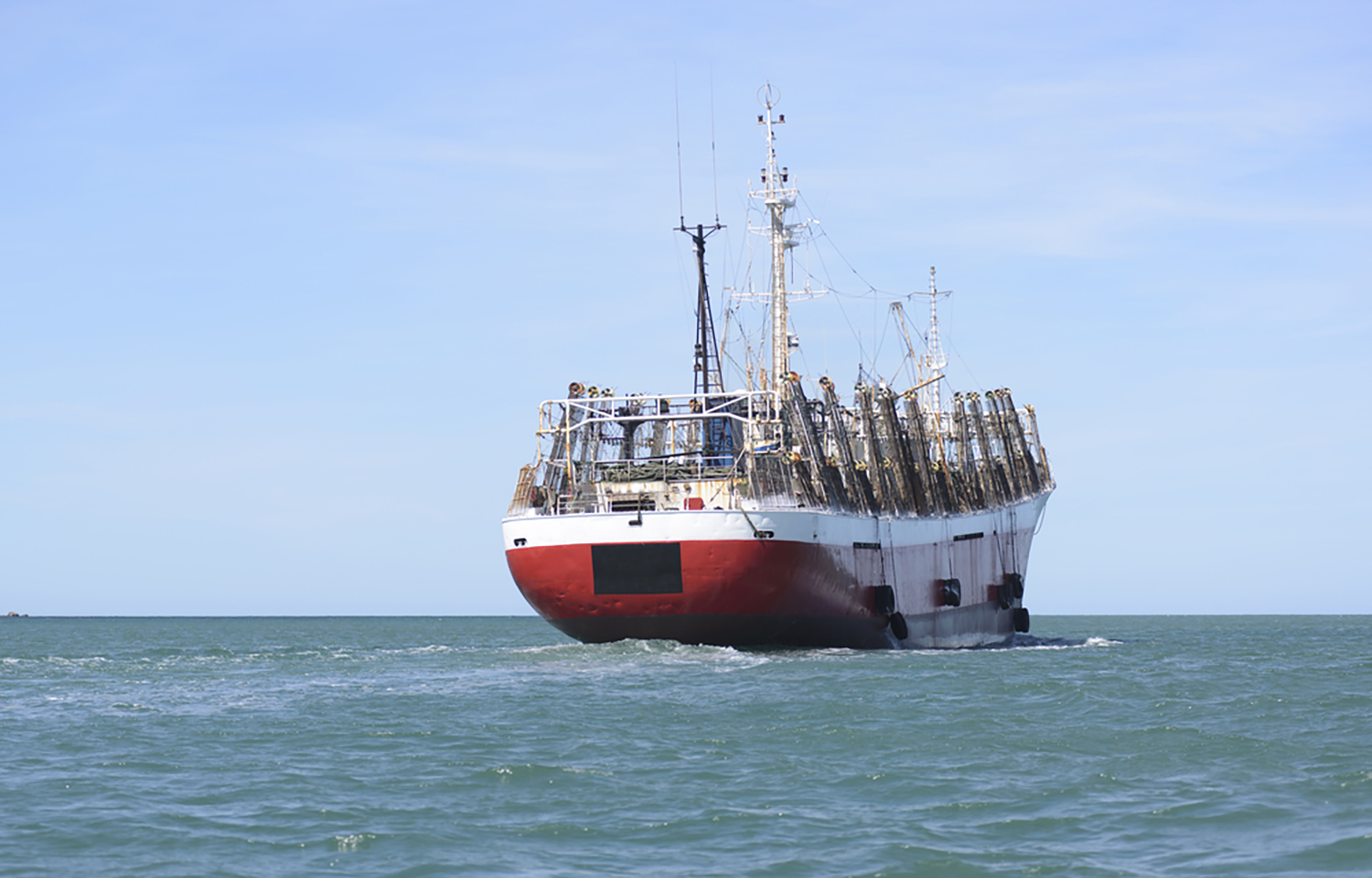
Japan has promised to send drones to Ecuador, Peru, Argentina, and Uruguay so they can better track vessels entering their exclusive economic zones (EEZs) that may be conducting illegal, unreported, and unregulated (IUU) fishing activities.
The move, which targets, among other vessels, China’s sprawling distant-water fleet off the South American coast, provides much-needed resources to a region that has struggled at times to properly combat IUU fishing, according to Milko Schvartzman, the ocean policy coordinator at Argentina-based environmental NGO Circulo de Politicas Ambientales.
“Keeping one vessel patrolling the sea strains resources heavily when 500 unregulated fishing vessels are at the doorsteps of your EEZ. The equipment donated by Japan will be useful for all four countries. Resources are a constraint in fighting IUU fishing in Latin America, not just material ones but also maintenance and supplies,” Schvartzman told SeafoodSource, adding that the sheer scale of the fleet fishing off the South American coast means coastal nations need all the help they can get to patrol the seas.
The donation of drones comes as relations between China and Japan have grown increasingly icy, largely over China’s territorial dispute with Taiwan. Japanese Prime Minister Sanae Takaichi said late last year that possible Chinese military action in Taiwan may result in a combative response from Japan. Those comments resulted in China reimposing a ban on Japanese seafood, implementing an unofficial ban on Japanese media, and more.
Nevertheless, Schvartzman stressed that the Chinese fleet is not the only set of vessels that requires monitoring off the coast of South America.
“The countries of South America are spending millions of taxpayers’ money monthly to avoid their resources and sovereignty being plundered by four heavily subsidized flag state fishing fleets: Spain, China, South Korea, and Taiwan,” he said.
Even after the donation of drones, however, the question remains whether some South American nations have the political will to properly monitor their EEZs, Schvartzman said.
“Argentina has quite enough equipment but hasn’t made a serious move into the use of drones,” Schvartzman said.
Besides the use of drones, observers in the region have also called for the establishment of such mechanisms as a regional fishery management organization (RFMO) to properly address IUU fishing issues, such as squid overfishing in the Southwest Atlantic Ocean.
Daniel Skerritt, a senior analyst on the Science and Strategy team at nonprofit Oceana, said in October 2025 that an RFMO would be helpful in the region, specifically in improving data sharing as a first step toward better management, which he describes as “a major gap in fisheries governance.”
He said that while RFMOs are not a silver bullet, “especially against overcapacity and overfishing, they are the best path toward effective management for shared and migratory fish stocks.”
“Without one, it is unlikely that we will get any impactful management at all,” Skerritt said.
