






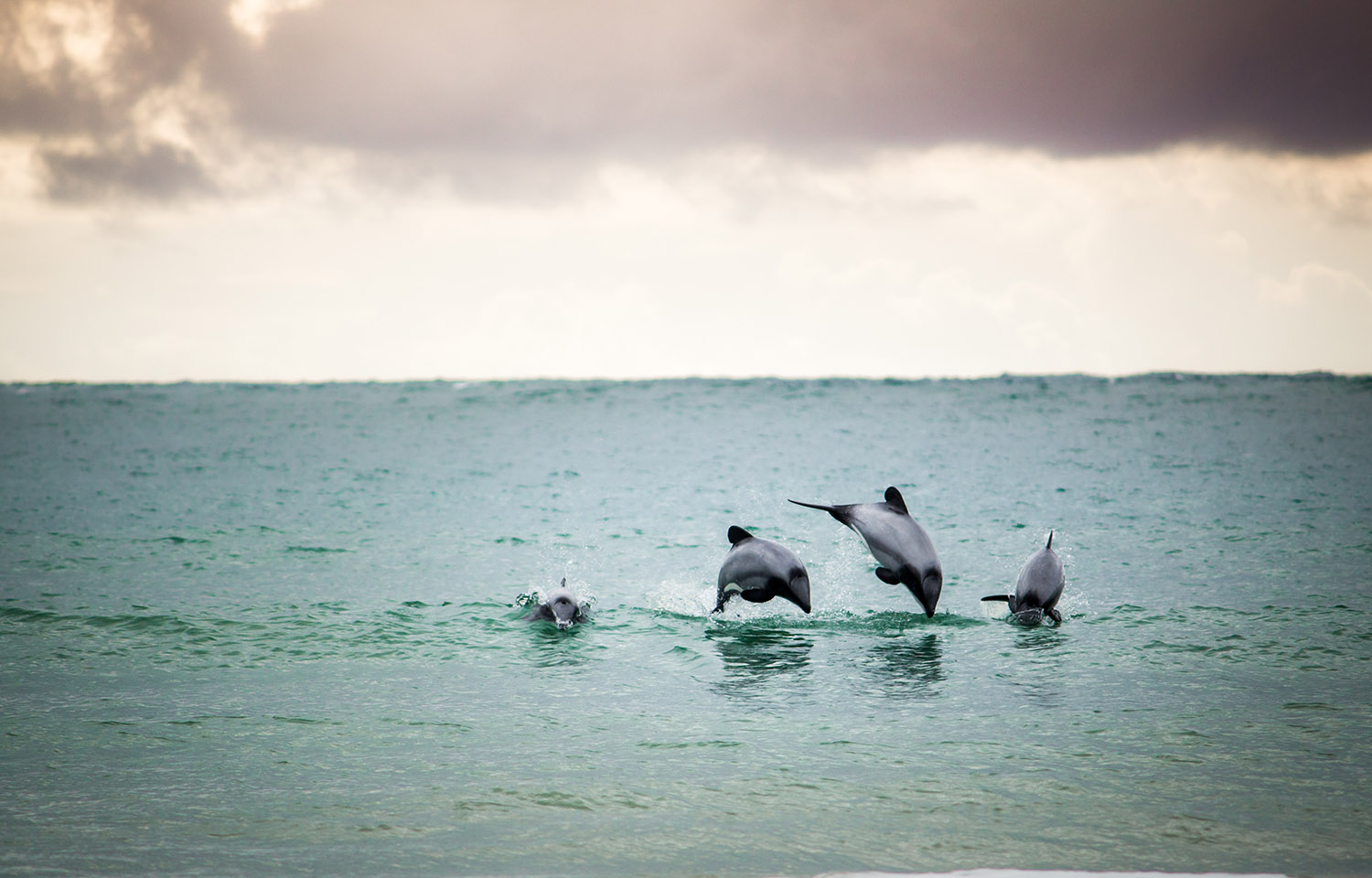
The U.S. Court of International Trade has ruled that NOAA Fisheries was wrong to allow seafood imports from two New Zealand fisheries.
“We are thrilled about the Court of International Trade’s decision and what it means for the Māui dolphin. This decision affirms what the law intends – that the U.S. government must not facilitate the extinction of marine mammal populations,” Earthjustice attorney Sabrina Devereaux said in a release.
In 2024, Earthjustice and Law of the Wild sued NOAA Fisheries in the international trade court on behalf of conservation group Māui and Hector’s Dolphin Defenders NZ, which claimed commercial fishers in New Zealand were driving those two critically endangered species to extinction. While researchers estimated the Māui dolphin population at roughly 2,000 individuals 50 years ago, current assessments place that estimate between 40 and 50 individuals, and the conservation group blames bycatch from commercial fishing fleets as a major factor.
According to Māui and Hector’s Dolphin Defenders NZ, New Zealand fishing practices ran afoul of the U.S. Marine Mammal Protection Act (MMPA), which requires foreign fisheries to implement bycatch protections equivalent or greater than those required in domestic fisheries.
In her 26 August ruling, Judge Jennifer Choe-Groves ruled that NOAA Fisheries did not have adequate evidence to support its decision to allow imports from the two New Zealand fisheries. Choe-Groves vacated NOAA Fisheries' decision, effectively banning imports from those fisheries until NOAA Fisheries can issue a satisfactory comparability finding. The court set a 24 November deadline for the agency to file an updated comparability finding.
“The U.S. now has to do what the New Zealand Government has failed to do – keep Māui and Hector’s dolphins in the west coast North Island safe from indiscriminate fishing, which is otherwise pushing the dolphins to extinction. It’s now New Zealand’s turn to protect the whole dolphin habitat in its own laws,” Christine Rose of Māui and Hector’s Dolphin Defenders said in a statement.
The court has been considering the case as NOAA Fisheries has been preparing comparability findings for foreign fisheries from 135 nations ahead of a January 2026 deadline. However, the ruling came just before NOAA Fisheries officially released those comparability findings, which determined that all New Zealand fisheries – including the two at the heart of the court decision – are in alignment with the MMPA.
“New Zealand has implemented bycatch mitigation measures that are comparable to what is required by the U.S. regulatory program,” NOAA Fisheries said in its findings. “New Zealand has provided a copy of its Threat Management Plan for [New Zealand’s Māui and Hector’s dolphins] that outlines all of the steps it is taking to mitigate bycatch for these two species (including a trigger that if one animal is caught the fishery is closed). New Zealand maintains a web-accessible database on reported events that include deaths, strandings, and bycatch of both species. The development and implementation of these measures are comparable in effectiveness to U.S. standards for Take Reduction Plans.”
It is not immediately clear how the newly released finding will play into the court’s demand that NOAA Fisheries prepare an updated comparability finding.
A similar lawsuit filed in the Court of International Trade by the Sea Shepherd Society in 2020 was dismissed last year after a judge determined the New Zealand government was acting sufficiently to protect the dolphins.
