



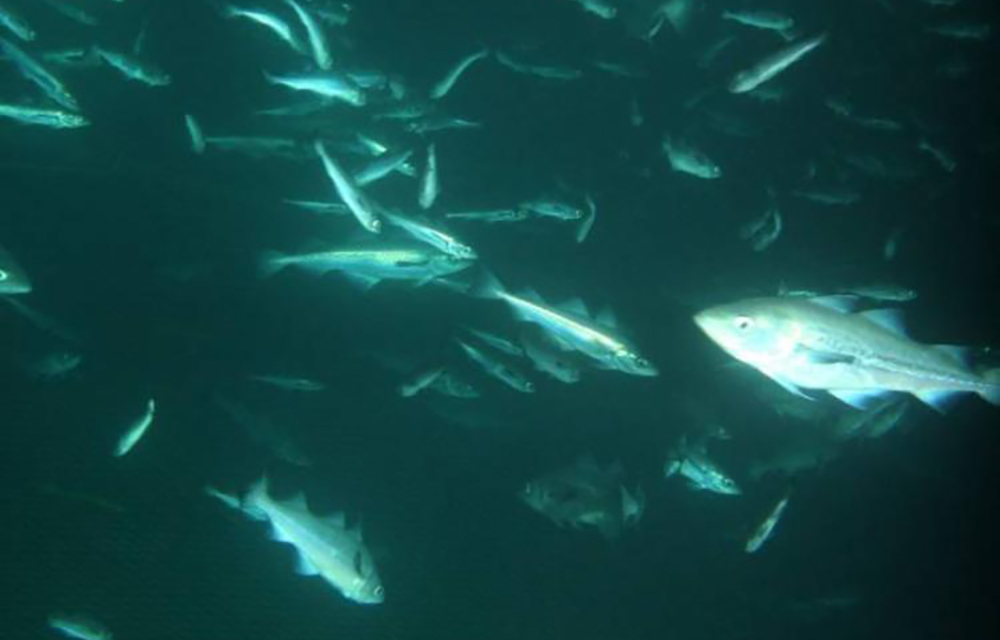
A U.S. district court judge has rejected a lawsuit seeking a new environmental impact study of the Bering Sea commercial pollock fishery, allowing NOAA Fisheries to continue relying on studies from 2004 and 2007 to regulate the fishery.
“We are deeply disappointed by this decision, which allows the National Marine Fisheries Service to continue relying on outdated studies while our salmon populations collapse,” TCC Chief and Chairman Brian Ridley said in a statement.
The lawsuit was initially filed in 2023 by the Association of Village Council Presidents (AVCP) and Tanana Chiefs Conference (TCC), representatives of Tribal communities that claim the commercial pollock fishery is contributing to the decline of salmon populations in the U.S. state of Alaska. Salmon abundance has dropped drastically in recent years, leading to closed fisheries and limits on subsistence fishing, and the salmon that are returning to Alaska rivers are smaller on average.
“As our environment changes, catastrophic impacts are occurring in our waters,” AVCP Chief Executive Officer Vivian Korthuis said in response to the judge’s ruling. “Tribes and communities throughout Western Alaska have been deeply harmed by severe and sustained restrictions to subsistence salmon fishing, while the pollock trawl fishery continues to fish uninterrupted even though it continues to catch thousands of salmon as bycatch while our salmon populations are at historically low levels. Our people are suffering without salmon as the agencies responsible for protecting our natural resources have stood back and watched the devastation unfold. The lack of salmon in our region has become a humanitarian crisis, the likes of which we have never before experienced.”
A University of Alaska Fairbanks report released in 2024 linked the changes in the salmon fishery to climate extremes. One well-known extreme in 2019 dubbed “the blob” resulted in decreased salmon fisheries and the migration of fish stocks.
In light of that warming, AVCP and TCC argued that NOAA Fisheries ought to conduct a new environmental impact analysis before determining how the Bering Sea pollock fishery should be regulated – and critically, how much salmon bycatch that fishery should be allowed to take.
Salmon fishers and pollock fishers have clashed over the impact of bycatch on salmon populations in Alaska for years. Earlier this year, salmon advocacy groups asked the Alaska Board of Fisheries to eliminate pollock trawling in Prince William Sound, although the proposal was soundly rejected.
For its part, the pollock industry has rejected any blame for declining salmon populations, pointing out that much of the salmon bycatch the industry takes in every year doesn’t originate from Alaska. The North Pacific Fishery Management Council (NPFMC) noted in February that the pollock sector “reduced its chum bycatch by nearly 95 percent over the past four years.”
Nearly 3 million chum salmon were taken as bycatch between 2015 and 2024 – less than half a million originated in Western Alaska, according to conservation NGO Oceana.
The plaintiffs took some solace in Judge Sharon Gleason’s acknowledgement that the Bering Sea pollock fishery is a contributing factor to Alaska salmon declines.
“As changes to the marine ecosystem in the Bering Sea and Aleutian Islands region have depleted salmon stocks, salmon bycatch in the groundfish fishery has further diminished stocks and escapement,” Gleason said in her order. “Some of the Chinook and non-Chinook salmon taken as bycatch by the groundfish fishery originated in western Alaska.”
Ultimately, however, Gleason determined that NOAA Fisheries acted according to the law in relying on old studies to manage the pollock fishery, granting the agency’s request for summary judgment and dismissing the lawsuit.
“While the judge deferred to the agency in ruling that a new environmental study is not needed, the judge also agreed that federal fisheries management contributes to Western Alaska salmon declines,” Earthjustice Attorney Kate Glover, who represented the Tribal groups, said in a statement. “These salmon declines, along with rapid changes in the ocean ecosystem, are causing a crisis for Western and Interior Alaska communities and we need fisheries managers to respond to that crisis with real changes in fisheries management.”
“Despite this setback, we will continue to fight with all available tools and use all avenues to end the salmon crisis,” Korthuis said.
The NPFMC is currently considering solutions for reducing chum salmon bycatch in Alaska’s pollock fishery. In February, the council advanced five alternative options, setting up a vote on which protections to implement as soon as December 2025.
In a statement, the council noted that both environmental changes and bycatch in the Bering Sea pollock trawl fishery have contributed to declining salmon populations.
“Available science indicates recent declines in chum salmon populations across many regions of the North Pacific, including Canada, Japan, Russia, Korea, and the U.S., appear to be driven by warmer water temperatures in both the marine and freshwater environments which impact juvenile survival, prey availability and quality, metabolism and growth rates, and reproductive rates,” NPFMC noted in a press release. “However, Western Alaska chum salmon are also taken as bycatch in the Bering Sea pollock trawl fishery, reducing the amount of salmon that return to western and interior Alaska rivers, and the council is considering action to address these impacts.”
