




A U.S. district court judge has dismissed a lawsuit brought by conservation NGO Oceana challenging bottom trawling in the North Pacific, finding that NOAA Fisheries acted in accordance with the law in regulating commercial fishing in the area.
Oceana filed the lawsuit in August 2024 in an effort to block bottom trawling in the North Pacific, an activity the group claims can cause substantial damage to seafloor coral and sponge habitats.
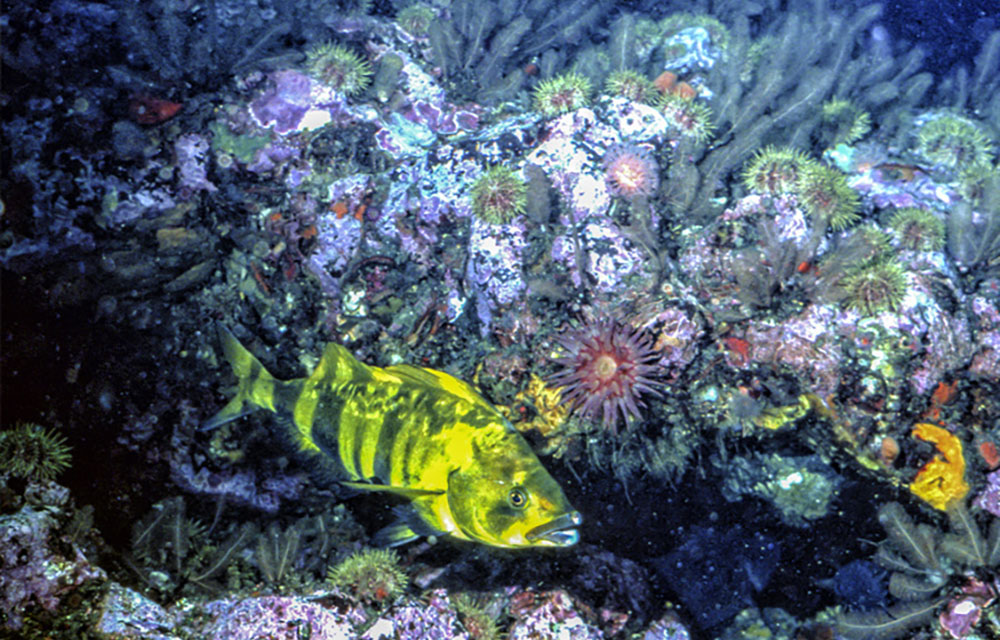
“Deep-sea coral and sponge ecosystems, some of which are hundreds of years old, can be destroyed by just one pass of a bottom trawl,” Oceana Pacific Campaign Director and Senior Scientist Ben Enticknap said when the suit was filed. “Protecting fragile seafloor habitats that are important for breeding, feeding, and spawning is essential for healthy ocean ecosystems and for fisheries like halibut and crab."
Oceana’s lawsuit challenged NOAA Fisheries’ 2023 Essential Fish Habitat (EFH) 5-year Review and related documentation which enables commercial trawling in the area. Though NOAA Fisheries staff and the council concluded that commercial trawling operations were having only a minimal and temporary impact on essential fish habitat, negating any need for mitigation by regulators, Oceana continued to push for restrictions on trawling.
In June 2023, the NGO proposed freezing bottom trawling in 90 percent of the Gulf of Alaska, a move it claimed would only displace at most 5 percent of the area commercially fished. The proposal would have required commercial fishers operating in the conserved area to use net sensors to ensure their gear did not make contact with the seafloor. The council did not direct staff resources to consider the proposal.
After the council approved amendments to five fishery management plans in alignment with the EFH review, Oceana filed suit against the government. The lawsuit took issue with several parts of the review and NOAA Fisheries’ documentation, with the NGO accusing the agency of failing to meet requirements for protecting fish habitat under the Magnuson-Stevens Fishery Conservation and Management Act (MSA) and the National Environmental Policy Act (NEPA).
“[NOAA Fisheries] ignored important obligations under both the Magnuson-Stevens Act and NEPA when it failed to adopt meaningful measures to five fishery management plans for the North Pacific Ocean to help protect corals, sponges, and important seafloor habitat from the destructive effects of trawling,” Earthjustice Senior Attorney Charisse Arce said when the lawsuit was filed in August 2024. “There have been massive changes in the North Pacific ecosystem, and NMFS must be adopting management measures that proactively conserve and enhance essential fish habitat.”
In December 2024, the At-Sea Processors Association, Alaska Groundfish Data Bank, and Groundfish Forum intervened to oppose the lawsuit, joining NOAA Fisheries. Oral arguments were heard before the U.S. District Court for the District of Alaska 12 September.
In her 30 September ruling, Judge Sharon Gleason deferred to NOAA Fisheries’ expertise in evaluating the impact of commercial trawling on essential fish habitat, adding that “Oceana does not offer an alternative method to determine when fishing impacts are more than minimal and not temporary; nor does Oceana challenge the regulation itself as being inconsistent with the MSA.”
The judge also did not take issue with NOAA Fisheries declining to consider Oceana’s 2023 bottom trawling proposal.
“Because the MSA does not dictate that NMFS consider every conservation and enhancement proposal put before it, NMFS’s failure to consider Oceana’s proposal did not violate the MSA,” Gleason said.
Gleason also ruled that the agency had not violated NEPA, determining that NOAA Fisheries was not required to consider Oceana’s proposal, which she said “went far beyond revising the EFH Components” and “instead would constitute a new management action to limit fishing activity and impose gear requirements.”
Accordingly, Gleason dismissed the lawsuit.
