






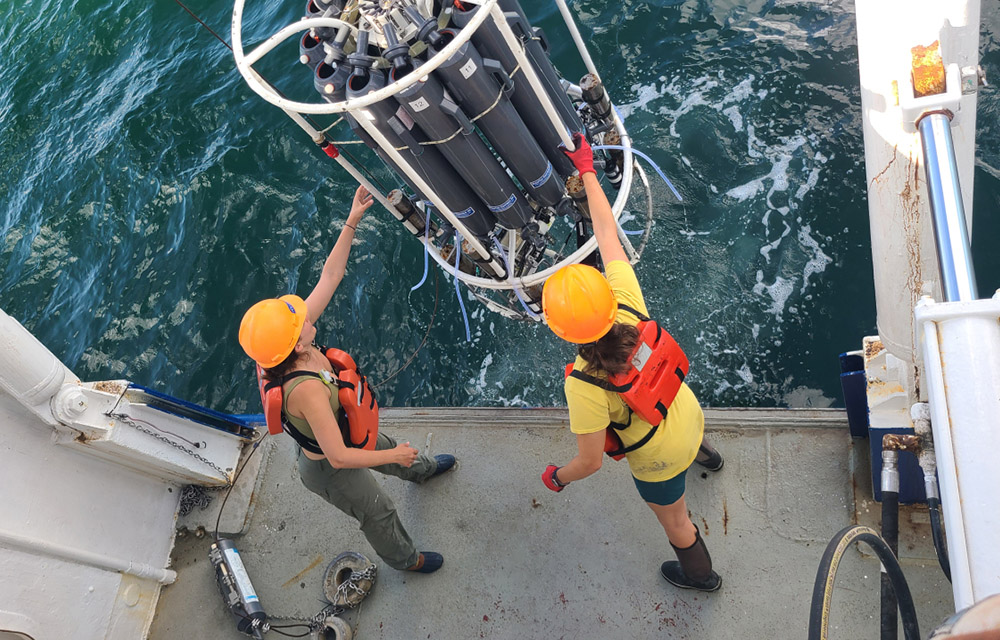
The U.S. Senate has passed legislation reauthorizing and strengthening the Harmful Algal Bloom and Hypoxia Research and Control Act (HABHRCA), a law designed to coordinate a government response to harmful algal blooms (HABs).
“Unchecked HABs can threaten our marine life and coastal ecosystems, the livelihoods of our commercial fisheries and coastal communities, and the health and well-being of Alaskans,” U.S. Senator Dan Sullivan (R-Alaska) said in a release. “Alaska is our country’s leading seafood producer and home to more coastline than the contiguous lower 48 states combined, making our response to HABs critically important. I want to thank all of my Senate colleagues for unanimously approving this important legislation, which will develop and coordinate effective responses to harmful algal blooms and improve the monitoring of the health of our oceans for the sake of coastal communities, especially those that rely on subsistence.”
Algal blooms are a substantial threat to aquatic ecosystems. The reduced oxygen levels created by algal blooms create hypoxic zones that can kill fish.
"HABs and their toxins are a threat to the food safety, food security, and economy of Alaskan coastal communities,” Alaska Ocean Observing System Executive Director Sheyna Wisdom and Program Manager Thomas Farrugia said in a release. “Reauthorizing HABHRCA will continue the crucial research and monitoring efforts that are helping us to understand and mitigate the HAB risks in Alaska.
HABs can impact fisheries along the nation’s coasts and in the Great Lakes. The most well-known HAB event is the annual “dead zone” in the Gulf of Mexico – currently referred to as the Gulf of America by the U.S. government. This hypoxic area averages a size of 5,244 square miles, leading to habitat loss and fish kills. The 2025 dead zone ended up being smaller than expected, despite early forecasts that it would align with the long-term average. NOAA scientists measured the dead zone at 4,402 square miles, 21 percent smaller than expected and the 15th smallest measurement on record.
"This year's significant reduction in the Gulf of America's 'dead zone' is an encouraging sign for the future of this area," NOAA Acting Administrator Laura Grimm said in August. "It highlights the dedication and impactful work of NOAA-supported scientists and partners and serves as a testament to the effectiveness of collaborative efforts in supporting our U.S. fishermen, coastal communities, and vital marine ecosystems. We are proud of these achievements and remain committed to fostering the research and strategies that ensure the health and vitality of our oceans for generations to come."
The original HABHRCA, passed into law in 1998, established an interagency task force to coordinate state and federal responses to HABs. The legislation has been reauthorized multiple times in the intervening years and is due for another reauthorization.
“HABHRCA provides essential support to human and environmental health and safety, as well as to economic growth and prosperity nationwide,” Don Anderson, senior scientist at the Woods Hole Oceanographic Institution and director of the U.S. National Office of Harmful Algal Blooms, said in a release. “The legislation recognizes the need for a comprehensive response to HABs and hypoxia and authorizes multiple funding programs and management activities across federal agencies that have had a huge positive impact on U.S. capabilities to monitor and manage these outbreaks. The success of the U.S. National HAB program is built on HABHRCA’s emphasis on facilitating partnerships among federal, state, academic, and industry stakeholders, underscoring the bipartisan nature of HAB and hypoxia problems and their national importance.”
The Senate Committee on Commerce, Science, and Transportation approved the legislation in a voice vote 5 February, and on 10 September, the full Senate passed the legislation by unanimous consent and sent it to the House for consideration. Companion legislation had been introduced in the House but has yet to be brought up for consideration and a vote.
