





The U.S. Senate Committee on Commerce, Science, and Transportation has advanced a bipartisan weather bill containing more than a dozen previously introduced pieces of legislation, including language from the Illegal Red Snapper and Tuna Act.
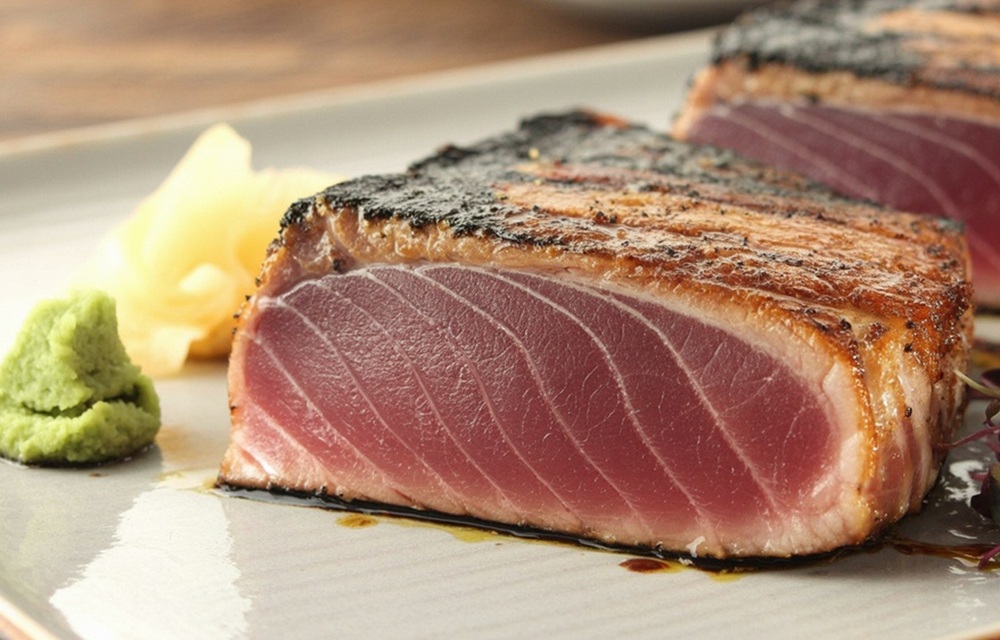
The latter legislation would direct NOAA and the National Institute of Standards and Technology (NIST) to develop a standardized chemical field test that can identify the country of origin of imported red snapper and tuna. The senators behind the bill said it is necessary to crack down on cheap imported seafood being mislabeled and sold as domestic product.
“Seafood that’s caught illegally or intentionally mislabeled rips off consumers and makes it harder for law-abiding U.S. fishermen to compete,” U.S. Senator Brian Schatz (D-Hawaii) said in a statement last year. “Our bill will help fight against anyone who tries to pass off cheap foreign tuna for high-quality ahi from local Hawai‘i fishermen.”
“Hardworking Texas fishermen in the Gulf of America are being undercut by cartel-backed entities who illegally catch and smuggle red snapper into U.S. markets, using profits to fund other illicit activities,” U.S. Senator Ted Cruz (R-Texas) said in a statement. “I am proud to lead the fight on this bipartisan legislation to crack down on these corrupt operations, stand up for Texas fishermen, and protect our communities.”
However, lawmakers have struggled to get the bill over the finish line and signed into law.
The original version of the legislation, the Illegal Red Snapper Enforcement Act, focused solely on red snapper and was approved by the Senate Committee on Commerce, Science, and Transportation but failed to move forward in the legislative process.
Senators reintroduced the new version of the legislation, which also included tuna, in 2025. That version was quickly advanced by the committee and was passed by the full Senate in July 2025. However, the bill has since stalled in the House.
Now, by attaching the legislation to the bipartisan Weather Research and Forecasting Innovation Reauthorization Act, lawmakers hope that red snapper and tuna identification language will finally be passed by both the House and Senate.
The weather bill also includes two other fisheries-related provisions that have failed to pass both bodies.
The legislation includes language from a bill introduced to reauthorize and strengthen the Harmful Algal Bloom and Hypoxia Research and Control Act (HABHRCA), which helps coordinate the government’s response to harmful algal blooms (HABs). HABs can pose a major threat to commercial fisheries; the algae reduces oxygen in the water to dangerously low levels, creating hypoxic zones that kill fish.
“HABHRCA provides essential support to human and environmental health and safety, as well as to economic growth and prosperity nationwide,” Don Anderson, senior scientist at the Woods Hole Oceanographic Institution and director of the U.S. National Office of Harmful Algal Blooms, said in support of the renewal last year. “The legislation recognizes the need for a comprehensive response to HABs and hypoxia and authorizes multiple funding programs and management activities across federal agencies that have had a huge positive impact on U.S. capabilities to monitor and manage these outbreaks. The success of the U.S. National HAB program is built on HABHRCA’s emphasis on facilitating partnerships among federal, state, academic, and industry stakeholders, underscoring the bipartisan nature of HAB and hypoxia problems and their national importance.”
The Senate passed the bill by unanimous consent in September 2025, but it has not been taken up in the House.
Finally, the weather bill includes language authorizing the U.S. Secretary of Defense to provide funds to support other country’s efforts to combat illegal, unreported, or unregulated fishing.
