






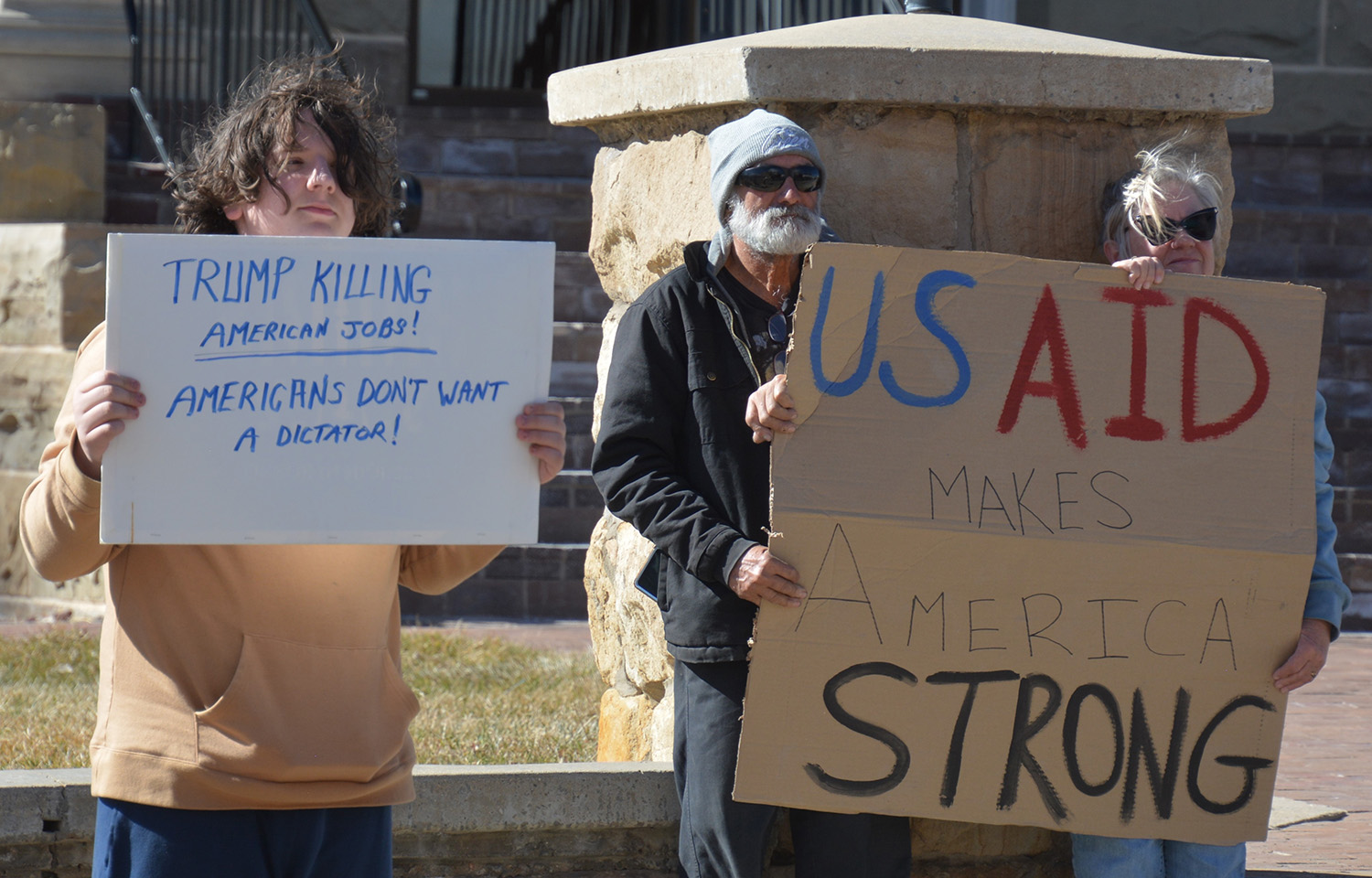
The U.S. Supreme Court has ordered the federal government to release nearly USD 2 billion (EUR 1.8 million) in funding for United States Agency for International Development (USAID) partners, frustrating U.S. President Donald Trump’s attempt to quickly freeze all foreign aid funding.
The ruling will help USAID partners who have already completed contracted work get reimbursed, but current and future USAID spending remains unlikely, with the Trump administration moving quickly to cancel contracts and eliminate future spending obligations.
Shortly after taking office, Trump issued an executive order freezing spending on foreign programs, immediately halting the flow of billions of dollars in expected funding for international development efforts. The unexpected pause in funding left many USAID partners – including those working on developing and improving foreign fisheries – with an immediate funding gap.
Two major USAID partners – AIDS Vaccine Advocacy Coalition and the Global Health Council – sued the Trump administration to unfreeze roughly USD 2 billion in reimbursements for USAID work that had already been completed. The NGOs had initial success in the lower courts, with the United States District Court for the District of Columbia issuing a temporary restraining order to block the freeze, ordering the federal government to continue issuing funding for projects where work had already been completed.
The Trump administration challenged the district court decision, but in a tight 5-4 decision, the Supreme Court ultimately upheld the lower court’s decision 5 March. The court order backing the district court ruling was brief, but Supreme Court Justice Samuel Alito issued a scathing dissenting opinion arguing that the district court had overstepped.
“Does a single district-court judge, who likely lacks jurisdiction, have the unchecked power to compel the government of the United States to pay out (and probably lose forever) USD 2 billion in taxpayer dollars?” Alito said in a dissenting opinion. “The answer to that question should be an emphatic ‘No,’ but a majority of this court apparently thinks otherwise. I am stunned.”
While the Supreme Court order requires the federal government to reimburse USAID partners for work that has already been completed, future and current spending remains in limbo.
The court battle involves only a fraction of the roughly USD 40 billion (EUR 37 million) in annual USAID funding that the Trump administration is working to slash. More than 4,000 USAID workers have been abruptly put on leave, while the agency’s remaining obligations have been transferred to the U.S. Department of State, which has since opted to eliminate roughly 90 percent of USAID grants.
USAID partners working on foreign fisheries projects have been left without expected funding, requiring them to make hard choices about shutting down projects and laying off staff.
“This entails frozen funds, staff layoffs, and scrambling around to find alternative funding for students. One of my projects was canceled ‘with no opportunity for appeal of the decision.’ In another, the funds are frozen, and the USAID person coordinating the program has been ordered to return to the U.S.,” University of Arizona Professor Kevin Fitzsimmons, who has consulted on USAID aquaculture projects, told SeafoodSource previously. “In the larger sphere, projects are being canceled and frozen that affect all kinds of fisheries and aquaculture efforts. I have been on the phone with and emailed various agencies and project leaders, and the most common response is, ‘I wish I knew more and could answer your questions.’ There seems to have been no planning or thought given to process or procedure.”
USAID spent more than USD 73 million (EUR 70 million) on conserving marine biodiversity and promoting sustainable fisheries in over 25 countries in fiscal year 2022.
At the same time, U.S.-based NGOs face potential cuts to domestic grant spending by the Trump administration. For example, at the beginning of March, the federal government announced it was discontinuing USD 4.5 million (EUR 4.2 million) in grant funding for the Maine Sea Grant program, but the funding was quickly restored following pressure from U.S. Senator Susan Collins (R-Maine) and other state officials.
U.S. fisheries groups are also contending with rumors of major cuts to NOAA, the agency that oversees management of the nations’ fisheries. While the Trump administration has yet to propose any specific cuts to NOAA, in February, the government began laying off hundreds of NOAA employees, including some working on NOAA Fisheries missions.
Last summer, House Republicans floated a proposal to chop NOAA Fisheries funding by 22 percent. That legislation ultimately died when Congress was unable to pass a fiscal year 2025 budget, instead passing a series of continuing resolutions to keep the government open. With the current continuing resolution set to expire 14 March, Congressional leaders are scrambling to avert a government shutdown.
A Republican budget plan passed last month calls on the Energy and Commerce Committee – which oversees the Department of Commerce and, therefore, NOAA – to cut USD 880 billion (EUR 816 billion) in spending over the next decade, allowing lawmakers to extend 2017 tax cuts and fund other Trump administration priorities.
