


U.S. lawmakers largely rejected U.S. President Donald Trump’s proposed budget cuts to NOAA Fisheries in a new compromise appropriations bill Congress needs to pass before the government once again runs out of money on 30 January.
On 5 January, House and Senate appropriations leaders released a compromise piece of legislation that will fund the U.S. Department of Commerce – which houses NOAA Fisheries – through the rest of fiscal year 2026, which runs until the end of September. The compromise bill’s spending for NOAA Fisheries largely aligns with the original Senate version of the legislation, ignoring the Trump administration’s proposal to slash the agency’s funding and eliminate programs.
“This package rejects President Trump’s push to let our competitors do laps around us by slashing federal funding for scientific research by upwards of 50 percent and killing thousands of good jobs in the process. It protects essential funding for our public lands, rejects steep proposed cuts to public safety grants that keep our communities safe, and boosts funding for key flood mitigation projects,” U.S. Senator Patty Smith (D-Washington) said in a release.
Both Trump and House Republicans had proposed drastic cuts to NOAA Fisheries last year. The administration only asked for USD 789,327,000 (EUR 670,603,175) in funding for the agency for fiscal year 2026, a 31 percent cut over fiscal year 2024 enacted levels.
House Republicans went even further, demanding a 40 percent cut to the agency’s budget.
Nonprofit Ocean Conservancy called the proposed cuts “draconian.”
“Simply put, a cut of that magnitude would destroy our world-class fishery management system and trigger the decline of our coastal communities,” Ocean Conservancy Senior Director of Fish Conservation Meredith Moore said when the bill was unveiled in September 2025. “NOAA Fisheries ensures that U.S. fisheries are healthy and well-managed for the benefit of all Americans. These cuts would deeply undermine the foundational science and management needed for sustainable fisheries, hamper seafood safety, and weaken the protection of marine wildlife and habitats.”
However, any debate over the different levels of spending in the two versions was put on hold 1 October, when the federal government shut down. With Congress unable to reach a compromise on keeping the government open, funding lapsed. It took several weeks for the Republican-controlled House and Senate to secure enough votes to pass a continuing resolution that reopened the government, maintaining funding levels through 30 January 2026.
Now, with just a few weeks left to avoid another government shutdown, House and Senate leaders have released a compromise bill that provides USD 1.12 billion (EUR 955 million) in funding for NOAA Fisheries, keeping its budget close to fiscal year 2024 enacted levels.
“This legislation is a forceful rejection of draconian cuts to public services proposed by the Trump administration and Republicans in Congress,” House Appropriations Committee Ranking Member Representative Rosa DeLauro (D-Connecticut) said in a release.
The legislation also includes USD 65 million (EUR 55 million) for the Pacific Coastal Salmon Recovery Fund, the federal government’s primary program supporting salmon recovery on the West Coast. Since its establishment in 2000, the fund has doled out more that USD 1.9 billion (EUR 1.7 billion) in support to salmon recovery efforts in California, Oregon, Washington, Idaho, and Alaska.
While former U.S. President Joe Biden had boosted the program with elevated funding from the Bipartisan Infrastructure Law and the Inflation Reduction Act, Trump had sought to eliminate the program, zeroing out funding beginning in fiscal year 2026. Lawmakers did not seem inclined to cut funding for the program when drafting appropriations bills in the summer of 2025, and the compromise legislation released 5 January 2026 rejects the cuts outright.
As with the Senate’s version of the appropriations bill, the compromise version includes USD 6.2 million (EUR 5.3 million) for improving the Seafood Import Monitoring Program. It also includes a USD 7 million (EUR 6 million) increase for fisheries surveys and USD 2 million (EUR 1.7 million) for the fisheries survey contingency fund.
The compromise bill specifies spending for several other initiatives, including:
- USD 1 million (EUR 853,020) for using satellite data to track foreign vessels involved in illegal, unreported, and unregulated fishing;
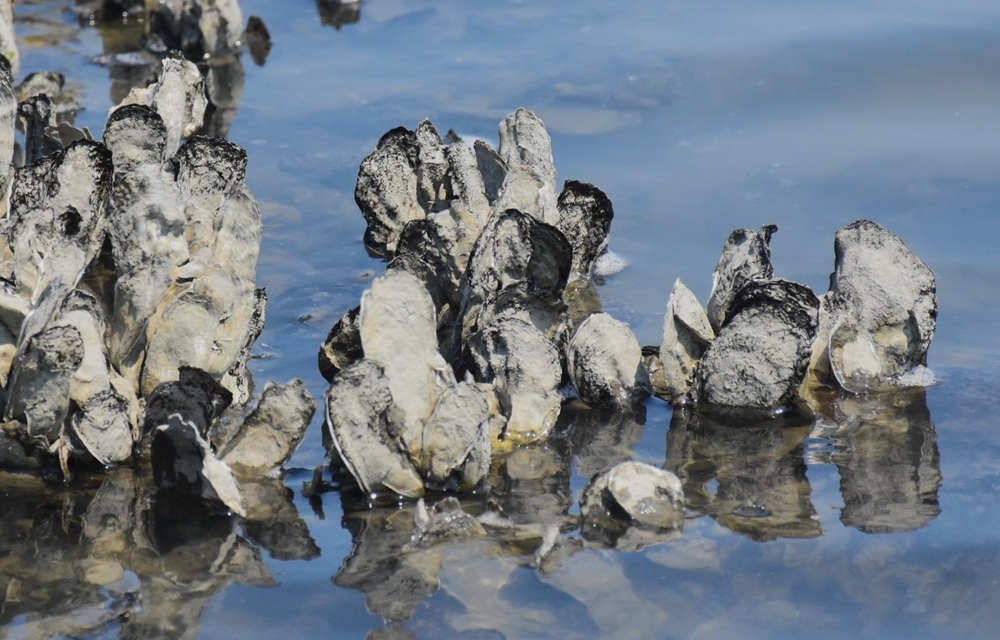
- USD 1.5 million (EUR 1.3 million) for oyster reef research in the Gulf of Mexico, currently referred to as the Gulf of America by the Trump administration;
- USD 5 million (EUR 4.3 million) for oyster aquaculture;
- USD 2.5 million (EUR 2.1 million) to enhance data collection on South Atlantic reef fish;
- A USD 4 million (EUR 3.4 million) increase in funding for Mitchell Act hatcheries; and
- USD 1.5 million for Chesapeake Bay oyster restoration.
“Importantly, passing these bills will help ensure that Congress, not President Trump and Russ Vought, decides how taxpayer dollars are spent – by once again providing hundreds of detailed spending directives and reasserting Congressional control over these incredibly important spending decisions,” Smith said. “It is so important we pass full-year funding bills again and refuse to cede power to this administration, and I hope that Republicans will work with us to do that as we pass the remainder of our funding bills.”
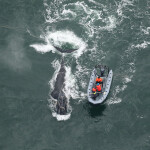
The legislation also directs NOAA Fisheries to carry out provisions included in the draft Senate and House versions, such as support for North Atlantic right whale conservation, funding for alternative lobster and crab gear, investments in whale tracking technology, and USD 5 million for aquaculture development.
