





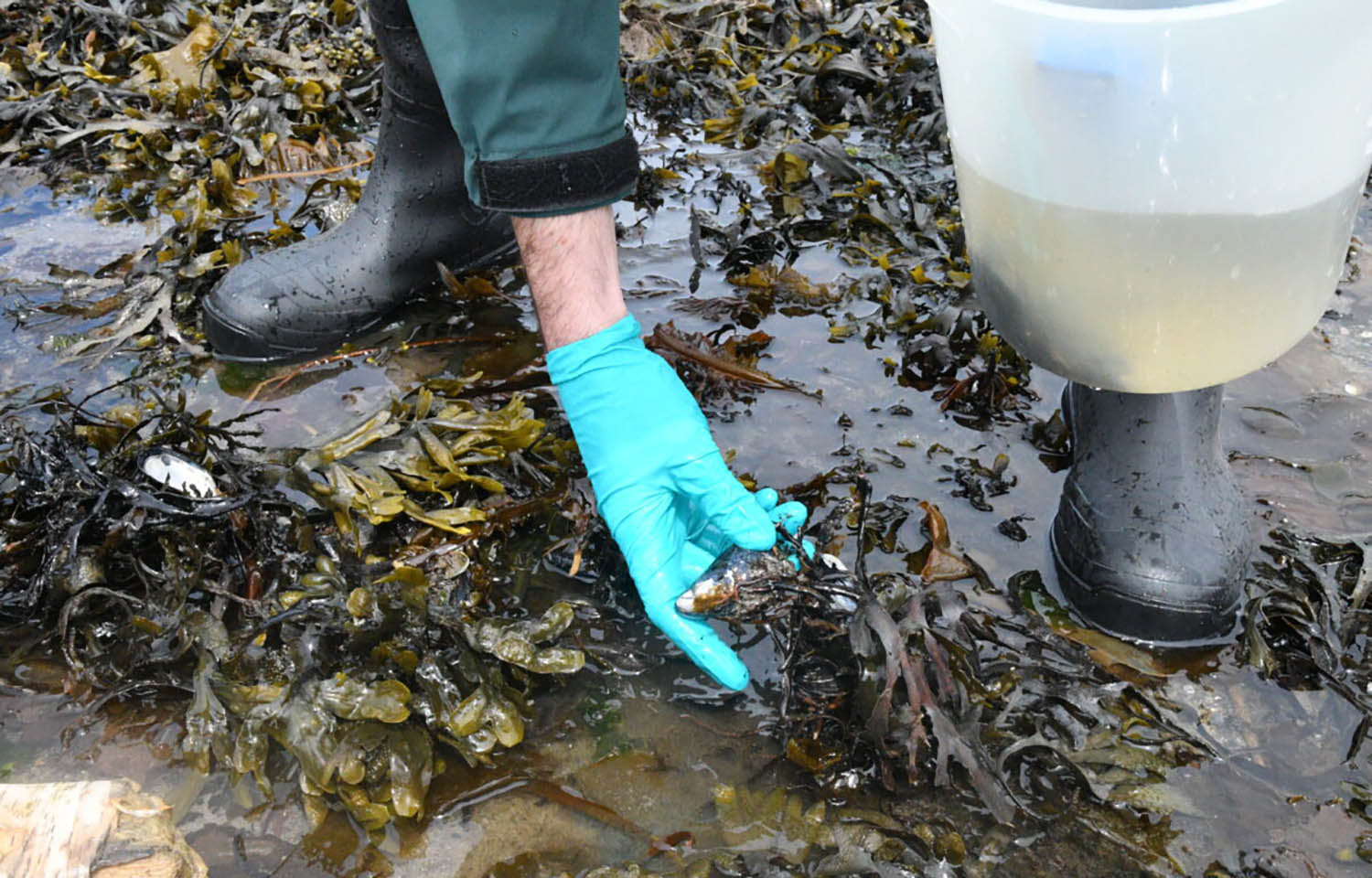
Canadian researchers applying oncology techniques to the study of mussel species have claimed their research provides a way for scientists to comprehensively test for marine pathogens in the bivalves that’s simpler, cheaper, and faster than current alternatives.
“Our approach has the potential to detect all the viruses, all the bacteria, all the pathogens,” Yves St-Pierre, a professor at Canada’s Institut national de la recherche scientifique in Quebec City, Montreal, told SeafoodSource. “It's a more integrated approach that allows us to get so much more information than what [we] can get right now.”
Like other bivalves, mussels filter lots of water – up to 15 gallons per day. The volume of water with which they come into contact means that mussels filter and retain relatively high quantities of the pathogens in their ecosystem, soaking up many bacteria, viruses, and other organisms that serve as indicators of marine heath in a particular area, also known as “sentinel species.”
However, comprehensively sampling and interpreting DNA from the full range of trace pathogens stored in mussels has proven challenging for researchers.
That’s where St-Pierre comes in.
St-Pierre has been a cancer researcher for over 20 years and first experimented with the approach of applying cancer-detection techniques to marine life a decade ago on a visit to the Kerguelen Islands, a remote archipelago over 1,000 miles off the coast of Antarctica. Now, a Quebec-based team led by St-Pierre and doctoral student Sophia Ferchiou has released a paper showing evidence that cancer-detection techniques could have strong use cases for pathogen detection in the aquaculture industry and for marine environmental monitoring.
The researchers utilized a technique called liquid biopsy, commonly used in cancer treatment, to test mussels at four sites in Quebec. In oncology, doctors use liquid biopsy to detect small blood samples of cancer-causing DNA in a person’s bloodstream. Applying that same method to mussels and other invertebrates allowed the researchers to isolate and identify an array of pathogens, bacteria, and other environmental indicators that were present in the ecosystem and stored in the mussels.
St-Pierre was surprised at the sheer amount of data he and the team were able to extract from individual samples, which included the presence and relative levels of harmful marine pathogens present in the mussels’ ecosystem, mutations, and genetic changes in the mussel population, as well as the presence of certain fish species in the area.
“We even discovered viruses … that were affecting [nearby] terrestrial organisms, like cattle. Because if it rains, you have DNA running into water,” St-Pierre said. “A mussel picks up the DNA, we sequence it, and then we can find a virus or a pathogen that is in a nearby ecosystem.”
Better yet for the possibility of future research expansion, recent advances in DNA sequencing technology have made liquid biopsy techniques the researchers used far cheaper and easier than they were just 20 years ago, he said.
“A few decades ago, when we first sequenced the human genome, it cost billions of dollars and took years. Now, we can do it in a couple weeks for a few hundred bucks,” St-Pierre said. “It’s a very simple procedure. We take a drop of blood, seal it in a Ziploc bag with a bit of desiccant, and send it to the lab in the regular mail. Then, we take the piece of paper, extract the DNA, and sequence it. It’s very simple.”
St-Pierre is already considering several potential applications in the commercial aquaculture space.
At the early stages of his research – about five years ago – he connected with mussel farmers in Quebec about using the method to test their crops for common bacteria and viruses. Aquaculture operations could also use the technique to monitor their marine environment for potentially harmful contaminants, he said, which promises to be cheaper and more comprehensive than what they and regulatory authorities are currently doing to ensure that commercially grown mussels are safe for consumption.
“Usually, people in the mussel-farming industry will take a few mussels, freeze them, send them to a lab, and have them test for very specific pathogens that could affect the health of the consumer,” St-Pierre said. “Our approach allows us to test for all the pathogens, not only a few … including some that are probably not being tested for [right now].”
The next hurdle is getting the message about the method’s potential out to the industry, with researchers already hard at work connecting with the business community and environmental monitoring groups to show them the potential of the biopsy technique.
“We are planning to … meet more mussel growers and explain to them what we do,” St-Pierre told SeafoodSource. “We hope getting the word out will help us to reach those interested in the future – in Canada or [the] U.S.”
