






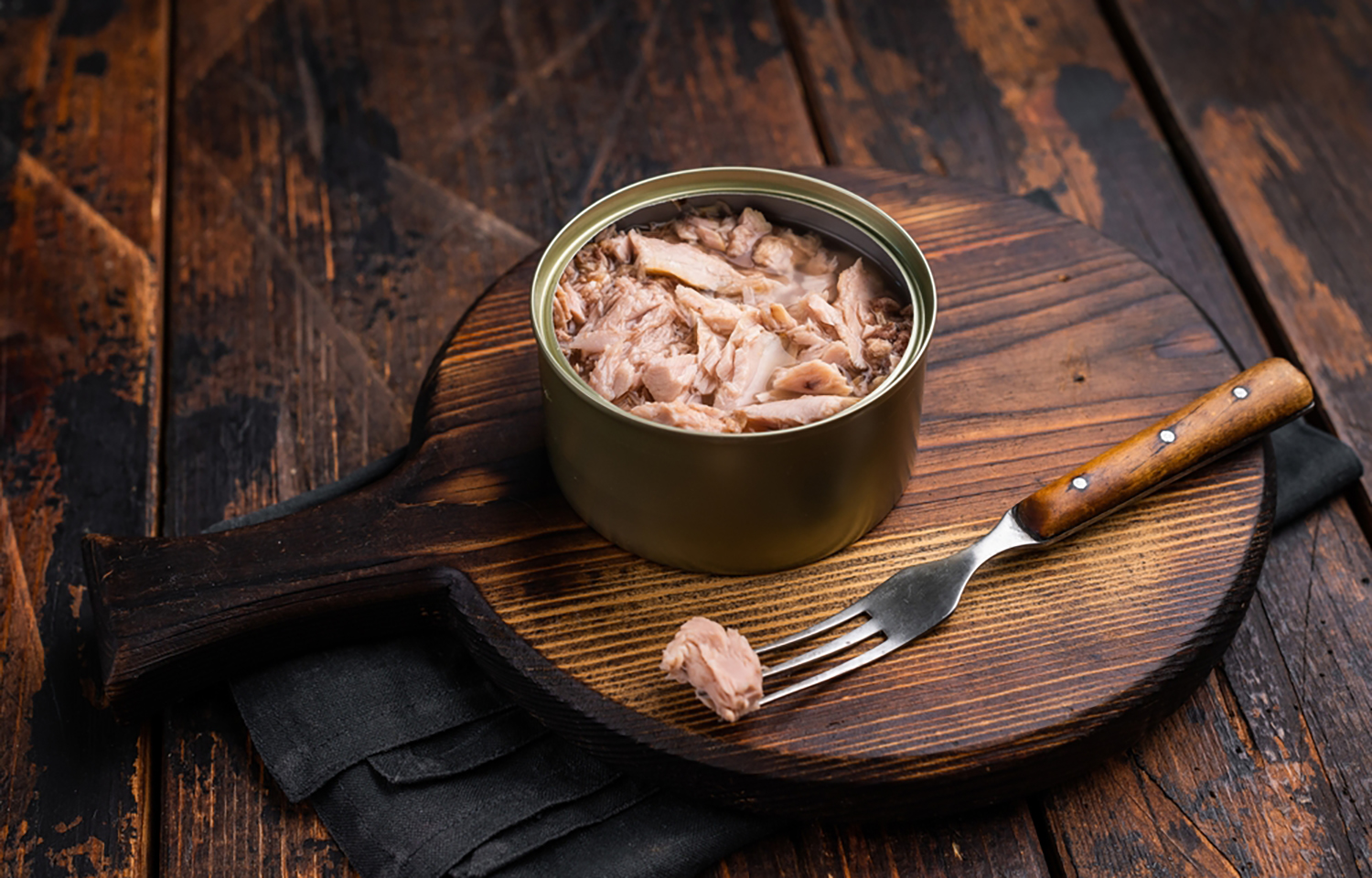
Eight cities in France have decided to take tuna off of school menus due to concerns about high levels of mercury.
A release recently signed by the deputy mayors of such cities as Paris, Lille, Lyon, and more stated that tuna will remain off their municipalities’ school menus until nationwide and/or bloc-wide regulations on mercury levels in tuna prioritize better protection of human health.
The municipalities urged the French government and the wider European Union to lower the legal limit for mercury in tuna, aligning with that of other fish species, and also made a wider call for the withdrawal of meals containing canned tuna from all school canteens, hospitals, care homes, and maternity wards.
The decision came in direct response to publications from NGOs BLOOM and Foodwatch.
Following an investigation, in 2024, these organizations alerted the public to high levels of mercury in tinned tuna across Europe. According to their investigation, one in 10 cans tested by independent laboratories had mercury levels higher than the legal limit for fresh tuna, and the French brand Petit Navire registered mercury levels 13 times higher.
The NGOs’ investigation also said that the European Commission and E.U. member nations set significantly higher maximum mercury limits for tuna than for other fish species.
According to the report, the maximum mercury content the E.U. allows for fresh fish including cod, sardines, anchovies, mackerel, and herring is 0.3 mg/kg, and seafood products in general must contain no more than 0.5 mg/kg. However, the maximum mercury content in tuna can be as high as 1 mg/kg, and the Bloom report found that in canned tuna, the mercury concentration can be as high as 2.7 mg/kg.
BLOOM said despite an unprecedented public response and a petition signed by nearly 60,000 people, the French government currently has no plans to lower mercury thresholds and has argued that further research is required “concerning the factors of concentration, dilution, or processing" in various forms of tuna.
“The French government has been avoiding the issue for almost a year now and continues to uphold mercury standards that protect the tuna market, rather than public health. We hope this growing movement will push both national and European policymakers to prioritize health over economic interests – especially when it comes to the most consumed fish in France and Europe,” Bloom Research Fellow Julie Guterman told SeafoodSource. “It is a major victory to see local elected officials taking a stand for public health and taking this issue into their own hands.”
BLOOM and Foodwatch’s investigation follows studies from other researchers that highlight the high levels of mercury in tuna.
For example, last year, French researchers found that mercury levels in tuna have remained nearly unchanged at a relatively high level over the past five decades and that the use of fossil fuels is playing a particularly harmful role in keeping these levels elevated.
However, other research has sought to dispel widespread fears of mercury in tuna.
Earlier this year, in a guest article submitted to the Western Pacific Regional Fishery Management Council, John Kaneko, a seafood safety specialist based in Honolulu, Hawaii, U.S.A., aimed to ease concerns surrounding mercury levels in tuna.
Fears of mercury in seafood, according to Kaneko, began in Minamata, Japan, in the 1950s, when high mercury levels were due to severe industrial pollution from mercury-tainted wastewater – not naturally occurring mercury concentrations.
Kaneko explained that tuna became a scapegoat in efforts to distance human industrial activities, such as coal and gold mining, coal burning, and waste processing, from mercury issues.
“Repeat a story enough times, it becomes true. The intent is to engage the public in support of controlling mercury pollution, especially from coal-fired power plants,” Kaneko said in the article.
In the present day, Kaneko acknowledged that while people are primarily exposed to mercury through seafood consumption and that mercury is a neurotoxin, it is not accurate to say that mercury concentrations typically found in tuna are harmful.
