






The National Fisheries Institute (NFI) and other organizations are concerned about new front-of-package (FOP) nutrition labels the U.S. Food and Drug Administration (FDA) is proposing for most packaged U.S. food products.
The FDA said the new nutrition labels would give consumers “readily visible information about a food’s saturated fat, sodium, and added sugars content – three nutrients directly linked with chronic diseases when consumed in excess.”
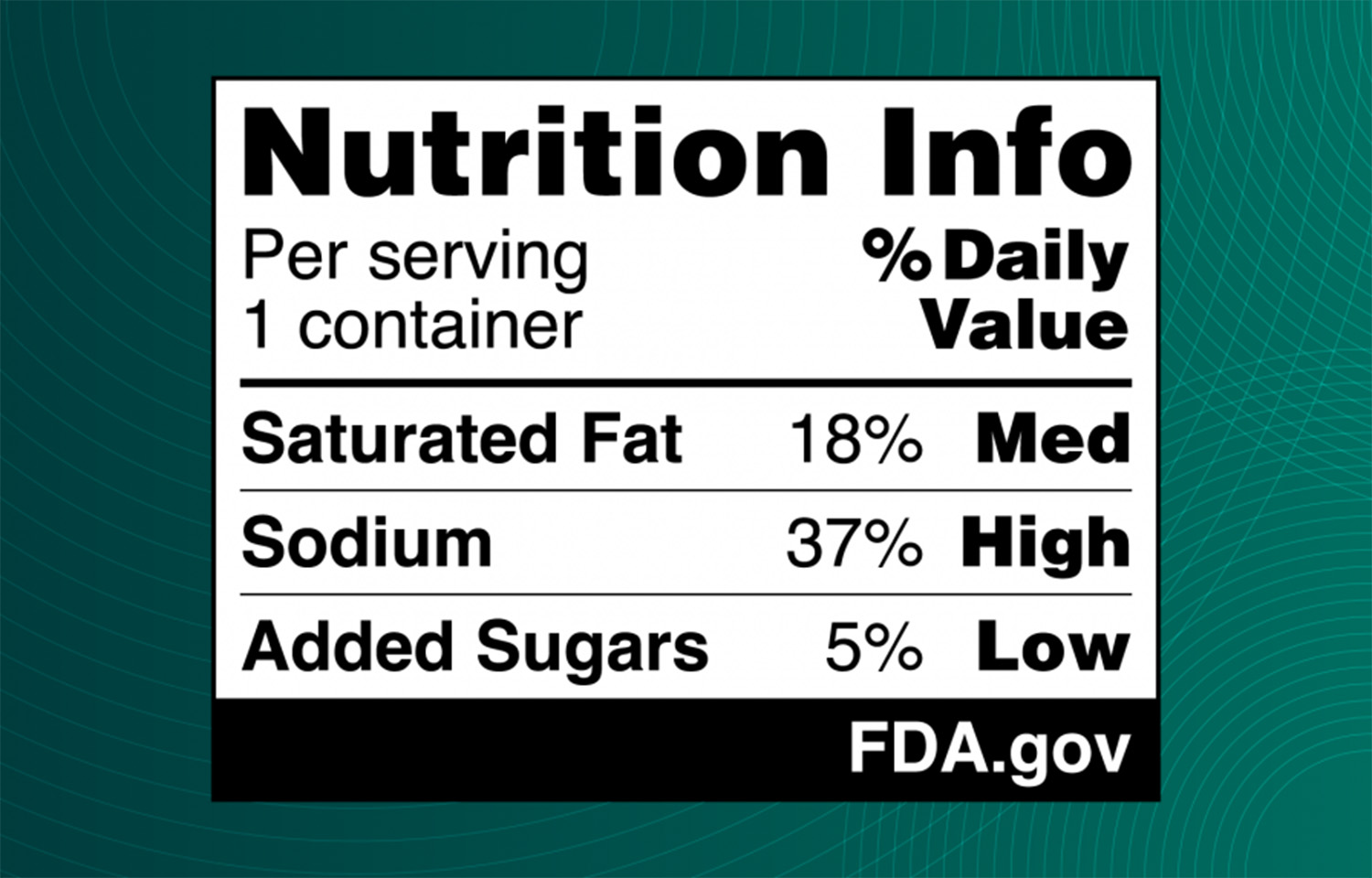
The “Nutrition Info box” that would appear on the front of packaged food products would show whether the food has “Low,” “Med,” or “High” levels of saturated fat, sodium, and sugar. The FDA said it would complement the existing Nutrition Facts label, which gives consumers more detailed information about nutrients in foods.
While the FDA said it would help better inform consumers, NFI President and CEO Lisa Wallenda Picard said the new labels would likely end up doing the exact opposite.
“We are disappointed that the FDA is proposing still more significant, unnecessary regulation in the waning hours of the Biden administration,” Picard said. “The proposed front-of-package labeling is redundant and could deliver an inaccurate message to consumers including healthy seafood in their diets.”
By focusing on saturated fats, the FDA “misses the point and misleads label readers,” Picard said.
“Fish, such as salmon, contain almost entirely unsaturated essential omega-3s, the healthiest fatty acids found in any protein,” she said. “Meanwhile, the planned labeling provides no way to highlight nutritious components of the product, including for fish, such as the unsaturated fats associated with brain and heart health.”
Picard said when it takes office, the Trump administration should withdraw the proposal in its entirety because for seafood products, the label would be “essentially pointless and can confuse consumers while adding an unneeded compliance burden to American producers who will need to retool their labels for the massive U.S. market.”
Similarly, FMI - The Food Industry Association Chief Public Policy Officer Jennifer Hatcher said that “reducing a food’s entire dietary contribution to whether it is low, medium or high in saturated fat, sodium, and added sugar is overly simplistic and will not help educate consumers on how to improve their overall dietary pattern.”
Hatcher said the proposed nutrition labeling would also be expensive to add to products because of the proposed requirements about its location. The FDA policy would mandate the label appear in the upper-third of the principal display panel, which according to Hatcher would “require a redesign of most packaging labels and displace other important information like date labels, leading to significant cost increases with limited corresponding benefit to public health.”
FMI said Instead of its current proposal, the FDA should adopt the Facts Up Front (FUF) program, a voluntary labeling scheme designed to highlight key product information such as calories, saturated fat, sodium, added sugars, and nutrients.
“FMI believes it is the best-suited scheme with clear facts to help consumers make informed choices based on their personal needs,” Hatcher said.
Consumers are also already familiar with FUF icons on more than 200,000 products, according to Hatcher.
The FDA said that the primary motivator behind its proposed front-of-pack nutrition labels is combating chronic diseases such as heart disease, cancer, and diabetes.
“With 60 percent of Americans having at least one chronic disease, such diseases are also the leading drivers of the nation’s USD 4.5 trillion [EUR 4.4 trillion] in annual health care costs,” the agency said. “A large body of research indicates that a major contributor to this problem is excess consumption of saturated fat, sodium, and added sugars. There is a proliferation of foods in the food supply that are considered ultra-processed, which often contain high levels of these nutrients. The Nutrition Info box is focused on providing accessible information to help consumers quickly and easily identify how foods can be part of a healthy diet.”
FDA Commissioner Robert M. Califf said the science on saturated fat, sodium, and added sugars is well-established, as it’s the direct link between their consumption and chronic conditions. The new labels would help consumers make quick decisions.
“It is time we make it easier for consumers to glance, grab, and go,” Califf said. “We are fully committed to pulling all the levers available to the FDA to make nutrition information readily accessible as part of our efforts to promote public health.”
The proposed Nutrition Info box is informed by a substantial body of research conducted by the FDA, including a scientific literature review, consumer focus groups, and a peer-reviewed experimental study, the agency said.
In 2023, the FDA conducted an experimental study of nearly 10,000 U.S. adults to further explore consumer responses to three different types of FOP labels. The study showed that the black and white Nutrition Info scheme with the percent Daily Value performed best in helping consumers identify healthier food options.
If finalized, the proposed rule would require food manufacturers to add the Nutrition Info box to most packaged food products three years after the final rule’s effective date for businesses with USD 10 million (EUR 9.7 million) or more in annual food sales and four years after the final rule’s effective date for businesses with less than USD 10 million in annual food sales.
Interested individuals and businesses can submit comments on the proposed rule by 16 May 2025.
