






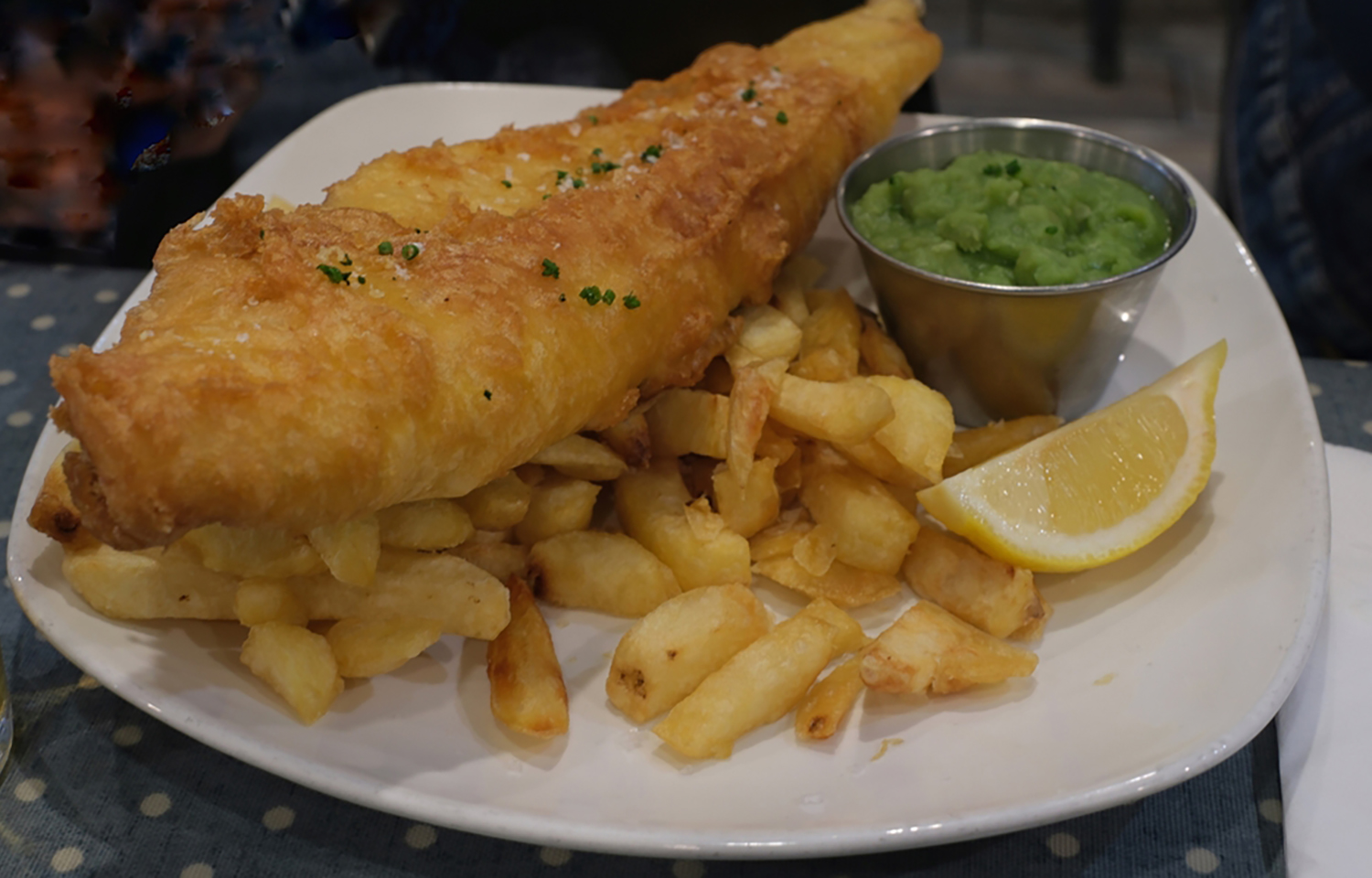
Sales of fish and chips realized declines in U.K. foodservice last year, while overall seafood sales declined less dramatically, according to recent data from seafood representative public body Seafish.
According to a new report, Seafish found out-of-home consumption of fish and chips in the U.K. declined 9 percent in 2025, equivalent to 13.1 million fewer servings. Long-term consumption has also fallen significantly, with servings 61 percent lower in 2025 than in 2017.
Still, fish and chips generate significant sales across the U.K. foodservice market, Seafish pointed out.
“Their broad appeal, cultural importance, and reputation as a familiar comfort food support strong and consistent demand across the sector. They also represent a key route for seafood consumption, accounting for 13 percent of all seafood servings in British foodservice,” the organization said.
Fish and chip shops remain the dominant purchase channel for the meal, accounting for 46 percent of servings last year; however, this channel also experienced the largest decline in 2025, dropping 22 percent in sales.
Pubs are the second-largest channel for fish and chips, accounting for 25 percent of servings last year, but similarly, sales fell by 13 percent. Servings at full-service restaurants also dropped 6 percent.
Conversely, quick-service restaurant sales of fish and chips jumped 27 percent, while sales in the workplace and education channel rose 122 percent. Travel and leisure venues, which have the smallest share of the market, realized a sales increase of 47 percent.
“Growth opportunities exist in attracting younger consumers, families, and expanding into breakfast and snacking occasions,” Seafish said, adding that convenience-led services, menu innovation, and value positioning are key to future recovery.
As for the broader seafood landscape, Britons purchased 141,688 tons of seafood out of home in 2025 worth GBP 7.7 billion (USD 10.2 billion, EUR 8.9 billion), according to Seafish, citing Circana data.
Those totals represented 3 percent drops in volume but a 20 percent increase in value, “significantly ahead” of total food and drink (+4 percent), Seafish found.
“This growth highlights higher prices rather than increased consumption or visit frequency,” the organization said.
Overall foodservice servings declined by 2 percent last year, and visits fell by 3 percent, demonstrating that consumers are eating out less frequently and purchasing fewer items, according to Seafish. Additionally, seafood represents 4 percent of all food and drink servings within U.K. foodservice, and around one-third of all seafood in the U.K. is sold through the foodservice market.
“Seafood is an important part of the British foodservice market, appearing across many cuisines and channels and sold at a range of price points. It is often associated with quality and nutrition, particularly as a source of protein,” Seafish said.
Though U.K. consumers view seafood as high quality and nutritious, they remain concerned about the price of seafood compared to other proteins, Seafish found.
“Seafood remains one of the most expensive proteins out of home, second only to lamb in terms of average spend per serving. This higher price category is increasingly reliant on promotions, with almost half of seafood visits including a deal,” the organization said.
