






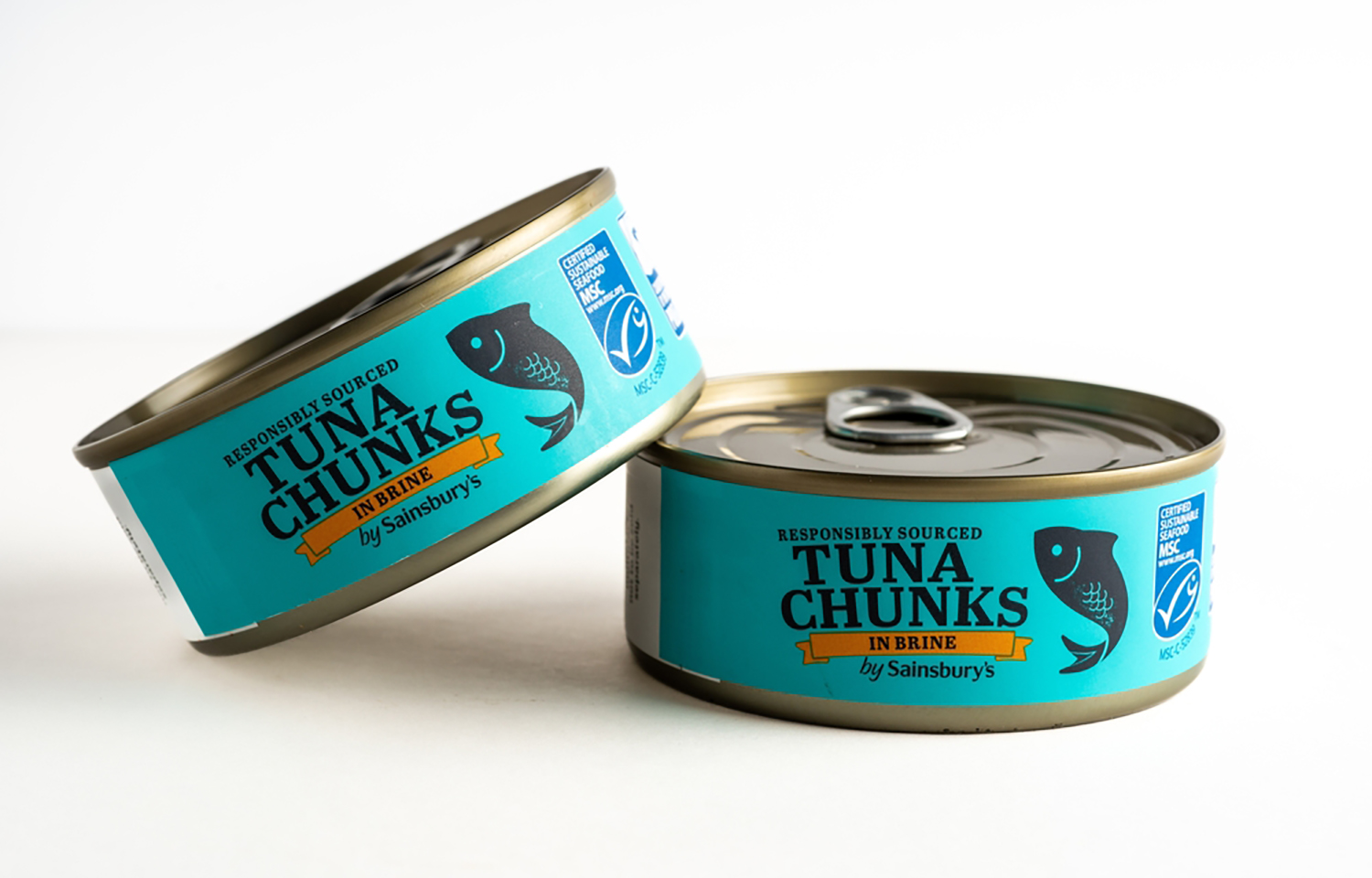
In the U.K., tuna is now the country’s top-selling Marine Stewardship Council (MSC)-certified wild-caught species, overtaking cod for the first time.
The “MSC UK Tuna Shopper Report 2026” recently revealed that nearly half (49 percent) of all tuna products on U.K. supermarket shelves now carry the MSC eco-label, up from just 18 percent in 2021. By volume, the increase is even more pronounced, with 65 percent of tuna sold in stores now MSC-labeled, compared with just 25 percent two years ago.
According to MSC U.K. and Ireland Senior Commercial Manager Seth McCurry, the market growth, which has seen sustainable tuna “becoming the norm” in the past five years, reflects a combination of retail commitments and improvements in fishery practices.
Ten major U.K. supermarkets now offer MSC-labeled tuna, up from six in 2023 and three in 2021. Among these retailers are Waitrose, Sainsbury’s, Tesco, and Iceland, which have all achieved 100 percent MSC certification across their own-brand tuna ranges, while Lidl and Aldi have significantly expanded their certified offerings.
The rise in availability has translated into record consumption.
U.K. and Irish consumers purchased 45,840 metric tons (MT) of MSC-labeled tuna in 2024-25, accounting for 18 percent of global MSC-certified tuna sales and more than double the previous year’s share.
Consumer demand – particularly among younger demographics – is playing a central role in this surge, with MSC research indicating that 83 percent of people under 30 actively choose sustainable seafood.
McCurry said that “while there is more to do,” the United Kingdom is proving that sustainability can be “delivered at scale, without compromising on affordability or choice.”
At the same time, MSC’s latest “Sustainable Tuna Yearbook” finds that momentum is not limited to the U.K.
It reported that more than 400,000 MT of MSC-labeled tuna were sold in 2025-26, marking 100,000 MT year-over-year growth – an increase of 39 percent. Germany and the United States have led the way in terms of the volume of MSC-labeled tuna they’ve made available to their markets, with 87,862 MT and 76,959 MT, respectively.
Landings from MSC-certified fisheries reached 3.1 million MT in 2025, representing over half of the global wild tuna catch across major commercial species, and some 182 tuna fisheries are currently engaged with the MSC program.
The yearbook also confirmed that retail and brand commitments to total certified sourcing are expanding across key markets. In addition to the U.K. progress, Walmart has reached 100 percent MSC-certified own-brand canned tuna in the United States, while Princes has achieved full certification in the Netherlands. In France, Rio Mare has transitioned its canned and jarred tuna ranges to MSC certification, and new private-label pledges continue to emerge across Europe.
MSC Chief Program Officer Nicolas Guichoux said these commitments “mark a shift toward full-scale transformation,” and by driving demand for certified fisheries and building consumer trust, they are helping “accelerate progress toward healthier oceans and more transparent food systems.”
Meanwhile, over the past year, several fisheries have achieved MSC certification, including Australian southern bluefin tuna and Ghanaian Atlantic skipjack and yellowfin fisheries. Today, around two-thirds of global tuna catch is certified to the MSC standard.
MSC reported that other key advances include the implementation of science-based harvest strategies and the use of technologies to reduce bycatch and ecosystem impacts. It highlighted that a significant policy milestone was reached in December 2025, when members of the Western and Central Pacific Fisheries Commission agreed on a management procedure for South Pacific albacore tuna. This pre-agreed, science-based framework establishes adaptive catch limits tied to stock health, marking an important step toward long-term sustainability for a major tuna stock.
Despite the progress made, challenges still remain, the MSC said.
It pointed out that not all tuna stocks are yet covered by robust harvest strategies and that climate change is expected to increase pressure on tuna populations and management systems.
At the same time, it noted that industry stakeholders and regulators face mounting urgency to ensure consistent adoption of effective governance frameworks across all regional fisheries management organizations (RFMOs).
The yearbook also advised that the foodservice industry “has not made the same progress” as the retail sector in offering more certified tuna, despite the growing availability.
