





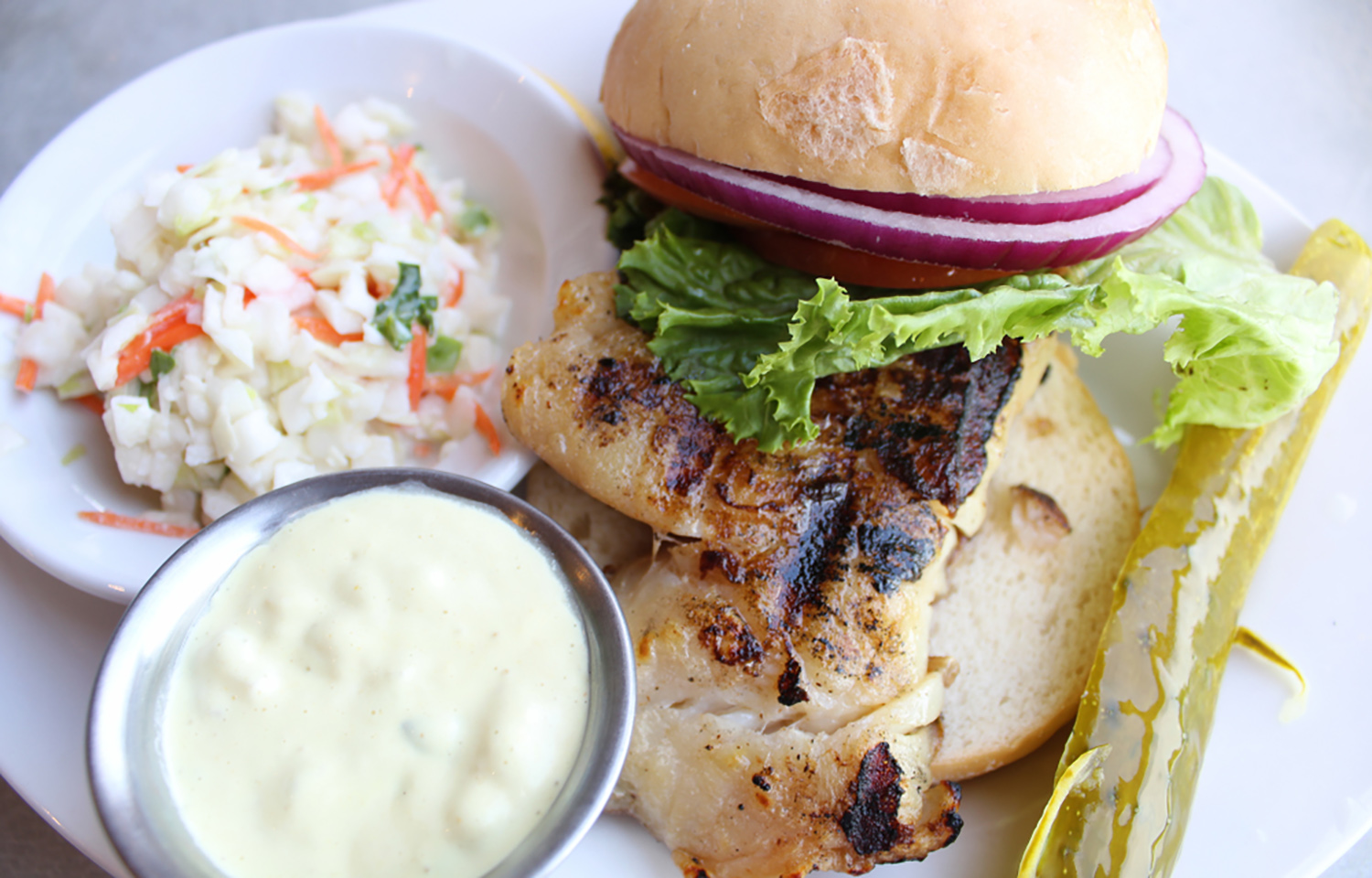
A grouper sandwich in the U.S. state of Florida has become the focal point of the latest public debate on U.S. inflation.
Florida Governor Ron DeSantis recently called out the price of a grouper sandwich when visiting a restaurant in Santa Rosa Beach, using it as an example of skyrocketing food costs in general.
“I’m looking at this sign: USD 32 (EUR 27) for a grouper sandwich. [They] are definitely getting those tourists to pony up,” DeSantis said, per Florida Politics, when visiting Shunk Gulley Oyster Bar. "I don’t know that I would pull the trigger on USD 32. I love grouper sandwiches, [but] I don’t know if I could pull the trigger on USD 32.”
Inflation is “unbelievable” everywhere, DeSantis added.
“I can’t get through the drive-thru at McDonald’s without spending USD 40 (EUR 34) or USD 50 (EUR 43) it seems,” he said. “It used to be you could get it very cheap. Now, it’s just more and more.”
Chef Andrew Gruel – a TV personality, a restaurant industry advocate, and the co-owner of Calico Fish House in Huntington Beach, California, U.S.A. – however, told SeafoodSource the price of the sandwich is “normal” and Shunk Gulley Oyster Bar is not price gouging.
After reviewing the costs of Florida grouper and other ingredients in the sandwich, Gruel said the menu price amounts to 25 percent of the cost of goods, which is industry standard. The fish cost the restaurant around USD 6.00 (EUR 5.00) for a 6-ounce portion, Gruel estimated after checking with purveyors in the state.
Additionally, that price doesn't include factors such as salt, pepper, paper products, cooking fats, and more, so “realistically, this sandwich probably isn't even a moneymaker for them,” Gruel said.
“This is a testament to the fact that the cost of goods has gotten so high,” he said.
Maeve Webster, the president of food consultancy firm Menu Matters, said she doesn’t know whether the grouper sandwich is priced fairly, but she believes it’s unfortunate that the restaurant is being called out as taking advantage of tourists or overpricing due to inflation, “as I don't think DeSantis knows for sure whether either is the case,” she said.
“It’s just an expensive sandwich, so it's an easy target,” Webster said. "It’s unfair to the restaurant to suggest they are doing something unfair or unjustified without having a better understanding of their overall costs and their finances.”
Restaurant operators’ costs have risen significantly, according to foodservice industry consultant John Gordon, the president of Pacific Management Consulting Group in San Diego, California, U.S.A., but he, unlike Gruel, said he believes the sandwich is priced too high.
“In my opinion, no restaurant can sell or feature a USD 32 sandwich for anything at any time. The bad publicity, whether on an outdoor sign or on a menu insert, is dangerous,” Gordon said.
Cumulative restaurant menu prices have risen 40 percent over the past five years, and grocery prices have climbed around 35 percent in the same period, Gordon said.
In May, food-away-from-home inflation rose 3.8 percent compared to May 2024, while the food-at-home index rose 2.2 percent, according to the U.S. Bureau of Labor Statistics’ U.S. Consumer Price Index. Notably, full-service restaurant meal prices increased 4.2 percent in the time frame, while limited service meal prices rose 3.5 percent.
In tandem with the price increases, overall U.S. restaurant traffic has seen declines over the past year, as Americans continue to be concerned about higher menu prices and the overall economy, Circana Senior Vice President and Industry Advisor of Food and Foodservice David Portalatin said, per Restaurant Dive.
As a result, foodservice data firm Technomic lowered its full-year 2025 sales projections for total U.S. foodservice, which includes hospitality, schools, restaurants, and other outlets, projecting a range of 3.4 percent to 4.6 percent increases, depending on the severity of economic challenges this year, which is down from its initial expectation of a 5.1 percent increase in foodservice sales this year.
For restaurants only, Technomic forecasts sales growth ranging from 2.8 percent to 4.2 percent, with a baseline scenario of 3.5 percent growth, marking a 0.2 percent decline from initial projections.
