






After years of selling fish to wholesalers and retailers, Zurich, Switzerland-headquartered tilapia farming firm Regal Springs is expanding into direct-to-consumer sales.
“We have very strong foundations, and that’s recognized in our trade equity,” Head of Marketing and Business Development Vernon Bradley told SeafoodSource at Seafood Expo North America (SENA), held 15-18 March in Boston, U.S.A. “What we don’t have a lot of is consumer equity.”
The expansion from business to business (B2B) sales into business to consumer (B2C) sales was inspired by the company’s desire to introduce consumers to the brand on its own terms.
“When we go to retailers, when we go to wholesalers, everybody knows Regal Springs,” he said. But “when you are a B2B supplier, you have less control of your outcomes.”
Regal Springs provides two thirds of the tilapia that is sold under the Kirkland brand at Costo in the U.S., and is a supplier of a number of other major retailers. Because Regal Springs currently sells most of its product under other company’s branding, however, consumers don’t recognize the company or, its leadership says, what sets it apart from other tilapia producers.
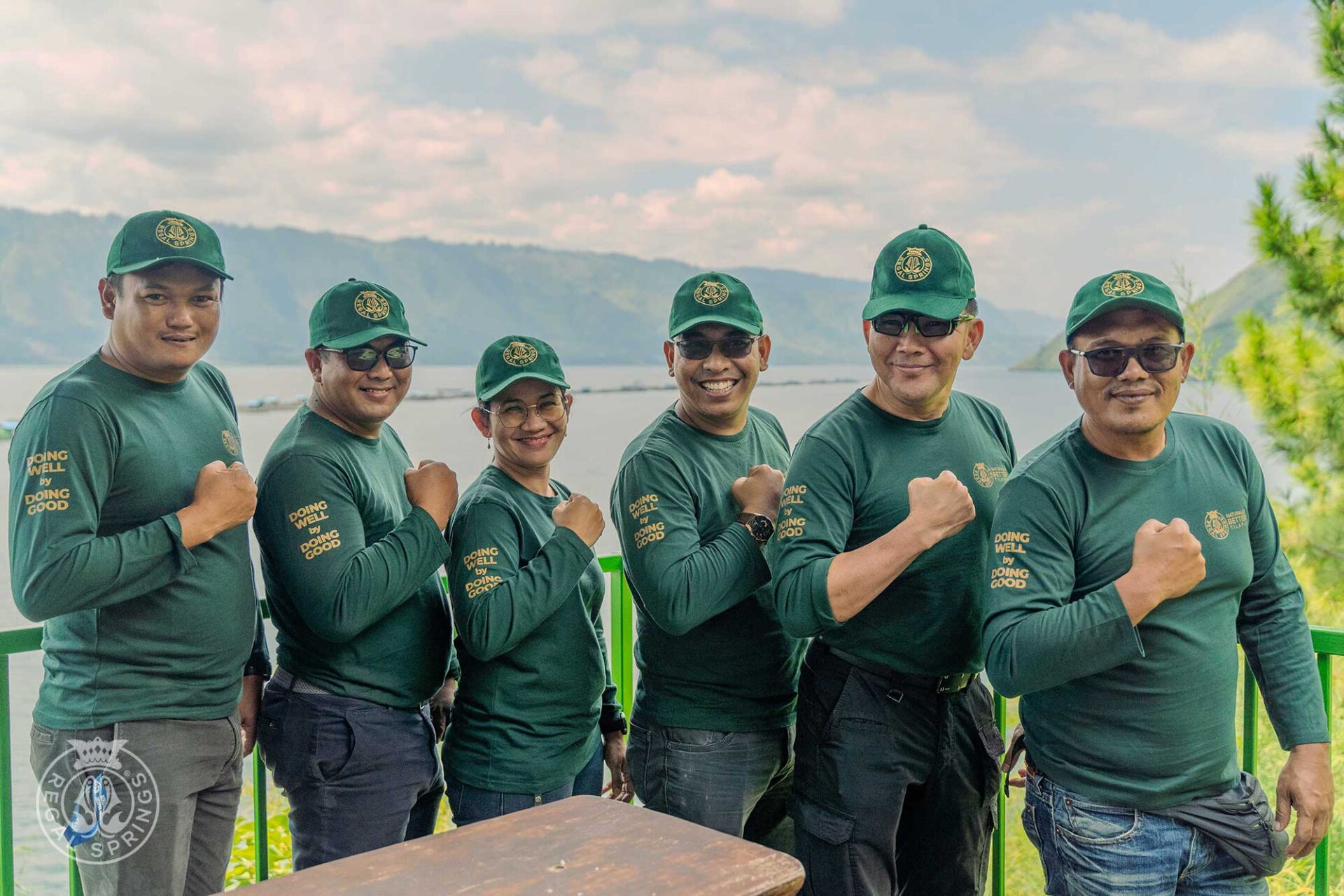
Founded in 1988 by former U.N. aid worker Rudi Lamprecht, the company has been sustainable from the beginning. Lamprecht’s goal in starting the company was to help an impoverished lakeside community in Java, Indonesia, build wealth and employment opportunities while producing a healthy, sustainable protein, CEO Alois Hofbauer said at SENA. Lamprecht took “doing well by doing good” as his motto, and the phrase remains the firm’s guiding principle to this day.
“Today you would call [Lamprecht] a social entrepreneur,” said Hofbauer. “At the time [in 1988], that was a new category.”
“He always said, ‘we [bake] the cake and we share the cake with the communities,’” said Hofbauer. “The rest is history.”
The company, which operates in natural lakes in Mexico, Honduras, and Indonesia, has grown from a 10-person operation to a major producer which employs nearing 5,000 people and produces 65,000-70,000 tons of tilapia a year. Its tilapia competes in the marketplace with what Bradley called “quality white fish,” being served – for instance – in English pub chain Greene King, where it replaced cod in the establishment’s fish and chips, and by Hello Fresh in Germany. Though Hofbauer said that many companies are skeptical about serving tilapia at first, they reliably find that Regal Springs’ products stand up favorably to other white fishes.
Hofbauer attributes the company’s high quality product to its focus on environmental sustainability and business ethics.
“Our farms are all on natural lakes, in oxygen rich waters, so we don’t do anything on ponds. Very early on this was difficult; [Lamprecht] said no antibiotics, no other funny substances, I want to have the best possible quality product there is. Obviously being a Swiss company, it’s very Swiss in the thinking,” said Hofbauer.
Hofbauer believes that the company’s ethics promote its business goals. Regal Springs is the largest employer in a number of communities where it operates, and it invests heavily in workforce development through education and on-site training programs which allow workers to learn from each other. It runs programs through local universities to train students in aquaculture, many of whom come to work at Regal Springs.
“We have to be in harmony with the communities [where we farm], so we invest in schools, we invest in medical [programs]. It’s our way of basically making them accept us. Because, if they don’t want you to be there, you won’t be there,” he said,
Hofbauer said that the prime challenge of the expansion is marketing a “quality product in a commodity-sized category.”
Running the business sustainably is a costly enterprise, said Hofbauer, and it's hard to communicate the value of those costs to consumers.
While wholesalers can absorb higher prices because they’re selling such large quantities, individual families need to understand why they are being asked to pay more for the same species.
Still, Hofbauer insists Regal Spring's quality outpaces the price differences between its products and those of its chief competitors.
“If you taste our product sight unseen with a Chinese product, I don’t even need to tell you [the difference]. You will immediately get it," he said.
The most effective way of getting customers on board, Hofbauer said, was doing tastings, which were reliably successful. Those events are expensive, however, so Bradley and his team have focused on running targeted tastings for influencers who then promote the brand.
Bradley explained that the marketing strategy for the new products – which include frozen fish fajitas and other pre-portioned and value-added fish strips – was meant to appeal to families seeking healthy, convenient, affordable dinner options. One of the influencers involved was a young mother whose content focused on cooking dinner with Regal Springs tilapia while her children played in the background.
Bradley called the fajita fish strips a “simple innovation,” that was lacking in the frozen protein market.
“Nobody does fish fajitas,” he said. “You get chicken fajitas, you can get beef fajitas, pork fajitas. So we’ve launched fish fajitas.”
The company has made tailored versions of each product for different national markets. In the Spanish community, Bradley said, the fajitas concept was immediately understood, while in other countries the company found that calling the product “fajita fish strips” was more effective. For the American market, Regal Springs produced frozen mini-filets to take advantange of consumers' prioritization of portion-control and convenience.
Despite Regal Springs’ focus on quality, there is no doubt that its direct to consumer products represent a “value proposition at the same time," Bradley said. Moving from B2B to B2C gives the company a chance to showcase what tilapia can be if it is produced under the right conditions.
“That’s why we want to control the output,” he said.
He said that the restaurants who are starting to feature Regal Springs tilapia aren’t yet fully ready to claim the species, though their customers love Regal Springs fish.
“At the moment, it’s white fish,” he said. “It’s a bit of a frustration, and it’s step by step.”
But the product “has gone down very well…so we just have to get over that hurdle," he added.
