






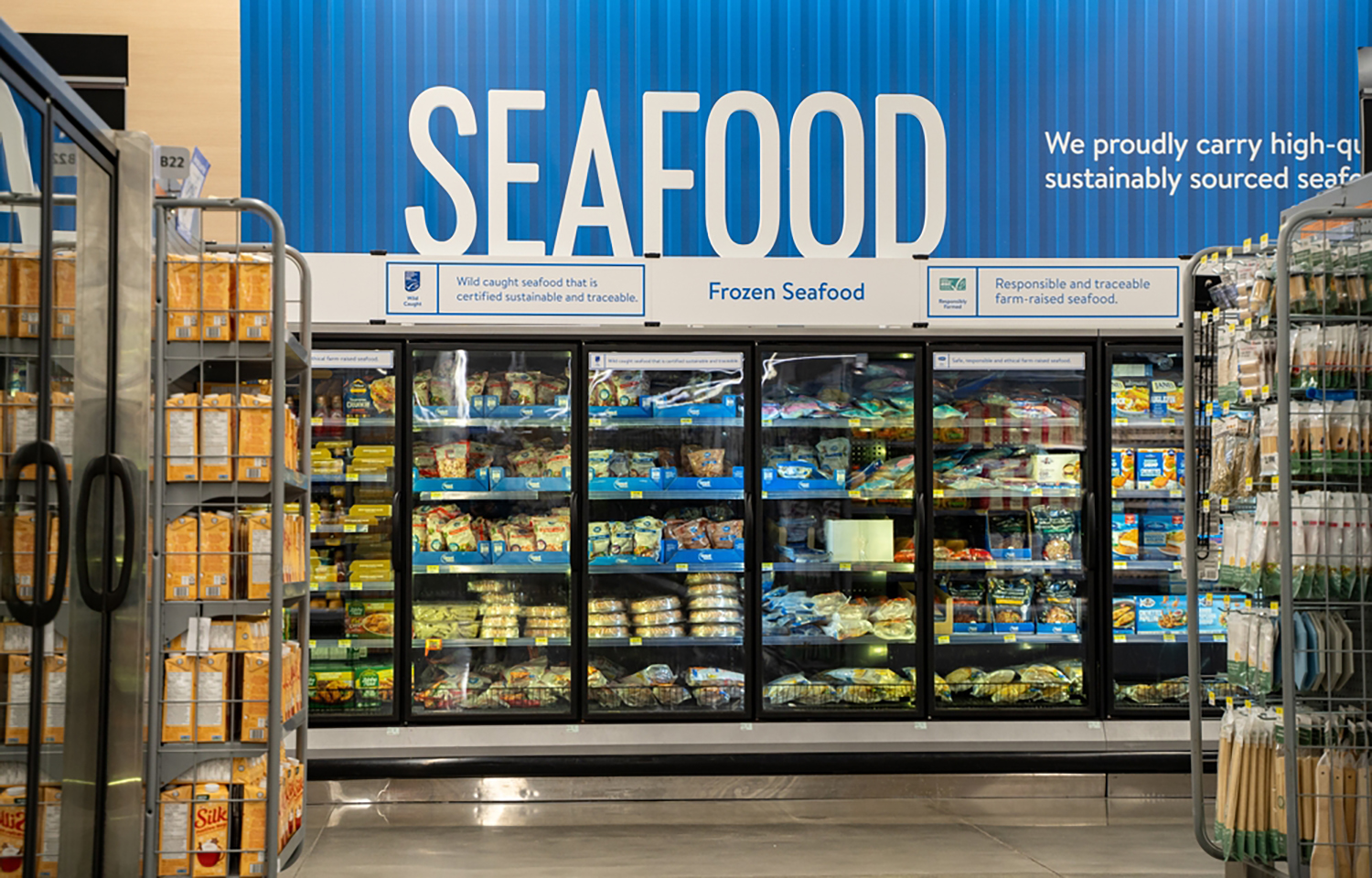
U.S. grocery sales are expected to continue on a steady growth trajectory over the next few years, and several consumer trends are pointing toward seafood being a top beneficiary of that growth.
According to a recent report from LLC Attorney, U.S. food retail sales are projected to soar from USD 245.8 billion (EUR 210 billion) in 2026 to USD 389 billion (EUR 333 billion) in 2029, enjoying a growth rate of more than 12 percent annually during that time frame. A large component of that projected growth will come from seafood, according to the firm, which predicted that seafood is expected to outpace every other food segment throughout the end of the decade, with projections of 13.8 percent annual growth and USD 11.4 billion (EUR 9.7 billion) in sales by 2029.
The firm attributed seafood’s anticipated rise largely to Americans’ growing interest in protein, particularly meat and seafood.
"After years of a focus on plant-based options, we're seeing a return to meat. Dishes like bone marrow and sweetbreads are trending, and protein is the buzzword of the moment,” Candace MacDonald, the co-founder and managing director of food and hospitality marketing group Carbonate, said as part of her firm’s 2026 Hospitality Trends Report.
Similarly, the National Restaurant Association (NRA) said in its 2026 What’s Hot Culinary Forecast that protein, including seafood, will be a “clear winner in 2026.”
“Diners of all kinds are exploring the physical benefits of protein-rich diets, including muscle building and weight management,” the NRA said.
Part of that trend is due to an uptick in the use of Glucagon-like Peptide-1 (GLP-1) medications, which are already used by 12 percent of Americans – a number that is expected to grow in 2026 as the U.S. Food and Drug Administration recently approved Novo Nordisk's Wegovy GLP-1 pill.
People taking GLP-1 medications are often recommended to eat a diet high in fiber, whole grains, and lean proteins, creating an opportunity for seafood sales to spike.
"We are seeing people cut back specifically on salty snacks, liquor, soda, drinks, and bakery snacks and [focus] more on protein and fiber, so we expect food companies and also restaurants to cater to this audience that is growing," Rabobank Consumer Foods Analyst JP Frossard told Reuters.
It’s not just GLP-1 users who commit to eating healthier, however, as many Americans make commitments to eating healthy in the new year, which may result in a short-term boost in seafood sales to start 2026. Around 44 percent of consumers plan to make resolutions, while 72 percent of resolution-makers plan to make physical health goals, per consumer research firm Numerator.
The top health goals are to exercise more frequently (65 percent), improve diet/healthy eating habits (63 percent), lose weight (62 percent), and increase everyday physical activity (59 percent), according to the firm.
While projections both short and long term are bringing positive news for the seafood industry, there are still headwinds for the sector to contend with.
Research firm Circana revised its 2026 outlook for the overall U.S. food and beverage sector this year, projecting sales by value to grow between 2 percent and 4 percent, while sales by volume are projected to be flat or slightly negative.
“Consumer confidence remains weak, prompting shoppers, especially in low- and middle-income groups, to pull back on discretionary spending and focus more on price-value optimization. Premiumization is likely to slow, and value-seeking behaviors are intensifying,” Circana said.
Still, Circana said that fresh categories are poised for higher demand.
“Our revised 2026 outlook reflects a market that is tightening and more challenging but not without growth vectors,” Circana Global Executive Vice President and Chief Advisor Sally Lyons Wyatt said. “While pricing pressures and cautious consumer sentiment are shaping a more measured growth trajectory, the food and beverage sector continues to demonstrate resilience and adaptability.”
Brands and retailers that prioritize affordability, channel flexibility such as e-commerce capabilities, and personalized experiences will be best positioned to succeed in 2026’s competitive landscape, Lyons Wyatt added.
