



London, England-based animal welfare organization Crustacean Compassion recently released the fourth iteration of its annual report, “The Snapshot,” analyzing the welfare practices of several companies involved in the trade of crustaceans across the U.K.
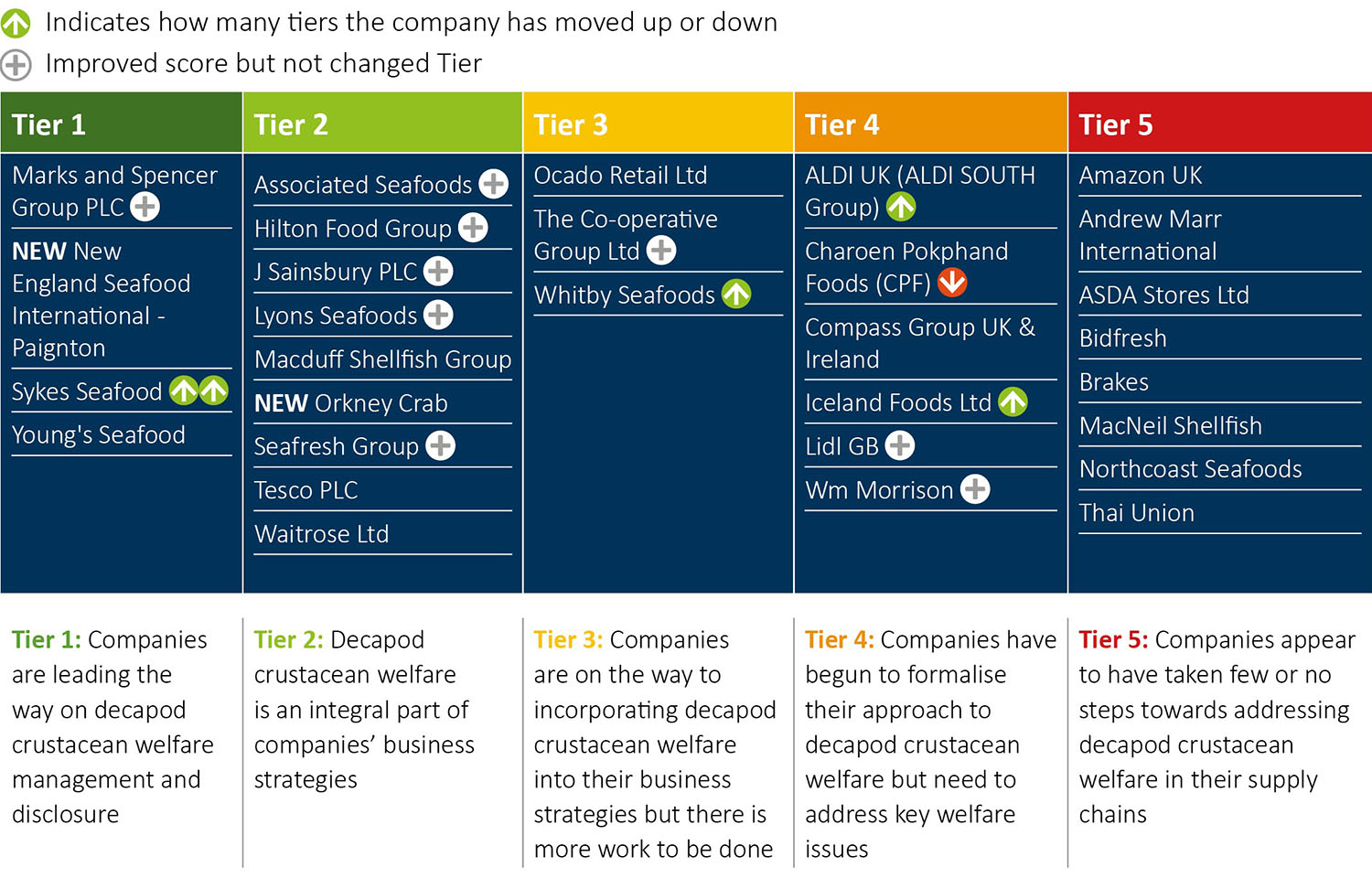
The report, titled “The Snapshot 2025: Industry Benchmark on Decapod Crustacean Welfare,” noted that though supermarkets and processors have made progress in rejecting inhumane slaughter practices from supply chains, there is still progress that needs to be made.
The study assessed 30 companies and explored how the U.K.’s food industry is responding to legal and consumer expectations around decapod welfare, the organization said in a release. The data is compiled from publicly available information; 12 of the 30 companies increased their welfare score from 2024 to 2025, and the bottom tier has the lowest number of companies in the category in its history.
Crustacean Compassion found that 19 of the 30 observed companies, or 63 percent, publish policies committing to continue, adopt, expand, or trial use of electrical stunning in their supply chain. Therefore, the report continued to prove that companies’ welfare practices outpace governmental policy, particularly around live boiling practices, according to the organization.
“Many companies have used electrical stunning for years to achieve humane slaughter for at least some decapod species, rejecting cruel practices such as live, conscious boiling,” Crustacean Compassion CEO Ben Sturgeon said. “With legal clarity on its way, there is no excuse to persist with outdated slaughter practices that nobody wants and that violate the law. The Snapshot shows there is both supply and demand to create a more humane industry, putting U.K. seafood in a strong position to lead globally on decapod welfare.”
Another finding consistent in both the 2024 and 2025 reports was that processors and producers remain ahead of retailers for welfare-based strategies.
Warrington, Washington, U.S.A.-based food manufacturer Sykes Seafood and New England Seafood International are in the top tier, with Sykes having moved up two tiers over the last year due to the publication of new and improved policies on capture method, bycatch, mutilations, holding and transport, humane stunning, and slaughter coupled with better public reporting.
“Despite the challenges, this is good news for decapods, businesses, and consumers alike, so we would be pleased to see companies share their progress in more ambitious ways,” Sturgeon said. “Consumers want to know that innovative companies can supply ethical, high-welfare seafood and will reward those who take their responsibilities to animal welfare seriously. To help empower shoppers to make the best choices for them, we’re also releasing The Snapshot Supermarket Guide, which gives a detailed overview of retailers’ welfare policies. We designed The Snapshot to provide companies with a roadmap to higher welfare, and with the launch of our Kinder Kitchens campaign, aimed at chefs and restaurants, we’re committed to supporting the food industry in its efforts to build a more compassionate future.”
Crustacean Compassion works for the humane treatment and legal protection of decapod crustaceans such as crabs, lobsters, prawns, and nephrops within the food supply chain.
“Since the U.K. Animal Welfare (Sentience) Act of 2022 legally recognized decapods as sentient beings capable of experiencing pain, fear, and pleasure, businesses handling these animals have an ethical and legal responsibility to uphold their welfare,” the organization said.
