



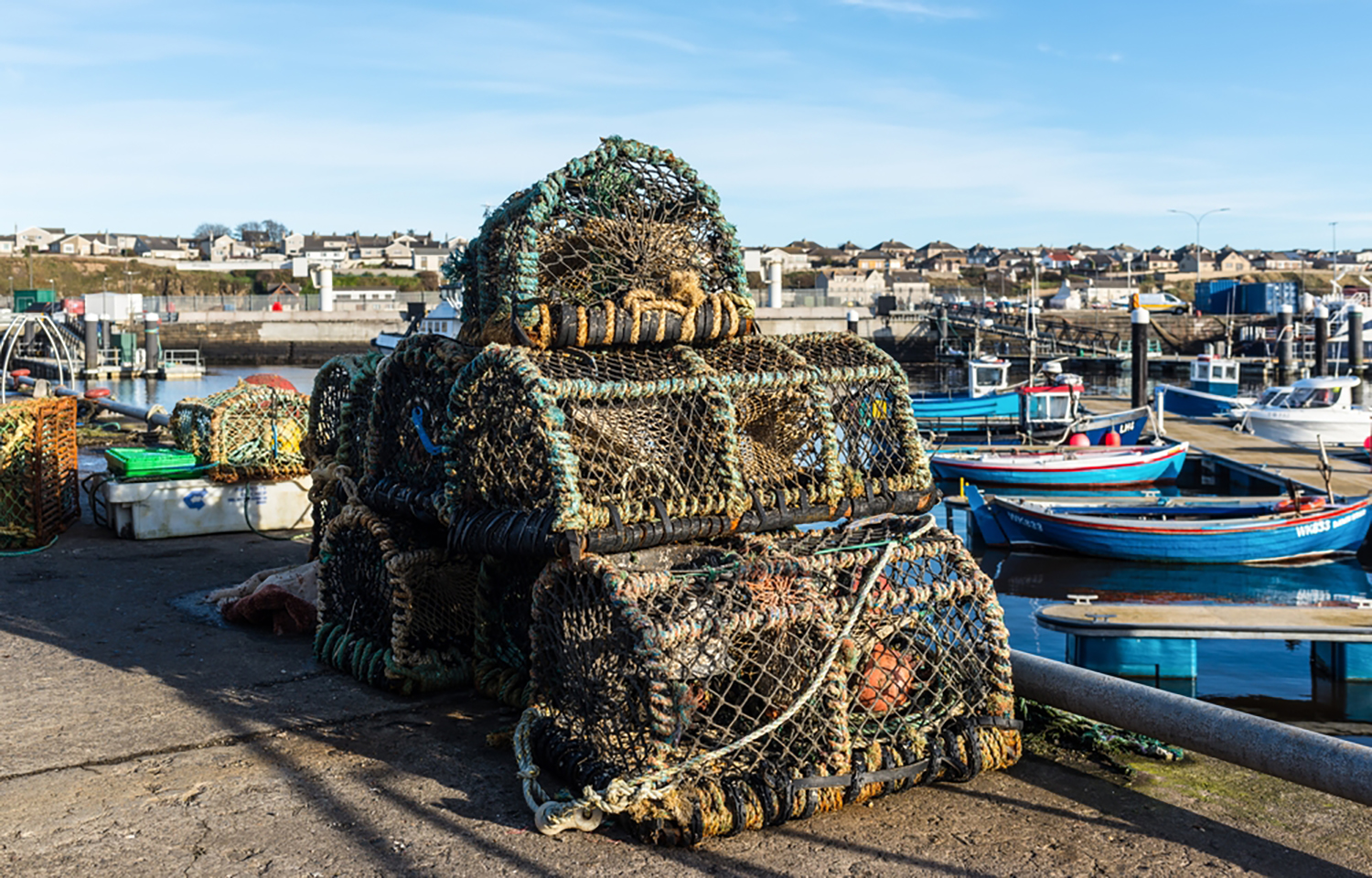
The U.K.’s Department of Environment and Rural Affairs (Defra) has announced its intention to issue government guidance for England on the landing and preparation of live crustaceans, with similar guidance for Scotland, Wales, and Northern Ireland regarding crustacean welfare likely to follow in the near future.
Catchers, processors, wholesalers, fishmongers, and restaurateurs across the country have expressed concern over the exact logistics involved, their cost implications, the required time frame for implementation, and who will be responsible for enforcing the rules.
Besides concerns over implementation and enforcement, seafood industry stakeholders also have longer-term worries over whether restrictions or an outright ban on the sale of live crustaceans could lead to the demise of the trade and open the door for greater supplies of imported frozen products.
Defra has made a recent push to ensure the nation’s crustacean landing and slaughter practices align with the 2015 Welfare of Animals at the Time of Killing (WATOK) regulations.
David Jarrad, CEO of the Shellfish Association of Great Britain (SAGB), told SeafoodSource that if the upcoming guidance follows WATOK bylaws exactly, the conscious boiling or freezing of lobsters and crabs or conscious dismemberment of decapods would be deemed illegal.
“Electrical stunning followed by a quick killing method is more welfare-friendly, according to Defra, with an alternative option of whole-body splitting of lobsters or double spiking of crabs if electrical stunning is not possible. Also, in the future, anyone engaged in the restraint, stunning, or killing of an animal must have the knowledge and skill necessary to perform the operation humanely and efficiently. This applies equally to consumers buying live animals from traders to cook at home,” Jarrad said.
Jarrad said SAGB is hoping to apply for funding to run a trial in which electrical stunning machines would be installed in a representative sample of businesses throughout the supply chain to assess their ease of use and effectiveness.
“Small restaurant kitchens, for example, may not have the space to install a machine, and there is also the cost implication to think of, so we are negotiating for SAGB members to obtain discounted rates when purchasing such equipment,” he said.
In addition to crab and lobster welfare, Defra has also turned its attention to the dispatching of nephrops at sea by conscious tailing without stunning. This practice is commonplace in the industry, with the tails destined for scampi products. However, it has been a point of contention for animal welfare NGOs since decapod crustaceans and cephalopod mollusks were officially recognized as sentient under the U.K.’s Animal Welfare (Sentience) Act of 2022.
Even without regulatory prodding to do so, the seafood industry has proactively responded to the nephrops debate, and trials have been underway with two different prototype systems that automatically stun and tail the animals at sea.
One system, developed by Norwegian company Optimar, completed its first successful sea trial aboard a commercial fishing boat in May. It is the result of a collaborative project involving fishermen, processors, retailers – including Marks & Spencer – academic institutions, and technology experts, with funding from industry and government alike.
“We are proud of this project and the future impact of the technology once adopted by the nephrops fleet. It will not only address a key animal welfare challenge but also significantly improve crew welfare and vessel efficiency. There is much more work to do and further sea trials are planned, but by 2026, we hope to have a market-ready solution available for the fleet, should they wish to adopt it,” Marks & Spencer Aquaculture and Fisheries Manager Linda Wood said.
SAGB, alongside industry public body Seafish and other partners, already developed its own comprehensive, voluntary, industry-based Codes of Practice (CoP) for Crustacea Welfare that cover the catching, wholesale, processing, retail, and foodservice sectors.
Launched in 2024, these were intended to kickstart the supply chain into embracing higher welfare standards.
When also considering the action the industry has taken on humane nephrops slaughter, Defra’s move into the crustacean welfare sphere is seen as unnecessary interference, according to SAGB.
“SAGB is dismayed at the recent Defra announcement about issuing guidance on the killing of crustacea. The decision to take this action, after they had been involved in the development of the CoPs, is disappointing to say the least,” Jarrad said.
Throughout the development of the new guidance, Defra has said it is seeking feedback from industry and other relevant parties through a series of meetings.
“We are open to listening, and naturally, if something comes up in the engagement that materially changes our understanding of the evidence, of course we’d consider it,” Defra said in a statement.
