






Food inflation increased in April, and overall consumer sentiment is low, but shoppers continued to buy more groceries during the month, in part thanks to the late Easter holiday.
Grocery inflation jumped up 3.8 percent in April compared to April 2024, grocery research firm Kantar reported, while the British Retail Consortium and NielsenIQ reported U.K. food inflation rose 2.6 percent in April compared to the previous year, versus a 2.4 percent increase in March. Fresh food inflation also grew 1.8 percent, after inclining 1.4 percent in March, BRC said.
Food inflation rose to its highest level in 11 months, while non-food deflation eased significantly, BRC Chief Executive Helen Dickinson said.
"Everyday essentials, including bread, meat and fish, all increased prices on the month,” Dickinson said.
Shoppers continue to benefit from lower overall retail price inflation compared to a year ago, but prices are slowly rising across supply chains, NielsenIQ Head of Retailer and Business Insight Mike Watkins said. As a result, grocers will be “looking at ways to mitigate this as far as possible,” Watkins said.
The BRC predicts food inflation will reach over 4 percent by the second half of 2025.
While consumers will remain cautious on discretionary spending, the late Easter holiday helped stimulate spending, Watkins noted.
In fact, grocery sales soared 6.5 percent in the four weeks to 20 April versus the same month in 2025, according to Kantar, as consumers spent 11 percent more on eggs and increased purchases of meat such as lamb and beef for the holiday.
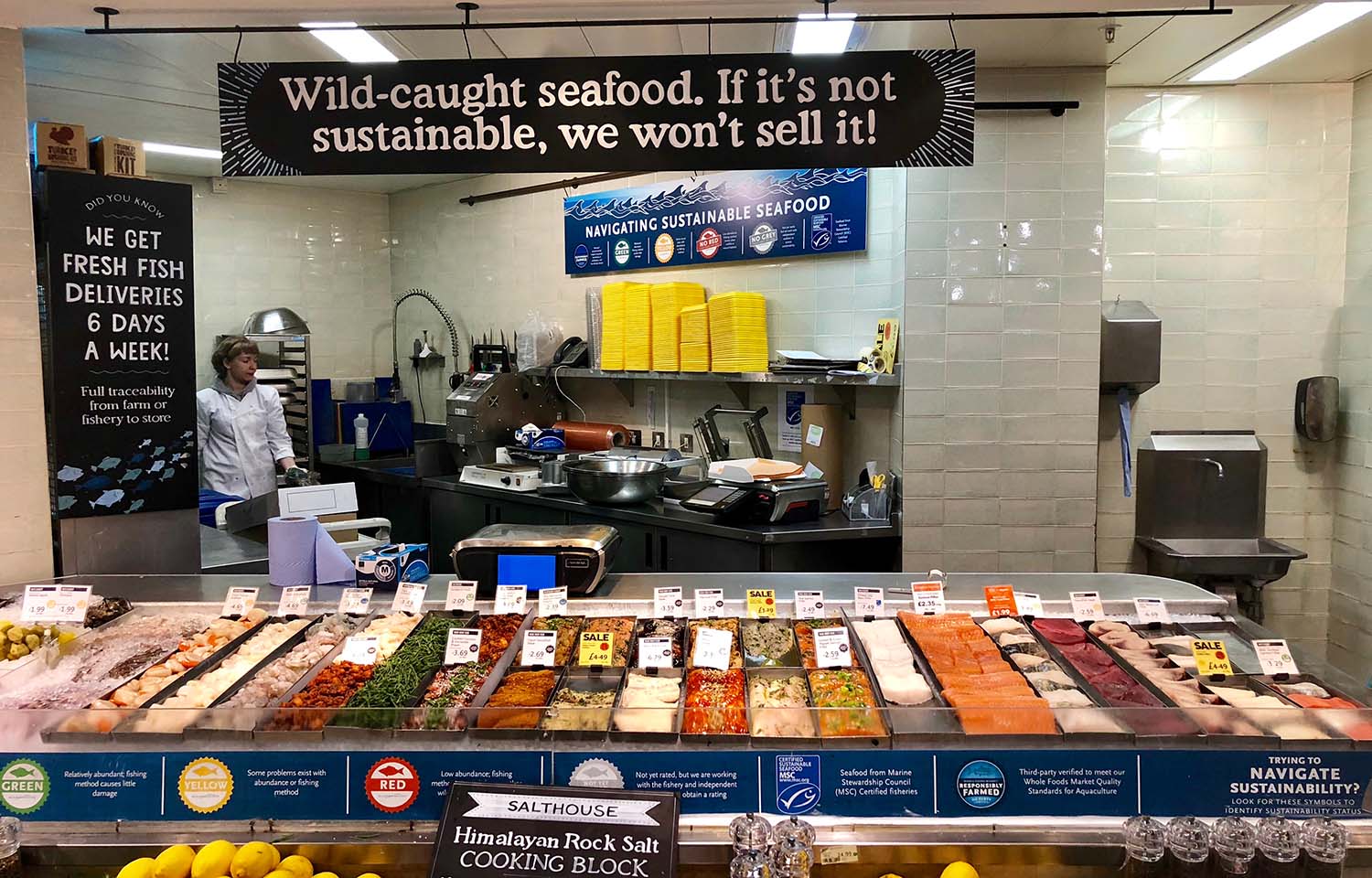
While Kantar does not provide specific seafood data, it is likely that seafood purchases also increased as shoppers bought significantly more “less seasonal fare” such as hamburgers.
Additionally, U.K. grocery shoppers are shopping more on price but are also willing to spend on quality products. Spending on promotions reached 29.7 percent, its highest level this year, according to Kantar.
“The grocers have been sharpening their pricing strategies to stay competitive in the fight for footfall. They’ve invested in price cuts which were the main driver of promotional growth,” Kantar Head of Retail and Consumer Insight Fraser McKevitt said. For instance, nearly 20 percent of items sold at Tesco and Sainsbury’s are sold on a price match, and they end up in almost two-thirds of shoppers’ baskets.
“However, it’s not all about price perceptions alone. What’s clear is that shoppers want quality too, particularly on special occasions, and we can track that, for example, in the rapid growth of premium own label in the latest four weeks at 23.2 percent.” McKevitt said. "Ultimately, retailers need to be seen to be offering great value but it’s a fine tightrope to walk, particularly as they manage their own business costs.”
While many U.K. retailers are offering price promotions, they are unable to absorb the total impact of the GBP 5 billion (USD 6.6 billion, EUR 5.8 billion) of employment costs and the additional GBP 2 billion (USD 2.6 billion, EUR 2.3 billion) in costs when the new packaging tax goes into effect in October, according to Dickinson.
"It is crucial that poor implementation of the upcoming Employment Rights Bill does not add further pressure to costs – pushing prices further up, and job numbers further,” she said.
Some of the cost increases faced by U.K. businesses include a change in the National Insurance contributions, a measure seafood processors have opposed citing a financial burden on employers. Retailers are also facing an increase in the minimum wage and higher business tax rates, which will affect businesses’ bottom lines.
Despite increased sales in April, consumers still say they are very concerned about the economy. The Conference Board Consumer Confidence Index fell by 7.9 points in April to 86, levels not seen since the onset of the Covid-19 pandemic, The Conference Board Senior Economist, Global Indicators Stephanie Guichard said.
The Expectations Index, which is based on consumers’ short-term outlook for income, business, and labor market conditions, dropped 12.5 points to 54.4, the lowest level since October 2011 and well below the threshold of 80 that usually signals a recession ahead.
“Notably, the share of consumers expecting fewer jobs in the next six months (32.1 percent) was nearly as high as in April 2009, in the middle of the Great Recession,” Guichard said.
Expectations about future income prospects turned clearly negative for the first time in five years, “suggesting that concerns about the economy have now spread to consumers worrying about their own personal situations,” Guichard added.
However, consumers’ views of the present have held up, containing the overall decline in the Index, she noted.
