





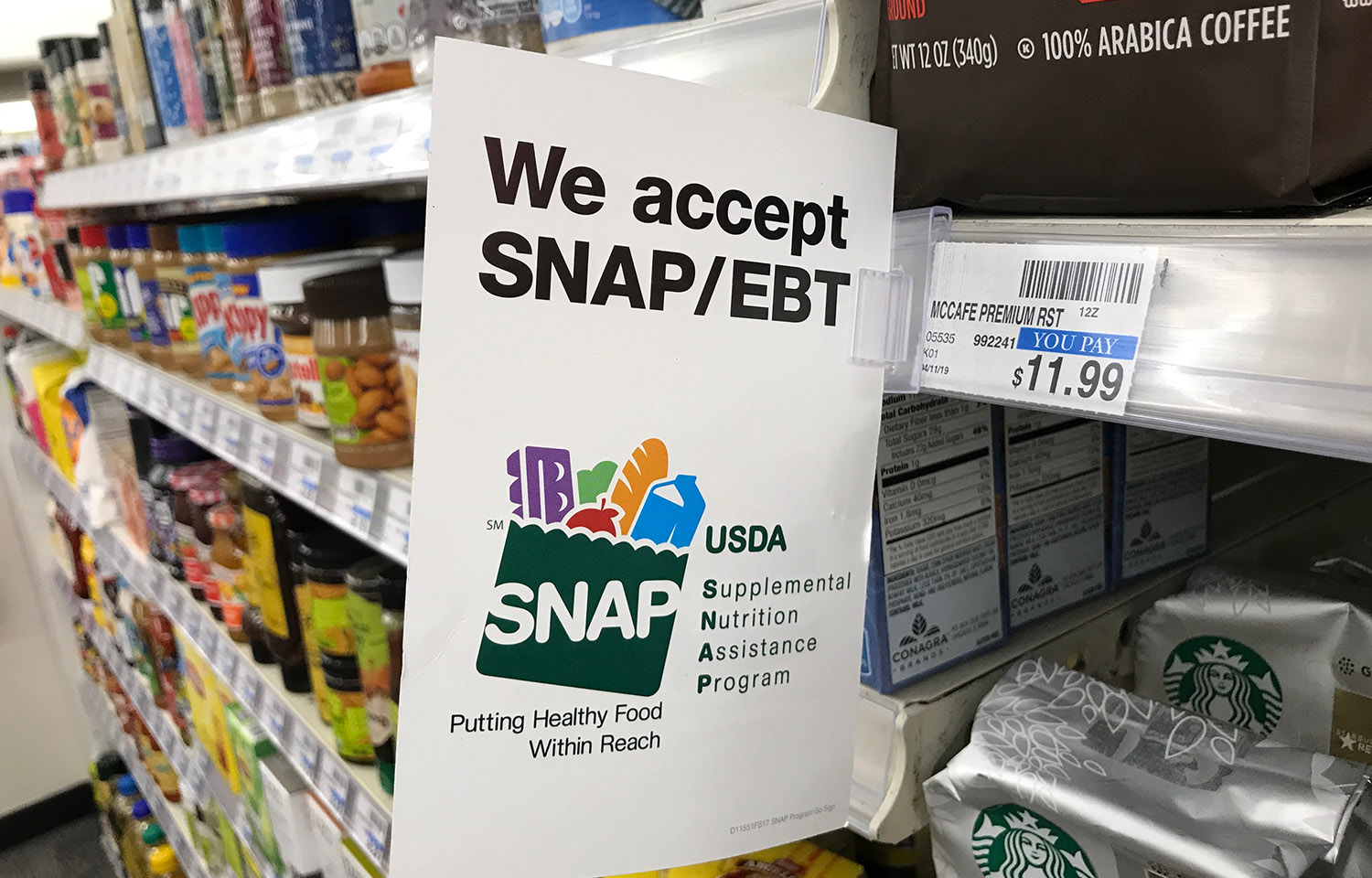
Two U.S. judges have ordered the Trump administration to issue food assistance benefits via the Supplemental Nutrition Assistance Program (SNAP) despite the ongoing government shutdown.
In response, the Trump administration announced that it would use an emergency fund to provide partial benefits for the SNAP program in November, although it will not tap into other sources to fully fund the program.
The White House had previously said that no SNAP benefits would be issued in November after funding ran out, blaming Democrats in Congress for not approving a continuing resolution to reopen the government.
“I do NOT want Americans to go hungry just because the Radical Democrats refuse to do the right thing and REOPEN THE GOVERNMENT,” U.S. President Donald Trump said in a 31 October social media post.
Democrats in the Senate have been holding out, refusing to back any temporary government funding until Trump agrees to extend Obamacare health care subsidies that just expired. However, U.S. Senator Chuck Schumer (D-NY) and other top Democrats have said they would approve a separate bill that only funds SNAP.
The federal government also has a USD 5.3 billion (EUR 4.6 billion) emergency fund that Democrats say could be used to partially fund SNAP benefits in November, although the Trump administration said before the judges’ rulings that it would not do so.
Nearly 42 million Americans used SNAP benefits on average in fiscal year 2024, receiving an average monthly benefit of USD 187.17 (EUR 161.81) per person. While many states and municipalities have provided emergency funding to make up for some of the lapsed SNAP benefits, local leaders say they can’t completely replace federal financial aid.
"Local leaders are doing what we always do – meeting people where they are and finding ways to help – but cities can't fill the gap left when federal food assistance stops," Oklahoma City Mayor and U.S. Conference of Mayors President David Holt said in a release. "The scale of the challenge is far beyond what local governments can solve on their own. It's time for Washington to do its job, put politics aside, and put American families first."
Food banks and charities have also stepped up support, anticipating a spike in demand.
“Families are already turning to our food pantries in growing numbers, many for the first time,” the Salvation Army said in a release. “In some communities, demand for food assistance in recent weeks has more than doubled what is typical. It is evident that this trend will continue throughout the country.”
"We are stepping up for New Yorkers because that's what we do," Food Bank For NYC CEO Leslie Gordon said in a release. "But let me be clear: no charitable organization can replace the critical support SNAP provides."
Now, two last minute court rulings have forced the federal government to dole out at least some SNAP benefits in November. U.S. District Judge John J. McConnell ordered the government to at least use the contingency fund to provide partial benefits, while U.S. District Judge Indira Talwani ruled the administration was acting unlawfully in withholding benefits.
Trump administration officials told the courts that it would provide partial benefits using the contingency fund, effectively providing 50 percent of eligible households’ current allotments, according to the New York Times.
