



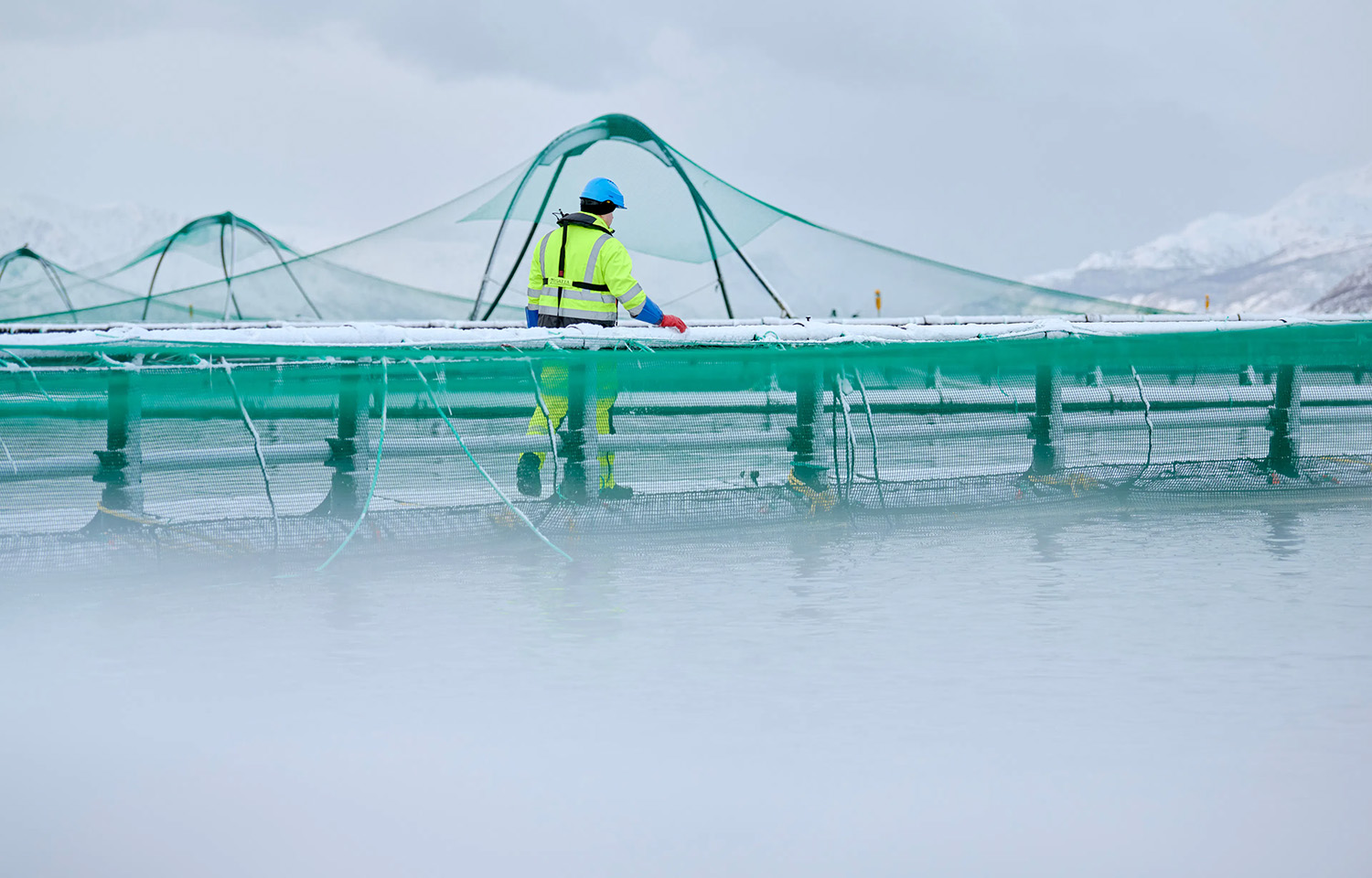
An algal event at a Rogaland, Norway-based salmon-farming site contributed to Grieg Seafood posting an EBIT loss of NOK 91 million (USD 9.5 million, EUR 8.6 million) in the third quarter of this year.
According to a recently released Q3 trading update, the Bergen, Norway-based producer’s sales revenue totaled NOK 1.14 billion (USD 119.4 million, EUR 107.6 million) in the three-month period – up from Q3 2025’s total of NOK 754 million (USD 79 million, EUR 71.2 million). The revenue increase came on harvest volumes of 10,498 gutted weight tons (GWT), compared to 6,820 GWT a year earlier.
Its operational EBIT loss, though, marked a significant decline from a loss of just NOK 1 million (USD 104,728, EUR 94,367) in the same period a year prior.
Year to date through Q3, Grieg’s operational EBIT has totaled a loss of NOK 120 million (USD 12.6 million, EUR 11.3 million) against positive earnings of NOK 290 million (USD 30.4 million, EUR 27.4 million) for the first nine months of 2025.
The company’s latest update reported that seawater production recovered by early Q3 after a difficult first half of the year, reaching “strong production performance” in August; however, in September, mortality climbed at one site after an unexpected algal event affected fish gill health.
Mitigating measures were put in place, but farming costs took a hit from the lost biomass, made worse by the high average weight of the affected fish. The company approximated the cost of reduced survival at NOK 66 million (USD 6.9 million, EUR 6.2 million), or NOK 6.30 (USD 0.65, EUR 0.59) per kilogram.
Despite the setback, Grieg reported that its 12-month rolling survival at sea rate stood at 91 percent, up from 90 percent at the half-year stage, while its superior quality share rebounded to 92 percent from 63 percent in H1. Average harvest weights in Q3 totaled 4.41 kilograms – up from 3.67 kilograms a year earlier.
Meanwhile, its Sales & VAP segment, which became a standalone business segment in the first half of this year and includes operations at Grieg’s Oslo Salmon Processing facility, posted an EBIT loss of NOK 0.40 (USD 0.04, EUR 0.03) per kilogram on revenues of NOK 1.11 billion (USD 116.3 million, EUR 104.8 million).
According to the firm, processing efficiency, measured in fish per minute, has more than doubled since the Oslo facility opened at the beginning of this year, and weekly volumes are up about 93 percent. Grieg confirmed it is in talks with several industry players about securing a strategic partner for the plant, with discussions now moving to a “more formal stage.”
The firm also said Årdal Aqua and Tytlandsvik Aqua, of which Grieg owns a one-third stake in both companies, performed well in Q3, delivering a combined Q3 EBITDA of NOK 124 million (USD 13 million, EUR 11.7 million) and EBIT of NOK 97 million (USD 10.2 million, EUR 9.2 million).
For the full year of 2026, Grieg is maintaining its harvest guidance of 29,000 GWT, with 4,600 GWT expected in Q4, though volumes will be lower mid-quarter to build biomass, it advised. The full-year farming cost is expected to be approximately NOK 71 (USD 7.43, EUR 6.70) per kilogram, including the year-to-date biomass write-downs.
To that end, Grieg stressed that “irrespective of market price developments,” its farming and headquarters costs remain too high.
Among the improvement measures it has implemented to mitigate high costs, Grieg cited poultry-based feed ingredients that offset roughly half of this year’s feed price increases, revised treatment procedures, smolt size optimization, tighter risk thresholds in high-risk periods, and further headquarters cost-cutting measures. This follows moves made last year that included reducing staff across sales and shared service functions by 55 percent.
Elsewhere, the update advised that investment group Ackermans & van Haaren (AvH) is in the process of completing its acquisition of a 37.5 percent stake in Grieg Aqua, which holds 50.17 percent of Grieg Seafood. Following the transaction, Grieg Aqua will then be owned by AvH, the Willumsen Grieg family, and the Grieg Foundation.
“Grieg Seafood is not a party to the transaction but views the introduction of the financially strong and experienced owners and teams as a long-term shareholder positively, providing a solid foundation for the group’s future strategic development and execution,” it said.
