






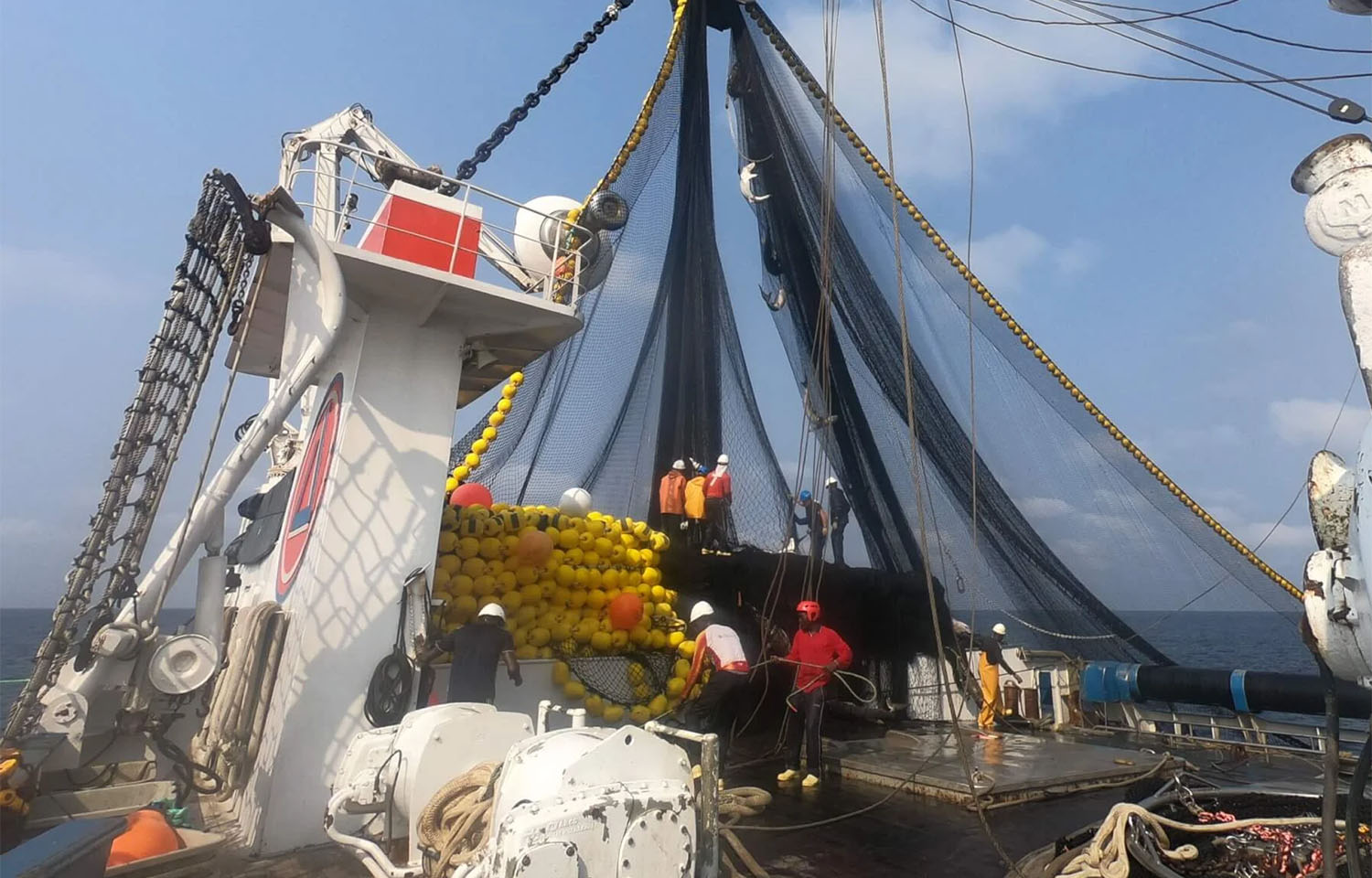
The Inter-American Tropical Tuna Commission (IATTC) has adopted an interim management procedure for Pacific bluefin tuna and a measure to reflect a management procedure on South Pacific albacore, but again deferred any action on tropical tunas.
Businesses and NGOs alike were pushing the IATTC to adopt its first-ever management procedures for tuna ahead of the meeting. A management procedure, also known as a harvest strategy, is a means of setting pre-determined triggers on species management so regional fishery management organizations (RFMO) like the IATTC have a roadmap ahead of any sudden changes in fish stocks.
The Pew Charitable Trusts, International Seafood Sustainability Foundation (ISSF), and Sea Pact all pushed for the management procedures, with a focus on a potential multi-species management procedure covering bigeye, skipjack, and both yellowfin tuna stocks.
“We’re at a point where the IATTC could adopt an interim multi-species management procedure that considers all four stocks of tropical tunas,” Pew Charitable Trusts Senior Officer Dave Gershman told SeafoodSource ahead of the meeting. “That’s a really big inflection point, a big historic moment, that we’re on the cusp of.”
However, the IATTC didn’t adopt any management procedure for the tuna stocks, despite years of work and multiple proposals.
“Despite seven years of science and dialogue, members could not agree, even though the option on the table would have allowed a modest increase in fishing on stocks scientists say are healthy,” Gershman said in a release following the meeting. “Instead, a dispute over whether certain countries can add new vessels to the fishery blocked progress entirely.”
With no consensus on a management procedure, the current measures remain in place as work to get the commission across the finish line continues.
“The IATTC lags far behind the world’s other tuna commissions in adopting these procedures, especially when it comes to the tropical tunas – bigeye, skipjack, and yellowfin,” Gershman said.
Despite the failure to enact a management procedure for the tropical tuna species, both Pew and the ISSF celebrated the IATTC’s adoption of new rules for Pacific bluefin tuna.
“If the Western and Central Pacific Fisheries Commission (WCPFC) adopts the same procedure at its annual session in December, it would complete a remarkable comeback for a fish once so depleted that Pew called for a commercial fishing moratorium,” Gershman said.
Pew called for a complete commercial fishing ban on Pacific bluefin in 2016, as the stock fell to just 2.6 percent of its historic size and international RFMOs failed to come together on a recovery plan. The fishery was on track to collapse completely, but work by the IATTC and WCPFC agreed to set new measures to reduce catch and set guideposts along the path to recovery, which successfully lead to the stock rebounding.
IATTC also adopted a new measure for South Pacific albacore, which, according to ISSF, reflects work by the WCPFC and supports continued collaboration on stock assessment and compatible management between the two RFMOs.
Outside management procedures, the IATTC did adopt some other measures, such as a push toward greater use of electronic monitoring (EM) in its longline fisheries.
“An adopted measure maintains the existing 5 percent minimum human-observer requirement for longline vessels, while allowing EM, consistent with IATTC’s interim standards, to supplement human observer coverage,” ISSF said. “IATTC staff will assess submitted EM data in 2027, with the commission scheduled to reconsider the minimum human-observer coverage level in 2029.”
While ISSF welcomed the advance of EM, it said the efforts weren’t to the level the NGO sought, which was an interim level of 20 percent – a level recommended by IATTC scientific staff. They also sought a timeline toward 100 percent coverage, which did not happen.
ISSF said there was little progress on some of the fish aggregating device (FAD) management improvements it had sought out before the meeting.
“We called for stronger monitoring of FAD deactivation and reactivation, improved marking and ownership requirements, a FAD register harmonized with WCPFC, and greater use of historical echosounder buoy data for scientific purposes,” ISSF said. “None of these FAD provisions were advanced this year, leaving significant work to strengthen FAD traceability, data collection, and management.”
Gershman and the ISSF both said the measure IATTC implemented show progress can be made, and are calling on the commission to continue its efforts to enact tropical tuna management and better monitoring in 2027.
“Fisheries management doesn’t have to be this way,” Gershman said. “Pacific bluefin tuna shows that governments can ultimately make the right decisions for a healthy ocean. Members should return next year ready to do the same for their valuable tropical tunas.”
